
An inland stretch of the Marche where Apennine valleys preserve an unassuming mountain landscape, with minor villages such as Visso and Ussita safeguarding local food traditions and craftsmanship.
The Marche stretch of the Valnerina occupies the innermost reach of the Apennines in the province of Macerata, where the river Nera rises and descends, cutting narrow valleys between slopes wooded with beech and turkey oak. This corner of the Marche should not be confused with the better-known and more frequented Umbrian Valnerina: it belongs to the Parco Nazionale dei Monti Sibillini (Sibillini Mountains National Park) and shares the same geographic logic — ridgelines rising above two thousand metres, high plateaus, villages built hard against the slopes as if seeking shelter from the eastern winds. The landscape offers no sweeping panoramas but rather a succession of close-set planes, where vegetation and rock alternate without interruption.
Visso sits in a hollow of the upper Nera valley, at around 600 metres, along the historic route that once linked Camerino to Foligno and on to Rome. Its position was no accident: the village controlled an important road junction, and its medieval history has settled into an urban fabric that is still legible today, made up of low, narrow houses, defensive walls, and a system of squares turning around Piazza Martiri Vissani. The buildings surrounding it date largely from the 1400s and 1500s, and it is this chronological compactness that gives the historic centre its rare coherence. The 2016 earthquake struck Visso hard, leaving wounds still visible in its structures and in the life of the town, which today counts around 1,800 residents and carries on a slow but steady reconstruction. The Touring Club Italiano has awarded the village its Bandiera Arancione (Orange Flag), a recognition reserved for inland towns that meet criteria of territorial and cultural quality.
Ussita lies higher up, following the valley of the Ussita torrent, a tributary of the Nera. The town is made up of hamlets scattered across the slopes, a settlement pattern typical of these mountain territories, where dispersed dwellings reflect the historic need to work pastures and woods at different altitudes. Ussita too suffered serious damage in 2016, and its post-earthquake story is now part of the landscape itself: building sites, propped-up structures, empty spaces where homes once stood. And yet the natural setting remains unmistakably that of the Sibillini, with slopes climbing toward Monte Bove Nord — 2,112 metres — and ridgelines that stay snow-capped for months each winter.
What sets this stretch of the Marche Apennines apart is not any single feature but the overall quality of the geographic silence that defines it. The roads leading here are minor, traffic is sparse, and the territory retains a scale that lets one read the relationship between human settlement and physical environment without mediation. Traditions tied to sheep-farming, to the making of local products, and to the calendar of religious feasts continue to shape the rhythm of the resident communities, even as post-earthquake reconstruction redraws the line between what was and what will be.
Beatrice IIS Bonifazi · CC BY-SA 4.0 — Wikimedia Commons
Certified Made in Italy businesses close to this place.

Trattoria La Piccola Baita
Pieve Torina (MC) · 14.6 km
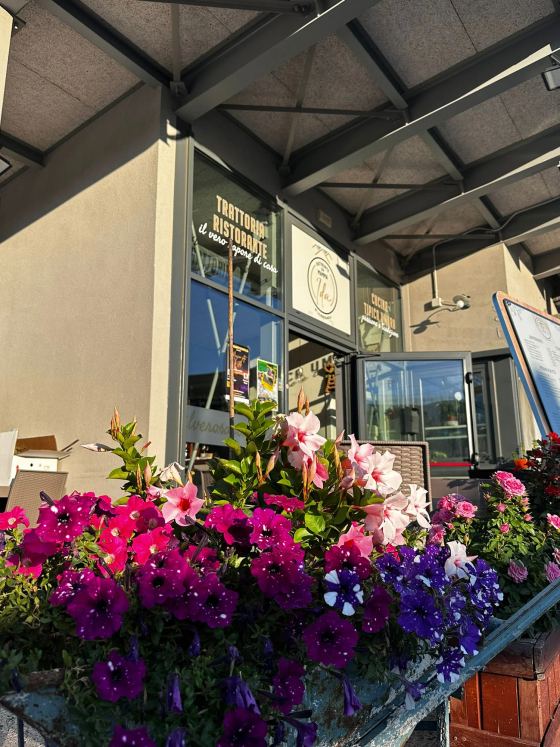
RISTORANTE DA MAMMA IDA
Castelluccio di Norcia (PG) · 15.2 km
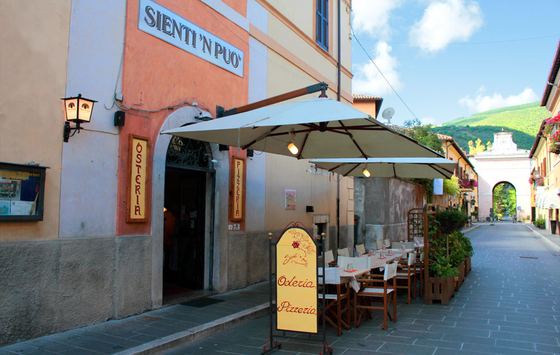
OSTERIA SIENTI'N PUO'
Norcia (PG) · 15.3 km
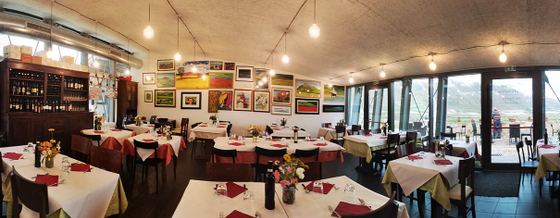
TAVERNA CASTELLUCCIO
Castelluccio (PG) · 15.4 km

TRATTORIA BAR LA FOJATERIA
Sellano (PG) · 15.8 km
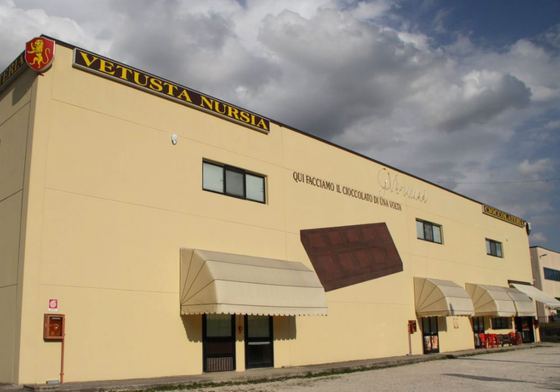
Cioccolateria Vetusta Nursia
Norcia (PG) · 16.3 km
