Before you go on
This site uses only what it needs to work: the language you choose, access to the members' area, and anonymous counts that tell us whether the search is answering well. For advertising campaigns we ask your permission, and without a yes nothing starts. See the full list.

A small borgo in the Valnerina known for its school of itinerant surgeons active between the 15th and 17th centuries, a unique artisan medical tradition in the Italian landscape.
In the Valnerina, the valley carved by the Nera river between the eastern spurs of Umbria and the buttresses of the Sibillini Mountains, Preci occupies a plateau at about 600 metres above sea level, in the province of Perugia. The medieval borgo (historic village), gathered within its walls, does not at first glance stand out from the other settlements of this narrow, secluded valley. And yet between the fifteenth and seventeenth centuries its name circulated in the courts of Europe, in the hospital registers of London, in the correspondence of Flemish and Spanish physicians: Preci was the homeland of the cerusici, empirical surgeons whose fame crossed the borders of the Papal States to spread across much of the continent.
The term "cerusico" — from the Latin *chirurgicus*, filtered through artisan practice — designated an operator who practised surgery without the academic title required of university-trained physicians. In Preci this figure took on a wholly distinctive character: not a street practitioner, but a specialist trained through family lineage, formed within veritable dynasties of the scalpel. The Ceccarelli, the Cardanelli, the Scacchi: certain families of the borgo built up over time a refined technical knowledge, concentrated above all on two types of procedure — cataracts and bladder stones — which demanded a steady hand, precise anatomical knowledge and a set of purpose-made instruments. The school had no institutional seat in the modern sense: knowledge was passed down in the workshop, from father to son, with a rigour that made up for the absence of academic formalisation.
Itinerancy was integral to the trade. The cerusici of Preci set out each season for the great cities — Rome, Naples, Venice, but also London and Flanders — carrying with them their instruments and the reputation of their home borgo. Some secured permanent positions at foreign courts and hospitals; others returned enriched, with a network of connections that further fed the collective prestige. This mobility was not an exception but a structure: Preci exported medical skill as other towns of the Apennines exported wool or timber, with the difference that the product was immaterial, and its value was measured in lives successfully operated on.
Today the borgo preserves concrete traces of that era. The Abbey of Sant'Eutizio, founded by Benedictine monks in the sixth century a short distance from the town centre, holds in its conventual archive documents attesting to the presence and activity of the local cerusici. The small Museo della Farmacia e della Chirurgia (Museum of Pharmacy and Surgery), housed in the borgo, gathers original instruments and written testimony of that tradition. Preci remains a town of a few hundred inhabitants, marked, like the whole of the Valnerina, by the 2016 earthquake, but the memory of its singular medical specialisation endures as documented history, not folkloric nostalgia.
LigaDue · CC BY-SA 4.0 — Wikimedia Commons
Certified Made in Italy businesses close to this place.
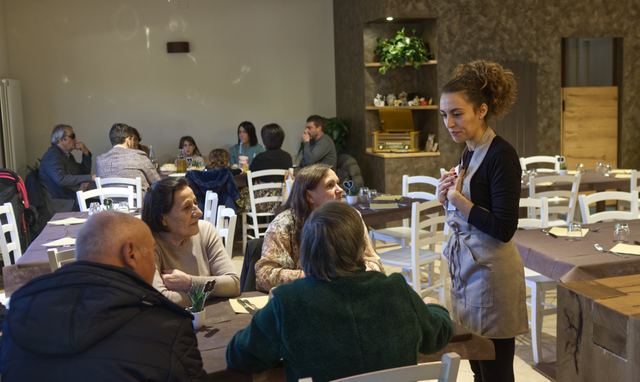
TRATTORIA BAR LA FOJATERIA
Sellano (PG) · 11.9 km
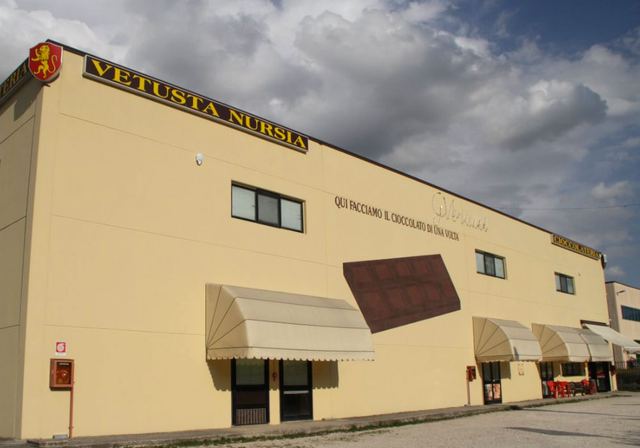
Cioccolateria Vetusta Nursia
Norcia (PG) · 12.3 km
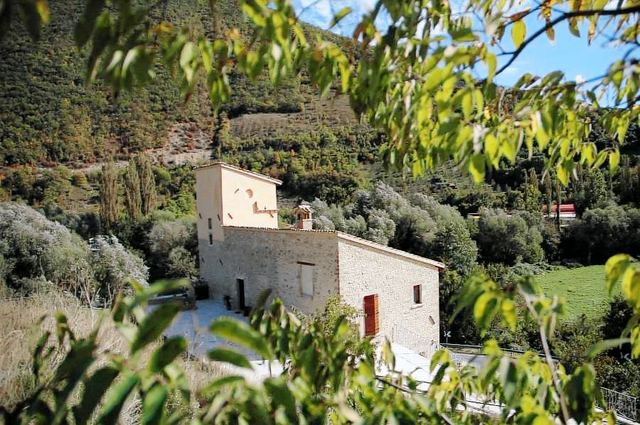
AGRITURISMO CASALE LA PALOMBARA
Borgo Cerreto (PG) · 12.8 km

AGRITURISMO SANTA SERENA
Cerreto di Spoleto (PG) · 14.3 km

RISTORANTE DA MAMMA IDA
Castelluccio di Norcia (PG) · 15.1 km
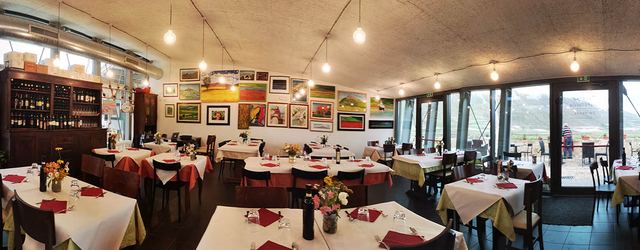
TAVERNA CASTELLUCCIO
Castelluccio (PG) · 15.3 km