
A side valley of Valsesia that has remained on the margins of mass tourism, with an unspoiled alpine landscape and a history tied to the presence of the Savoy royal house.
Val Vogna opens on the eastern flank of Valsesia just beyond Riva Valdobbia, in the province of Vercelli, like a narrow corridor between wooded slopes rising toward the heights of Monte Rosa. It is a side valley in the most precise sense of the term: it leads to no busy mountain pass, no ski resort, and this geographic marginality has preserved a landscape that elsewhere, in the more celebrated valleys of Piedmont, has been progressively altered over the course of the twentieth century.
The valley floor is crossed by a path linking a sequence of small historic hamlets — Otro, Pile, Resiga, among others — built of local stone according to Walser building tradition, the German-speaking population that settled at these altitudes starting in the Middle Ages. The dwellings, compact and south-facing, still show their original structures: granite foundations, balconies in darkened wood, hay barns set against the houses. Time here has produced neither uniform abandonment nor cosmetic restoration, but a quiet layering that makes each hamlet legible in its material history.
The presence of Queen Margherita of Savoy in this valley — documented from the period when the royal house spent summers in Valsesia — has left its trace in a building in Otro that still bears her name (a chalet built for her stays). The fact that the Savoy court chose these places to rest is no mere ornamental detail: it shows how, already in the nineteenth century, Val Vogna was perceived as a space of distance from public life, a place where altitude and silence served a precise function.
The coniferous and broadleaf woods covering the slopes up to the high pastures gradually give way to open grazing land, where in summer livestock still climbs according to the rhythms of vertical transhumance. The soundscape shifts with altitude: on the valley floor the sound of the Vogna stream dominates, while higher up toward the pastures silence becomes the prevailing condition, broken only by wind and cowbells. This is not a spectacular valley in the sense of great rock faces, but a proportioned one, where the human scale is never overwhelmed by geology.
Those who walk Val Vogna — the only way to reach its innermost hamlets, not served by road along the whole route — experience a rhythm that the terrain itself imposes. Elevation changes are modest, paths well marked, distances between hamlets measured in hours of slow walking. It is this structural slowness, more than any scenic attribute, that defines the valley's character and explains why it continues to draw those who seek in the mountains not an adventure to be consumed quickly, but an experience of reduction — of noise, of speed, of complexity.
Matteo Delfitto · CC BY-SA 4.0 — Wikimedia Commons
Certified Made in Italy businesses close to this place.
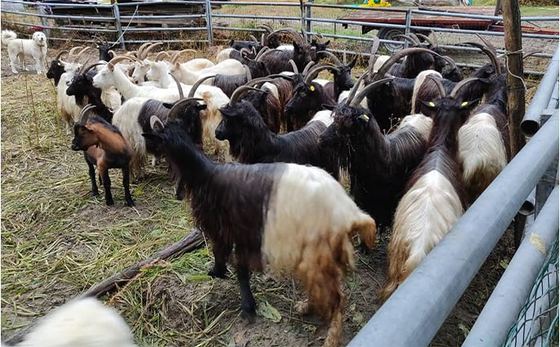
Azienda Agricola ''La Ghiviola'' Di Ragozzi Agnese
Vocca (VC) · about 17 km
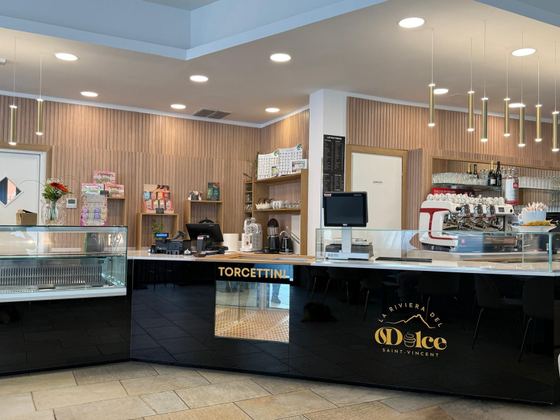
LA RIVIERA DEL DOLCE
Saint Vincent (AO) · 25.4 km
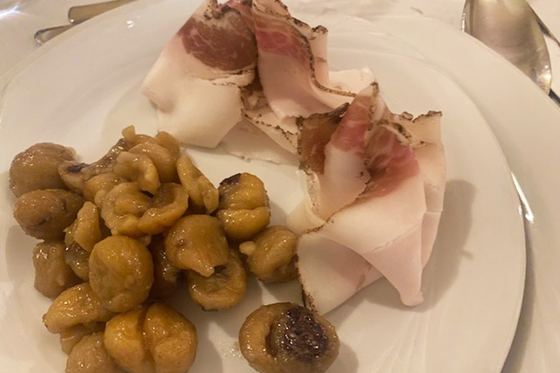
RISTORANTE DEL SANTUARIO
Graglia (BI) · 30.2 km
BERGO pneumatici - Centro SuperService
Biella (BI) · 31.3 km
Patty - Hamburgeria Gourmet
Ponderano (BI) · 33.5 km
Macelleria Simonetta
Beura Cardezza (VB) · 38.3 km
