
A plateau municipality overlooking Lake Garda, made up of eighteen hamlets including Pieve as the main village, where the landscape shifts between alpine and Mediterranean atmospheres.
The Tremosine sul Garda plateau rises on the western shore of the lake, in the province of Brescia, like a karst platform suspended between two climates. At altitudes ranging from 350 to over 1,000 metres, the territory belongs to the Parco Regionale dell'Alto Garda Bresciano (Alto Garda Bresciano Regional Park) and comprises eighteen hamlets — including Pieve, the main village — linked by scenic roads and ancient mule tracks that cross broadleaf woods, clearings and olive groves. The overall population stands at around 1,500 inhabitants, spread across a mosaic of rural settlements that have retained a medieval settlement structure.
The landscape singularity of Tremosine lies in the coexistence of two vegetation regimes that elsewhere exclude one another. At lower altitudes, where the lake tempers winter temperatures, olive trees grow on terraces descending toward the shore; higher up, Mediterranean scrub gradually gives way to the chestnut, beech and hornbeam woods typical of the Brescia Pre-Alps. This layering is not merely botanical: it changes the light, the humidity of the air, the colour of the soil. The result is a landscape that shifts register within a few kilometres, with no perceptible break.
The most direct access to the plateau from the lakeshore runs through the Forra di Tremosine (Tremosine gorge), a canyon carved by the Brasa stream through limestone rock. The road that climbs through it — narrow, cut into the living rock, with tunnels and balconies opening onto sheer drops — is considered one of the boldest stretches of road in Italy. Winston Churchill, who travelled it in the early decades of the twentieth century, described it as the eighth wonder of the world, a phrase that circulated widely and helped make the place known long before mass tourism reached Lake Garda.
Historians trace the place name Tremosine to a personal name of possible Etruscan origin, Tremusina, which would attest to human presence in the area predating Roman colonisation. In Pieve, the main village listed among the Borghi più belli d'Italia (Italy's Most Beautiful Villages), the church of San Giovanni Battista stands on the site of an earlier Celtic place of worship dedicated to the mountain deity Bergimo. A Roman inscription found on site and now kept in Verona mentions an aedile of Brescia who, by order of the Decurions, had a temple restored in honour of that same deity, identified with the pantheon of the Cenomani of Brescia. The religious stratification of the site mirrors the geographical one: each layer covers the previous one without fully erasing it.
What sets Tremosine apart from the busier lakeside towns of the Garda shore is not just its altitude or distance from the water, but a different relationship with time. The hamlets — Vesio, Voltino, Sermerio, Olzano, among others — retain rural courtyards, stone fountains and votive chapels that belong to a human scale untouched by the tourist pressure of the lakefront promenades. The plateau looks down on the lake, keeping it within sight yet holding it at a distance behind the sheer wall of the gorge: a position that for centuries determined a relative isolation and, with it, the persistence of forms of life and landscape that have elsewhere been lost.
Ximonic (Simo Räsänen) · CC BY-SA 4.0 — Wikimedia Commons
Certified Made in Italy businesses close to this place.
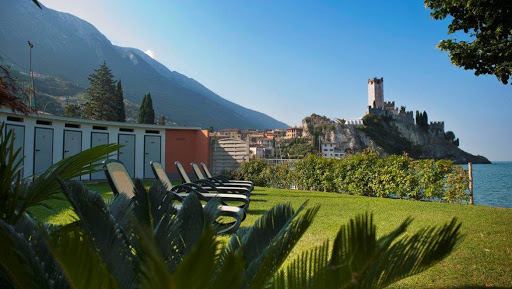
LIDO PAINA RISTORANTE PIZZERIA
Malcesine (VR) · 3.9 km
LB GELATERIA
Limone Sul Garda (BS) · 5.4 km
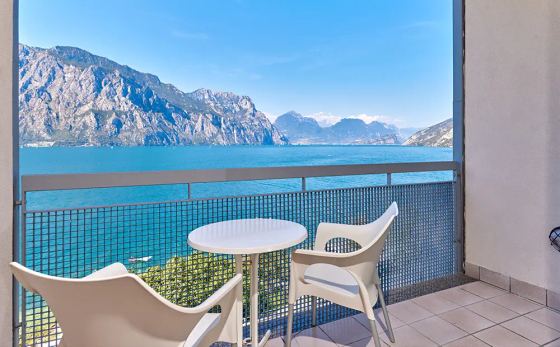
Wind Hotel Malcesine
Malcesine (VR) · 7.6 km
Osteria DA LAURA
Torri del Benaco (VR) · 13.3 km
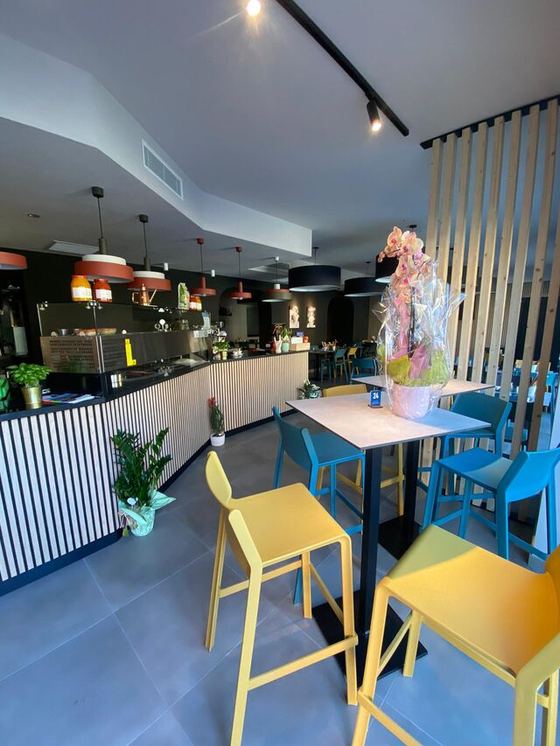
ANEMA E CORE
Garda (VR) · 22.1 km
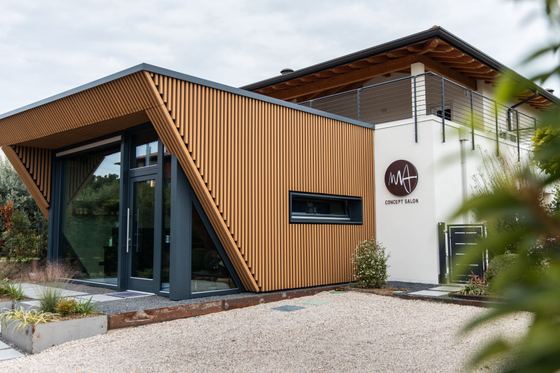
FALEGNAMERIA BOME’ DI BOME’ IVANO Srl
Sella Giudicarie (TN) · 23.2 km
