
A food and wine itinerary through the territory between Montefalco and Bevagna, dedicated to Sagrantino DOCG, one of Italy's most tannic and long-lived red wines.
Between Montefalco and Bevagna, in the heart of the Umbrian Valnerina, lies a hilly district where viticulture is not an economic activity superimposed on the landscape, but its very structural backbone. The Strada del Sagrantino (Sagrantino Wine Road) is the itinerary that runs through this territory, linking villages, vineyards and wineries along a route that crosses the municipalities of Montefalco, Bevagna, Castel Ritaldi, Giano dell'Umbria and Gualdo Cattaneo. The common thread is a native grape variety of ancient local presence, Sagrantino, which finds in this narrow hilly area the exclusive conditions for its production: the DOCG designation Montefalco Sagrantino cannot be claimed anywhere else.
Sagrantino is among the Italian red wines with the highest tannin content, a trait that defines its imposing structure and its capacity for prolonged ageing. Vinified as a single varietal, it requires years of refinement before its aromatic profile can fully express itself. This slowness, dictated by the nature of the grape, is reflected in some way in the very rhythm of the territory: the hills around Montefalco are not meant to be crossed in a hurry. The frescoes by Benozzo Gozzoli in the church of San Francesco, dating to the 15th century, already depict the village encircled by laden vineyards, evidence of how deeply this crop is rooted in the identity of the place.
Montefalco occupies an elevated position above the valleys of the Clitunno, the Topino and the Tiber, so much so that it is traditionally known as the Ringhiera dell'Umbria (the Balcony of Umbria). From this vantage point, the panorama takes in an agricultural system that alternates vineyards with olive groves, with medieval villages emerging along the hilltops. Bevagna, a stage along the route, preserves a Roman and medieval urban layout of rare integrity, with its central square — Piazza Silvestri — home to two Romanesque churches facing one another. The historical dimension of this architecture is interwoven with the wine-growing dimension of the route, with neither ever overshadowing the other.
In 2024, the San Francesco museum complex in Montefalco was enriched with an immersive section dedicated to Sagrantino, inaugurated on 20 April in the presence of regional institutions and the Consorzio Tutela Vini di Montefalco. The exhibition path begins in the ancient Franciscan cellars and traces the history of the denomination up to the present day, reinforcing the identity bond between the grape variety and the territory of the Strada del Sagrantino. It offers visitors a key to interpretation even before they step into the producers' cellars.
The itinerary works as a system: it is not any single winery or village that defines its value, but the relationship between elements arranged along the route in a legible sequence. The agrarian landscape, the history of the settlements, the winemaking technique and Umbrian cuisine — with its legumes, cured meats and local cheeses — present themselves as parts of one and the same context. To travel the Strada del Sagrantino is to cross a territory that has built its own coherence over time, where every component points back to the others.
Umbria Lovers · CC BY-SA 2.0 — Wikimedia Commons
Certified Made in Italy businesses close to this place.
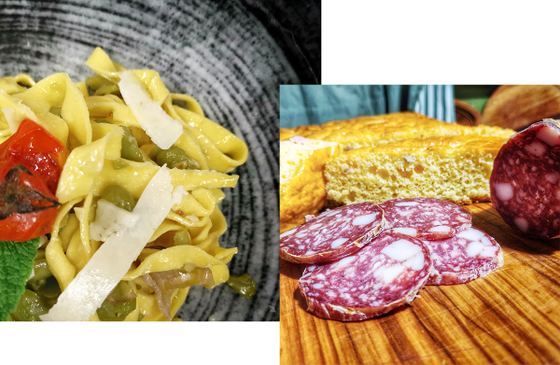
OLEVM
Montefalco (PG) · 0.3 km
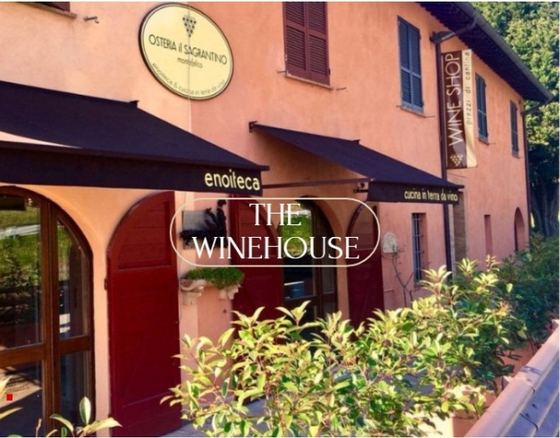
OSTERIA IL SAGRANTINO
Montefalco (PG) · 3.5 km
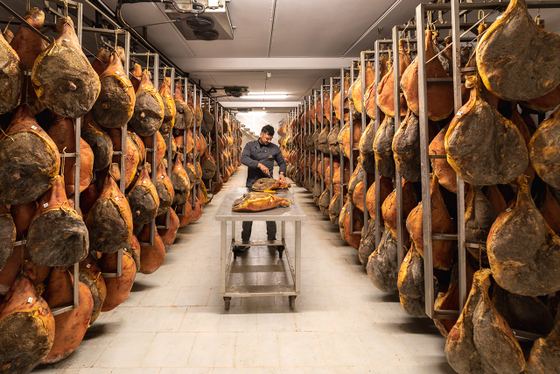
Norcineria Pizzoni Adelmo
Foligno (PG) · 7.4 km
LA TAVERNA DI SAMPEY
Castel Ritaldi (PG) · 8.1 km
Il Mulino Ristorante Pizzeria
Gualdo Cattaneo (PG) · 9.3 km
Ristorante La Lumaca D'Oro
Bevagna (PG) · 10 km
