
A medieval village perched on a rocky spur in the upper Valle Argentina, known for the sixteenth-century witchcraft trials and the wild landscape that surrounds it.
In the upper Valle Argentina, about forty kilometres from Sanremo and a short distance from the French border, Triora occupies a rocky spur at 780 metres above sea level. The village belongs to the province of Imperia and looks out toward the ridges of the Ligurian-Piedmontese Apennines, with an exposure that in the late afternoon leaves the village in shadow while the surrounding peaks still hold the light. Its lanes — the narrow, vaulted caruggi typical of rural Ligurian architecture — wind without any apparent logic, climbing, descending, closing against walls of grey stone. Remains of defensive towers and of the medieval castle still mark the village's profile, which retains the compact structure of a settlement built to withstand.
The story that made Triora known beyond Liguria dates back to the late sixteenth century. Between 1587 and 1589, during a period of famine and social tension, dozens of women from the village and the surrounding hamlets were accused of witchcraft. The trial involved the Genoese Inquisition and ended in convictions, torture, and several executions. The accused were largely elderly or marginalised women, and the place local tradition points to as the site of their alleged nocturnal gatherings is the Cabotina, an area on the edge of the village. That episode has not remained confined to the chronicles: it has shaped the village's collective identity, which today is explored through the Museo Etnografico e della Stregoneria (Ethnographic and Witchcraft Museum), housed in a medieval building in the centre of the village, where documents, objects, and reconstructions convey the historical context of the trials.
The territory surrounding Triora, however, belongs to a different dimension — less bound to memory, more physical. The chestnut woods covering the valley's slopes offer a network of trails for walking or mountain biking, with routes that climb toward the border ridges and reach elevations above two thousand metres. Monte Saccarello, at 2,201 metres the highest point in Liguria, can be reached via paths that start from the Triora area and cross landscapes of alpine grassland and limestone rock. The Valle Argentina, carved by the stream of the same name, retains dense vegetation and wildlife including roe deer, wild boar, and, at higher altitudes, chamois. It is an inland area that coastal tourism pressure has largely left untouched.
Triora belongs to the I Borghi più Belli d'Italia network and has been awarded the Bandiera Arancione (Orange Flag) by the Touring Club Italiano. These recognitions describe a state of conservation of the built and landscape heritage that, in the context of the Ligurian hinterland, is far from a given. The resident population is small, as in many mountain villages in the region, but the village does not give an impression of neglect: the stonework is well kept, the streets are walkable, and the presence of activities linked to local craft and food and wine keeps a certain vitality alive. Triora bread, made with local flours according to a traditional recipe, is one of the products the village has managed to establish over time as a mark of identity distinct from the narrative of witchcraft.
Giovdek · CC BY-SA 4.0 — Wikimedia Commons
Certified Made in Italy businesses close to this place.
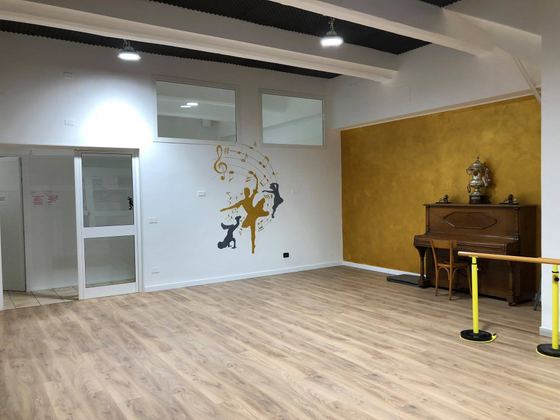
Scuola Danza Città Dei Fiori Asd
San Remo (IM) · 23.2 km
BAR SAN SCI'
Sanremo (IM) · 23.3 km
Studio D'Arredo Graziella Vero
San Remo (IM) · 23.4 km
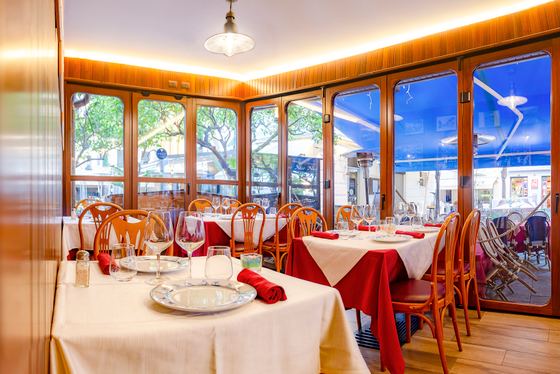
Ristorante Da Nicò - Sanremo
Sanremo (IM) · 23.5 km
BASILICO E PINOLI
Sanremo (IM) · 23.9 km
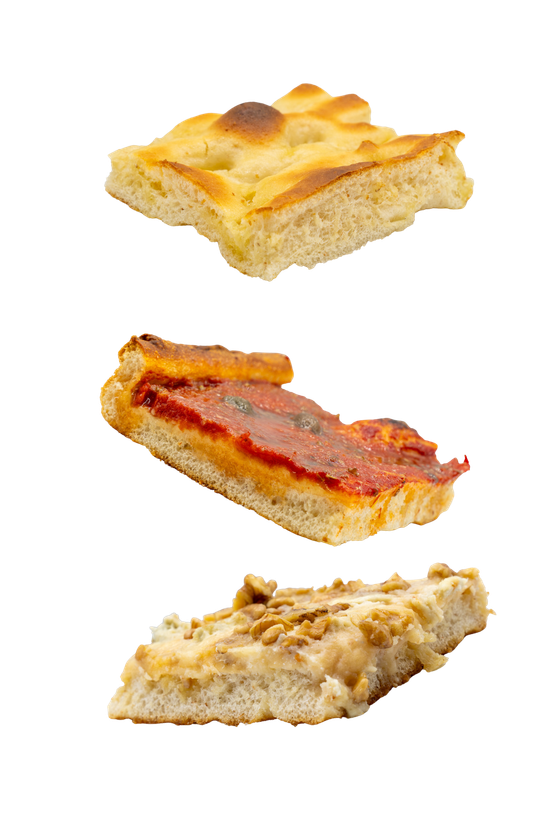
LA TAVERNA BAKERY
Bussana (IM) · 24.4 km
