
Ancient European pilgrim route crossing Trentino-Alto Adige to link the Baltic Sea and Rome, travelled for centuries by merchants and pilgrims trading amber, salt, iron and silk.
The Romea Strata is a path of over four thousand kilometres connecting Tallinn, in Estonia, to Rome, crossing seven European countries: Estonia, Latvia, Lithuania, Poland, the Czech Republic, Austria and Italy. In its Italian section, which extends for approximately 1,400 kilometres and touches seven regions, the route enters national territory at the Tarvisio pass and crosses Trentino-Alto Adige before descending towards Veneto and continuing south. Forty-seven stages, 237 municipalities, 335 parishes: figures that convey the scale of a historic infrastructure that remained active for centuries, long before anyone thought to map it.
The name itself carries the route's dual nature. "Romea" points to the final destination, Rome, and to the tradition of medieval Christian pilgrimage; "Strata" is the Latin term for a paved road, recalling the route's Roman origins and its commercial function. Long before pilgrims walked it with devotional intent, this way was travelled by merchants carrying amber from the Baltic, along with salt, iron and silk. Trentino-Alto Adige stood at the centre of this exchange system: the region's alpine geography made it an obligatory passage between the Germanic world and the Po Valley, and the villages along the route also developed in response to this continuous flow of people and goods.
In Trentino-Alto Adige, the path crosses landscapes that modernity has altered less than one might assume. The alpine valleys, the mountain passes, the smaller historic centres preserve a material layering that walking allows one to read at a pace impossible by other means. Romanesque churches, medieval hospices, stone bridges: many of these structures were built precisely to meet the needs of travellers, and their position along the route is no accident but follows the logic of daily stages, rest stops, and water supplies.
The contemporary rediscovery of the Romea Strata fits within the broader European phenomenon of historic pilgrimage routes, yet it has its own distinct character. Unlike the Camino de Santiago, which has built over time a recognisable cultural identity and an established tourist infrastructure, the Romea Strata remains a less-travelled path, with a hospitality network still under development and stretches that require a certain self-sufficiency from the walker. This condition, which might seem a disadvantage, preserves in the route a quality of direct engagement with the land that is hard to find elsewhere.
The alpine section of the path crosses one of Italy's most historically composite regions, where the linguistic layering — Italian, German, Ladin — reflects centuries of overlapping political and cultural belonging. Walking the Romea Strata in Trentino-Alto Adige means moving through a space where European history is not an abstraction but a concrete presence, legible in the architecture, in the place names, in the very arrangement of settlements along the routes of communication that for centuries held distant worlds together.
Ximonic (Simo Räsänen) · CC BY-SA 4.0 — Wikimedia Commons
Certified Made in Italy businesses close to this place.
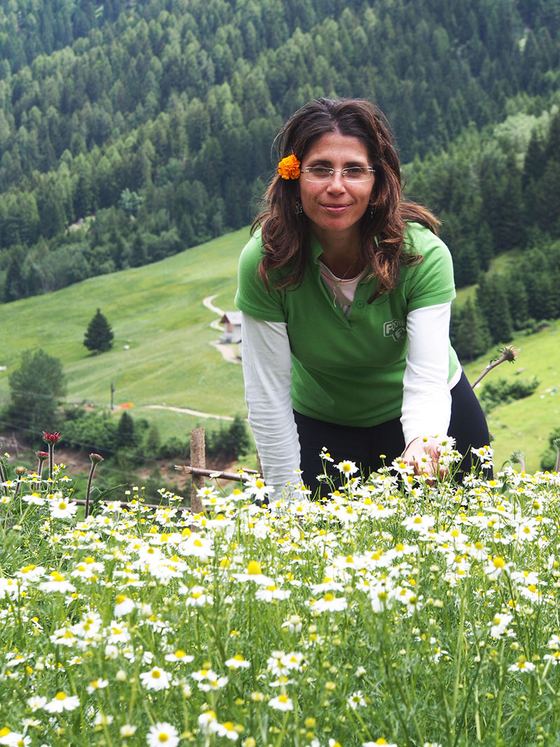
Azienda Agricola Erbevive
Trento (TN) · 0.4 km
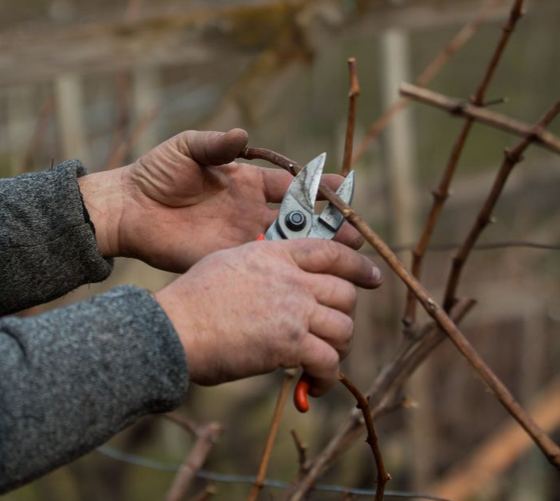
TENUTA GOTTARDI
Cembra Lisignago (TN) · 14.5 km
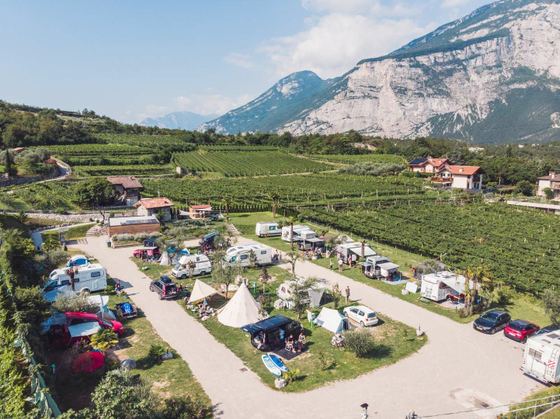
Camping Le Marocche
Cavedine (TN) · 16.1 km

Drena Resort
Drena (TN) · 17.9 km

Cristian Floriani - Pavimenti in Legno
Rovereto (TN) · 19.2 km
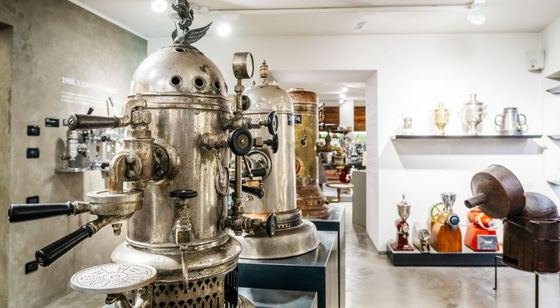
Torrefazione Caffè Bontadi
Rovereto (TN) · 20.5 km
