Before you go on
This site uses only what it needs to work: the language you choose, access to the members' area, and anonymous counts that tell us whether the search is answering well. For advertising campaigns we ask your permission, and without a yes nothing starts. See the full list.

A small hamlet in the municipality of Foligno crossed by streams and channels that once powered ancient mills, today an almost forgotten village of rare scenic charm.
Rasiglia is a hamlet within the municipality of Foligno, in the heart of Umbria, and it owes its identity not to the stone of its houses nor to the profile of the surrounding hills, but to water. Springs that emerge directly from the ground feed a network of open-air channels that runs through the village in every direction, flowing between the walls of houses, under small bridges, along paved lanes. Water here is not a decorative element added to the landscape: it is the very structure of the place, the reason Rasiglia exists where it does.
In the Middle Ages, this continuous and abundant supply of water made the hamlet a small production hub. The channels powered mills for grinding grain and fulling mills for processing cloth, activities that required a constant and reliable source of motive force. The village's architecture still reflects this vocation: buildings in local limestone are arranged along the waterways with a functional rather than ornamental logic, and the marks left by waterwheels and by the channels built to direct the current remain visible in the fabric of the buildings.
The surrounding territory belongs to the Umbrian-Marche Apennines, an area where groundwater rises to the surface with a regularity that has shaped human settlement since ancient times. Rasiglia lies just a few kilometres from Foligno, and yet the landscape around it has a scale and a quality of silence that belong to another measure of time. Woods of oak and hornbeam descend almost to the first houses, and the sound of running water is nearly constant in every season.
Unlike many Umbrian villages that have become fixtures of regional tourism, Rasiglia remained, until recently, in a state of relative isolation. Its resident population is small, and many of its buildings still bear the marks of a gradual abandonment that began in the second half of the twentieth century, when the depopulation of the countryside emptied many of the smaller settlements in the Apennine hinterland. This process has left the hamlet in a suspended state, neither restored nor entirely abandoned, which adds to the particular quality of its atmosphere.
The relationship between architecture and the natural element that one observes in Rasiglia is not the result of a landscape design, but of a slow layering in which every human intervention answered a concrete need. The channels were dug to turn the mill wheels, the bridges were built to cross them, the houses were raised wherever the space between one watercourse and the next allowed it. The result is a formal coherence that no deliberate planning could have produced.
NikonZ7II · CC BY-SA 4.0 — Wikimedia Commons
Certified Made in Italy businesses close to this place.
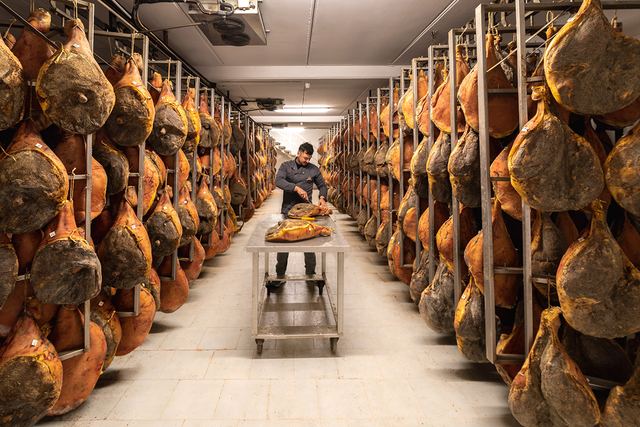
Norcineria Pizzoni Adelmo
Foligno (PG) · 1.3 km
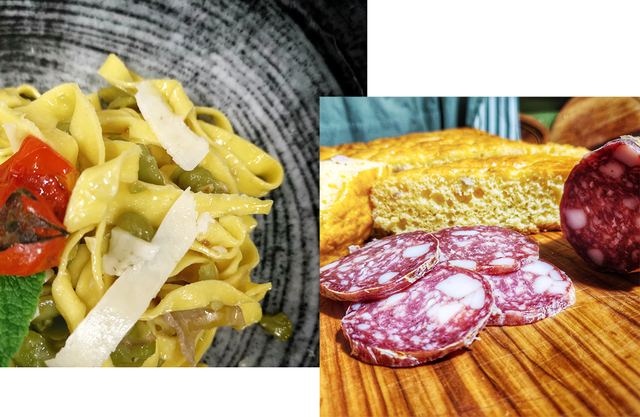
OLEVM
Montefalco (PG) · 8.1 km
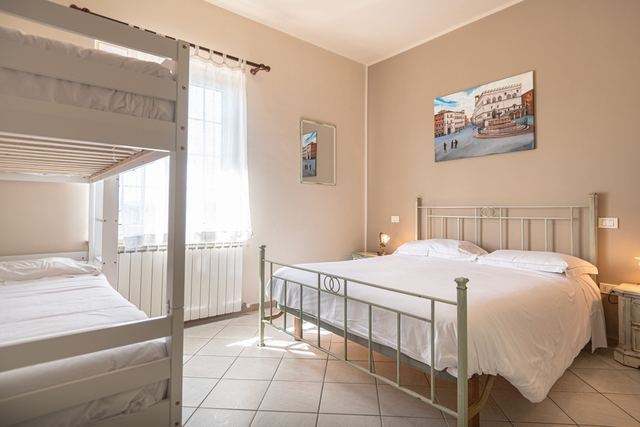
AGRITURISMO TORRE QUADRANA
Spello (PG) · 8.2 km
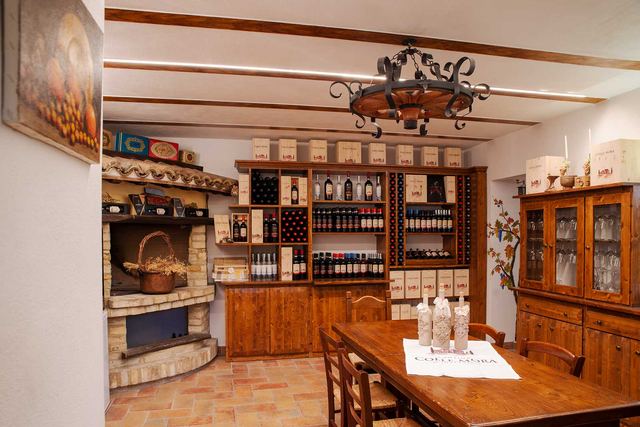
Cantina Colle Mora
Montefalco (PG) · 9.1 km
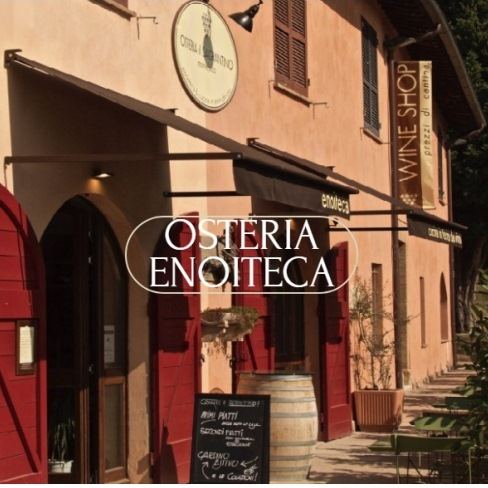
OSTERIA IL SAGRANTINO
Montefalco (PG) · 10.5 km
Hazienda Ristorante Cafe'
Cannara (PG) · 11.1 km