
Piobbico stands at the foot of Monte Nerone, one of the highest peaks of the Umbrian-Marche Apennines, amid a green mountain landscape suited to exploration on foot and at altitude.
Piobbico stands at 339 metres above sea level in the province of Pesaro e Urbino, set between two hills of quite different nature and scale: Montiego, which reaches 975 metres, and Monte Nerone, which climbs to 1526 metres and ranks among the highest peaks of the entire Umbrian-Marche Apennine chain. The village lies at the confluence of the Biscubio and Candigliano rivers, which meet at the centre of the settlement, and this double presence — water flowing below, rock rising above — defines the character of the landscape with almost geometric precision.
Monte Nerone does not merely dominate the Candigliano valley with its mass: it cuts into it, shapes it, runs through it. The slopes plunge in steep inclines that over time have yielded to the erosive force of water, forming ravines, gorges, natural arches and canyons carved into the limestone rock. It is this limestone origin that has made the massif an ongoing subject of study for geologists and paleontologists: the rock's stratification has over time yielded fossils and remains of ancient fauna, and the morphology of the relief retains a scientific legibility that few other areas of the Apennines can offer. The human history of the mountain overlaps with its natural history in equal density: Piceni, Etruscans and Romans left traces across these lands, and the medieval period added monasteries and convents that still dot the surrounding territory today.
The massif is shared among the municipalities of Apecchio, Cagli and Piobbico, all within the province of Pesaro e Urbino, but it is from Piobbico that access to the eastern slope is most direct. The village acts as a natural threshold to the ridges and woods of Monte Nerone, in a setting that has not yet come under pressure from large tourist flows. This is not a marginal detail: it means the landscape presents itself in its ordinary substance, without the mediations that elsewhere accompany the experience of the mountain. The views from the higher elevations change radically with the seasons — winter snow and summer vegetation offer two readings of the same relief — and in both cases silence is an integral part of what one perceives.
Diego Baglieri · CC BY-SA 4.0 — Wikimedia Commons
Certified Made in Italy businesses close to this place.
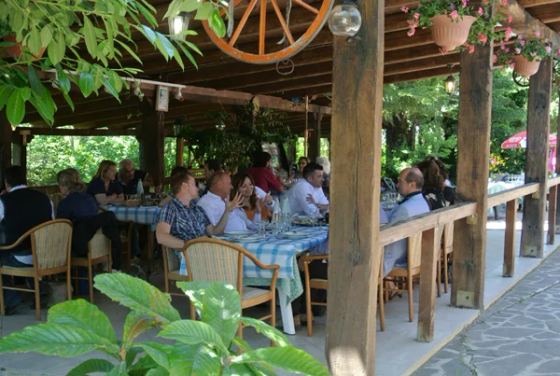
RISTORANTE DA BAFFONE
Gubbio (PG) · 13.8 km
Il Triangolo Pizzeria
Pietralunga (PG) · 17.4 km
LocAle Ristorante e Guesthouse
Pietralunga (PG) · 17.4 km
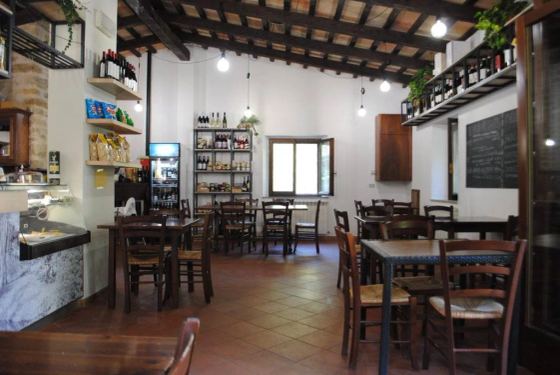
Mulino DiVINO
Frontino (PU) · 22.3 km
Crocché & CO
Città di Castello (PG) · 25.2 km
OSTERIA DEL BOTTACCIONE
Gubbio (PG) · 25.9 km
