Dicomano, a small municipality in the Mugello, holds documented memory of old local trades such as the bigherino, the panieraio and the bucataia, craft figures now vanished but recorded in school and municipal publications.
Dicomano lies in the eastern Mugello, at the exact point where the Comano stream flows into the Sieve. The land slopes down from the Apennines toward the valley floor through woods of beech, oak and chestnut, and the landscape still bears the marks of a rural civilisation that for centuries organised its existence around local resources. The origins of the settlement date back to the Bronze Age, as shown by the stratigraphic excavations carried out in the 1970s in the area known as cantiere Rosselli (the Rosselli excavation site), within the town centre, where the oldest layers of human presence lie buried beneath alluvial sediments and traces of craft activity from the modern era. This layering of human presence is the necessary premise for understanding how certain manual skills managed to take root and pass down through time.
Among the trades that shaped life in Dicomano well into the twentieth century, three figures stand out with particular clarity in collective memory: the bigherino, the panieraio and the bucataia. The bigherino worked wicker and plant fibres to produce ribbons and trimmings; the panieraio wove baskets and containers for household and agricultural use; the bucataia was the washerwoman who handled the laundry using techniques passed down from generation to generation, often along the banks of the streams that cross the territory. These three figures were not marginal: they were nodes in an economic system built on self-sufficiency, in which every rural community produced internally most of what it needed.
The record of these figures is entrusted to a book with a precise title: *Bigherino, panieraio, bucataia: mestieri e storie a Dicomano* (Bigherino, Basket-weaver, Washerwoman: Trades and Stories from Dicomano), produced by the local middle school and published by the Comune (municipality). The editorial project gathered first-hand accounts from those who had known or practised these trades, turning oral memory into written heritage. The book became part of the bibliography on old trades and craftsmanship in Tuscany curated by the Biblioteca del Consiglio regionale (Regional Council Library), as part of a systematic cataloguing effort also undertaken in response to regional law no. 15 of 5 March 1997, which established a list of activities at risk of disappearing across Tuscan territory — a list that numbers around a hundred entries.
What makes this Dicomano experience significant is not the rarity of the trades themselves, but the way a small community chose to preserve their trace. The school as a place for gathering memory, the Comune as publisher, the regional library as archive: three different institutions that found themselves carrying out a function that elsewhere has remained unfulfilled. The Mugello, a territory that underwent profound demographic change over the course of the twentieth century, preserves in this book a fragment of that material civilisation which time and depopulation have otherwise scattered.
Certified Made in Italy businesses close to this place.
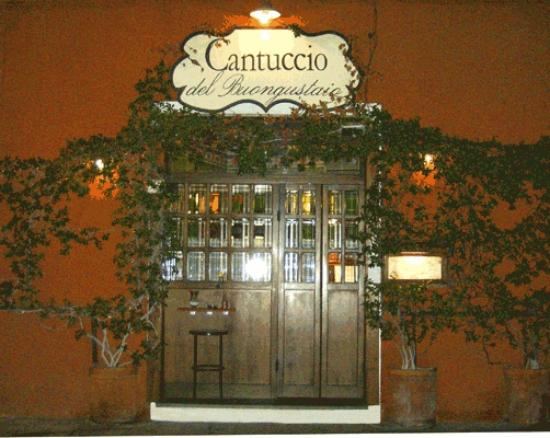
CANTUCCIO DEL BUONGUSTAIO
Pontassieve (FI) · 14.7 km
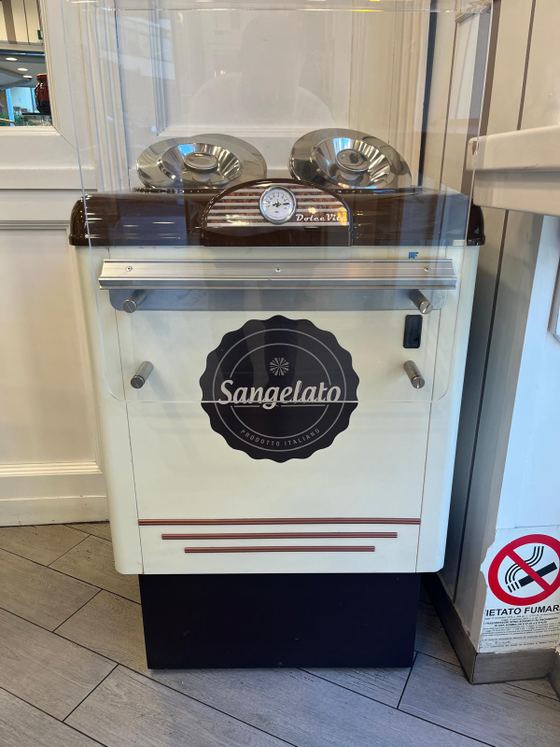
SANGELATO
Firenze (FI) · 23.3 km
CERE PER COTTO FIORENTINO
Firenze (FI) · 23.6 km
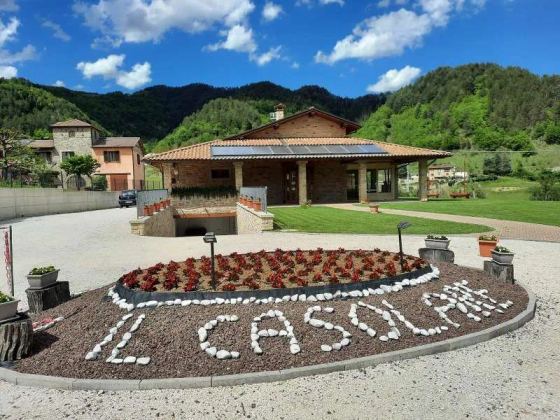
Ristorante Il Casolare
Marradi (FI) · 23.7 km
M.G.S. INTERNATIONAL
Firenze (FI) · 24.3 km
Il Barroccio Antica Osteria Firenze
Firenze (FI) · 25.2 km
