
Small village near Modena known for Lambrusco and Aceto Balsamico Tradizionale, set in a hillside landscape of vineyards and historic cellars. One of the stages on an Emilian food-and-wine itinerary away from the main centres.
Levizzano Rangone is a hamlet in the municipality of Castelvetro di Modena, occupying a hilltop ridge in the heart of the Lambrusco Grasparossa production area — an indigenous grape variety closely tied to this stretch of the Modena Apennines. The village lies a few kilometres from the main town, in a landscape where vine rows alternate with farmhouses and unpaved roads follow the contours of the hills rather than cutting across them. This is not a place built for tourism: it has remained, in substance, what it always was — a rural settlement with a long history and a productive vocation that has never ceased to be exercised.
Organised human presence in this territory is documented at least since 890, when records from the Abbey of Nonantola attest to the existence of a defensive structure in the area. Over the following centuries the village and its fortress passed through various ruling families: in 1342 Levizzano came under the dominion of Guglielmo and Gherardo Rangoni, the family from which the second part of the current name derives. The castle seen today is a fortified residence enclosed by walls, with the so-called Torre Matildica (Matilda's Tower) at its centre, connected to the feudal palace by an underground passage that can be visited on a guided tour. From the loggia on the main floor, the view opens onto the surrounding vineyards, establishing a direct relationship between architecture and agricultural landscape that has never been broken here.
Inside the castle is the ROSSO GRASPA museum — a museum of wine and rural society — which gathers agricultural tools, implements for working wood and grapes, and a body of photographic documentation on local farming life. The museum does not end within its walls: it also offers an outdoor route, described as a "museum outside the museum," which invites visitors to read the surrounding agricultural landscape as a direct extension of the evidence preserved inside. It is an approach that treats the territory as a primary source, not a decorative backdrop.
Wine production on this hillside centres on Lambrusco Grasparossa di Castelvetro DOC, a red grape wine with a firm structure and more pronounced tannins than other expressions of Lambrusco from Modena. The area's cellars also produce Aceto Balsamico Tradizionale di Modena DOP, whose ageing process in batteries of casks made from different woods requires a minimum of twelve years for the affinato designation and twenty-five for extravecchio. The two products share the same raw material — local grapes — but follow radically different paths, and their coexistence in this territory speaks precisely to the density of Emilia's productive tradition.
Levizzano Rangone does not feature on the region's main tourist circuits, and this marginality has preserved the village's proportions. Those who travel the road climbing from Castelvetro find a settlement where productive and residential functions still coexist without sharp separation, where the cellars remain part of the built landscape rather than converted structures. The Lambrusco Grasparossa fermenting in these hills carries with it the specificity of a soil and microclimate that no denomination can fully describe: it is best understood by being here, watching the vine rows in autumn as the leaves turn red and the air still carries traces of the harvest.
Patafisik · CC BY-SA 4.0 — Wikimedia Commons
Certified Made in Italy businesses close to this place.
PIZZERIA ANTONIO SORBINO
Castelnuovo Rangone (MO) · 5.1 km
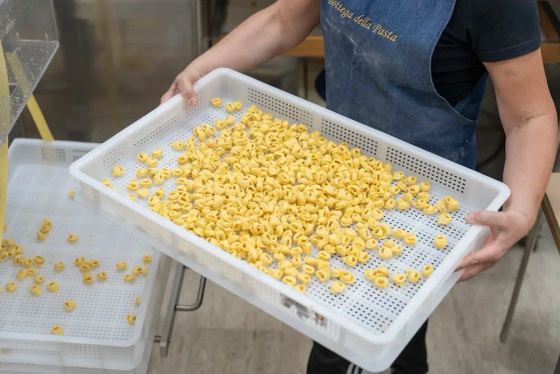
BOTTEGA DELLA PASTA DAL 1986
Formigine (MO) · 10.7 km
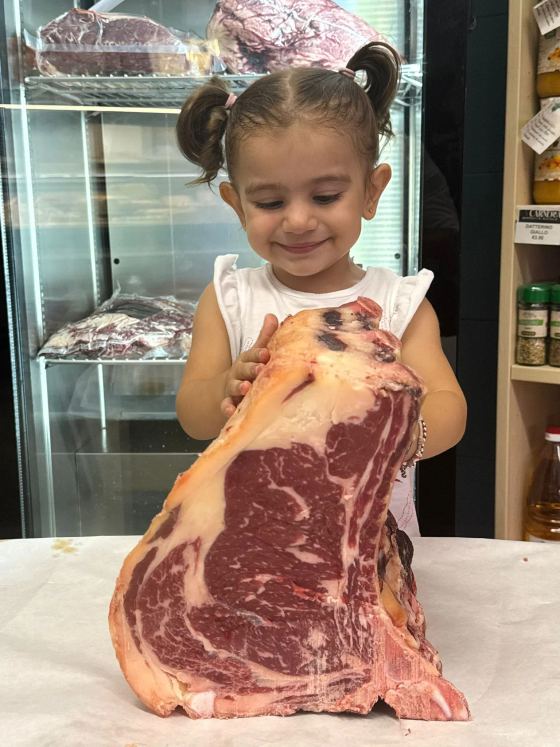
LA CARNERIA MAROTTA NICOLA
Valsamoggia (BO) · 11.2 km
PIZZERIA VESUVIANI - Il Vero Segreto Della Pizza
Modena (MO) · 12.2 km
Ristorante La Vecchia Filanda
Modena (MO) · 12.8 km
Ricevimenti La Vecchia Quercia
Serramazzoni (MO) · 13.4 km
