
Piegaro preserves a centuries-old glassmaking tradition, with blown-glass techniques rooted in the Middle Ages that still stand today as a distinctive artisan identity of the Umbrian territory.
Piegaro rises on a hill in the province of Perugia, amid the woods that slope down toward Lake Trasimeno and the valleys of southern Umbria. The town has ancient origins — an Umbrian settlement, then Etruscan, finally Roman under the name Plagarium — and still preserves a legible medieval layout in its walls, in the two access gates known as Porta Romana and Porta Perugina, in its narrow lanes and houses built of local stone. It is within this geographic and historical setting that, from the 13th century onward, one of central Italy's oldest glassmaking traditions took root.
The presence of glassmakers in Piegaro was no accident. The territory offered two resources essential to glass production: locally extracted silica sands, an indispensable raw material for the glass paste, and the surrounding woods, a source of timber to fuel the furnaces. This convergence of natural conditions turned the town into a production center active for centuries, where master glassmakers passed down their techniques — blown glass in particular — from generation to generation, through an apprenticeship that rarely left written records but was perpetuated through gesture and direct practice.
Blown glass demands a physical and temporal mastery difficult to put into words: the molten mass drawn from the crucible must be worked within minutes, turned on the blowpipe, shaped with the simplest of tools before the material loses its plasticity. In Piegaro this technique was not ornamental but part of everyday production, applied to household objects as much as to more elaborate forms. The craft's continuity held firm for a long time, even as the industrial transformations of the 19th and 20th centuries gradually stripped many similar artisan trades across the peninsula of their economic relevance.
Today the memory of this tradition is gathered and preserved at the Museo del Vetro (Glass Museum), which traces the stages of the craft, the tools used and the town's productive history. The museum stands as the convergence point for documentation that might otherwise scatter its fragments between local archives and oral memory. Piegaro thus remains a case where geography determined a vocation, and that vocation left a mark deep enough to survive its own decline.
LigaDue · CC BY-SA 4.0 — Wikimedia Commons
Certified Made in Italy businesses close to this place.
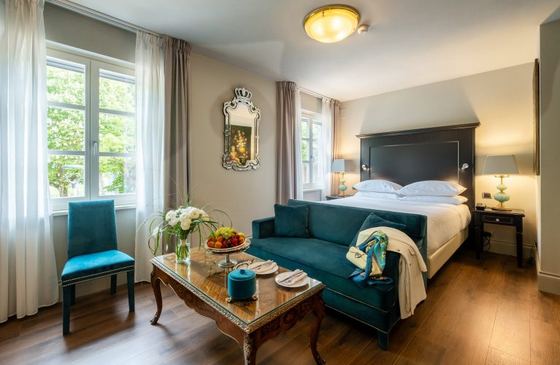
HOTEL VANNUCCI
Città della Pieve (PG) · 6.8 km
DA LAURA RISTORANTE
Città della Pieve (PG) · 6.9 km
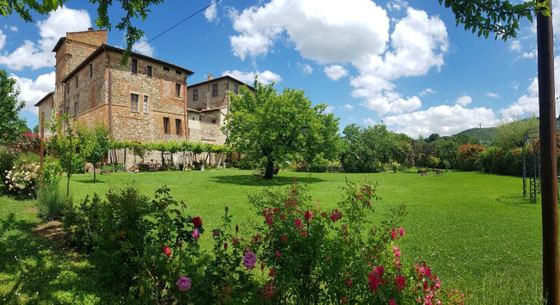
Agriturismo Abbazia Sette Frati
Pietrafitta (PG) · 9.9 km
Macelleria Ansano di Del Balio Luca
Citta'della Pieve (PG) · 10.1 km
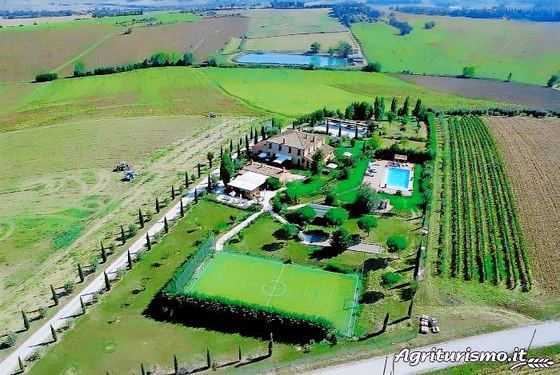
Agriturismo I Romiti
Villastrada Castiglione del Lago (PG) · 10.7 km
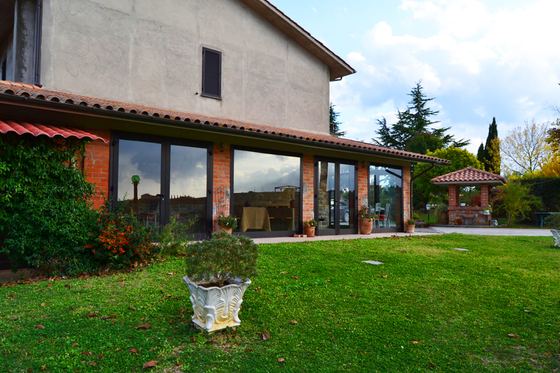
Azienda Agricola Bittarelli Patrizio
Castiglione del Lago (PG) · 11.6 km
