
Pretoro is one of the villages of Abruzzo where the tradition of wood carving is still alive, handed down by local artisans who work this raw material with age-old techniques.
Pretoro clings to the slopes of the Maiella like many villages in the province of Chieti: houses in limestone, narrow lanes, a horizon that climbs toward the massif's nearly three thousand metres. In this setting of Apennine mountain life, where for centuries resources were simply what the territory offered directly — stone, woodland, wool — timber represented a matter of necessity before it became one of expression. Beech, maple and hornbeam from the Maiella entered homes as tools, fittings, furnishings: objects that someone had to know how to make, and that someone else had to know how to repair.
The carving tradition in Pretoro developed within this closed economic logic, typical of Abruzzo's mountain villages until the mid-twentieth century. The master carvers were not figures set apart from the farming and shepherding community: they were often the same men who understood the cycle of the seasons, who knew which wood to cut and in which period of the year to keep it from splitting as it dried, which species best withstood the dampness of the stables, and which lent itself to fine work. This knowledge was never written down: it circulated through the workshop, through observation, through repetition.
What distinguishes the work of these artisans from plain carpentry is the presence of the decorative gesture: carving, precisely, which turns a smooth surface into a field of marks. Geometric motifs, plant forms, occasionally stylised animals — a formal repertoire that reflects pastoral influences and popular devotion, and that recurs across many objects of Abruzzo's material culture: distaffs, spindles, chests, frames. In Pretoro this practice has kept a continuity that in other centres was broken by the depopulation of the 1960s and 1970s.
The village today counts only a few hundred inhabitants, but the presence of artisans still active in carving remains documented. The craft is still passed on directly, from person to person, without the mediation of schools or formal institutes. It is a fragile way of transmission, exposed to interruption whenever a generation finds no one to take up what it has gathered. And yet it is also the very way that has allowed these techniques to survive for centuries, adapting without dissolving.
Zitumassin · CC BY 3.0 — Wikimedia Commons
Certified Made in Italy businesses close to this place.
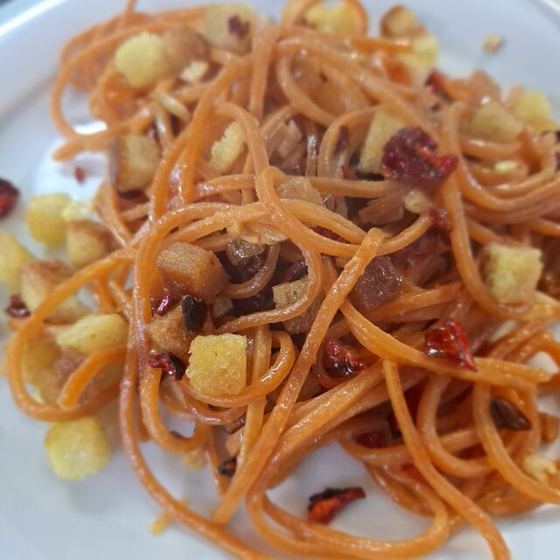
RISTORANTE LA TORRE DI PRETORO DI SALVATORE PATRIZIA
Pretoro (CH) · 0.1 km
BRIOPACK - packaging
Poggiofiorito (CH) · 14.4 km
mediaplus
Chieti (CH) · 16 km
AUTOCARROZZERIA ABRUZZESE DI DI PELINO GUIDO Srl
Castiglione A Casauria (PE) · 18.1 km
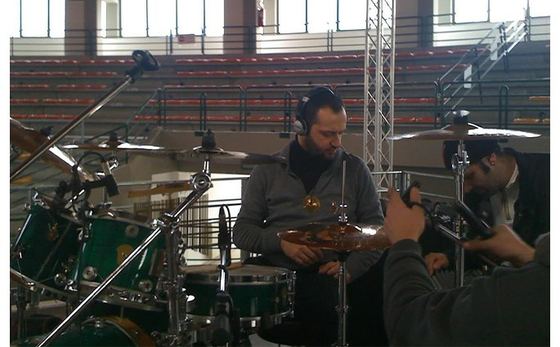
Il Paese Della Musica Lanciano e Pescara
Lanciano (CH) · 19.5 km
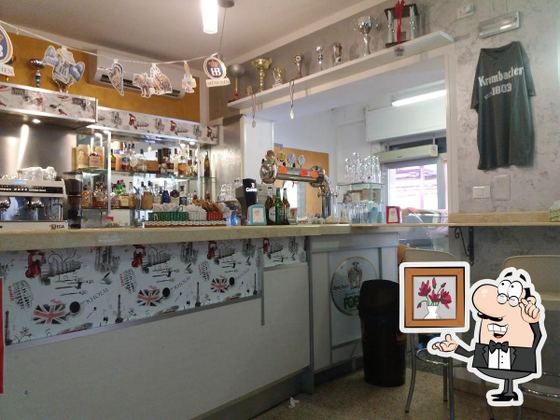
DIBA BAR
Lanciano (CH) · 20 km
