Before you go on
This site uses only what it needs to work: the language you choose, access to the members' area, and anonymous counts that tell us whether the search is answering well. For advertising campaigns we ask your permission, and without a yes nothing starts. See the full list.

A recognition system for Trentino's rural biodiversity that promotes small-scale traditional agricultural and food products, often tied to autochthonous varieties at risk of extinction. A food and wine heritage spread across the valleys and mountains of the province.
In the province of Trento there exists a recognition system unlike any other quality mark found in the Italian food landscape. The Sigilli del Trentino (Seals of Trentino) do not certify a standardised production process, nor do they guarantee minimum volumes: instead, they identify products at risk of disappearing — plant varieties, animal breeds, processing practices — whose survival often depends on a handful of farmers or breeders who have remained faithful to techniques passed down for generations in the Alpine valleys.
The project stems from a precise reading of the Trentino territory: a province where the agricultural modernisation of the latter half of the twentieth century progressively marginalised crops and livestock that were not industrially competitive, reducing cultivated biodiversity to a handful of high-yield varieties. The Sigilli intervene in this process by documenting and making recognisable what would otherwise remain invisible to the market. Among the protected products are ancient varieties of apples and cider pears, mountain-grown cereals such as spelt and rye, malga (mountain hut) cheeses made with milk from Rendena cattle, cured meats from pigs raised according to traditional methods, and chestnut and rhododendron honey gathered in specific areas of the province.
The Rendena deserves a separate mention: it is an autochthonous Trentino cattle breed, hardy and suited to high-altitude pastures, which had suffered a drastic decline in numbers over the course of the twentieth century. Its milk, rich in fat and protein, goes into the malga cheeses that the Sigilli help to promote, forging a direct link between the safeguarding of livestock biodiversity and that of cheesemaking. It is an example of how the system works through connections, not isolated categories.
What sets the Sigilli apart from other tools of territorial promotion is scale: these are almost always minuscule productions, tied to specific microclimates, to slopes exposed in a particular way, to altitudes that rule out any real possibility of commercial expansion. This structural limitation is also their reason for being. A sealed product cannot be replicated elsewhere without losing the conditions that define it, and this unrepeatability is precisely what the mark seeks to convey to those who go looking for it.
For those travelling through the valleys of Trentino — Val di Non, Vallagarina, Valle dei Laghi, Valsugana — the Sigilli offer a map that runs parallel to the conventional tourist one: not attractions to visit, but products to seek out at producers, local markets, village shops. It is a system that calls for a certain active curiosity, since distribution remains deliberately limited and rooted in its place of origin.
Franco Visintainer · CC BY-SA 3.0 — Wikimedia Commons
Certified Made in Italy businesses close to this place.
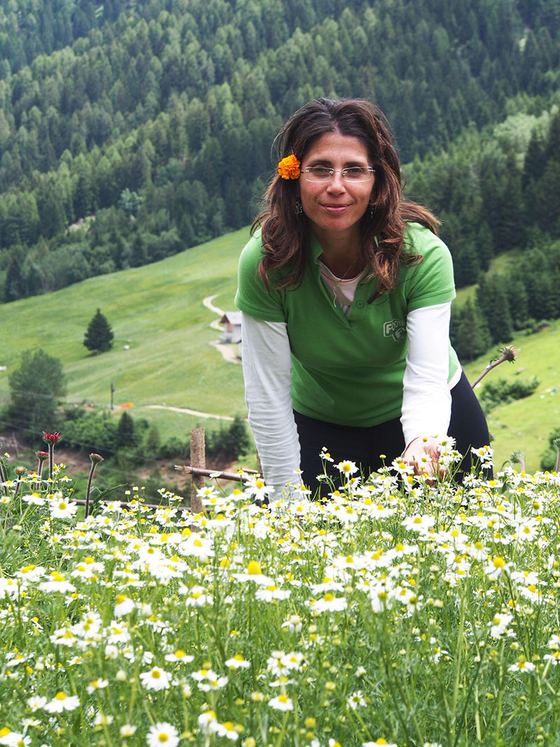
Azienda Agricola Erbevive
Trento (TN) · 0.4 km
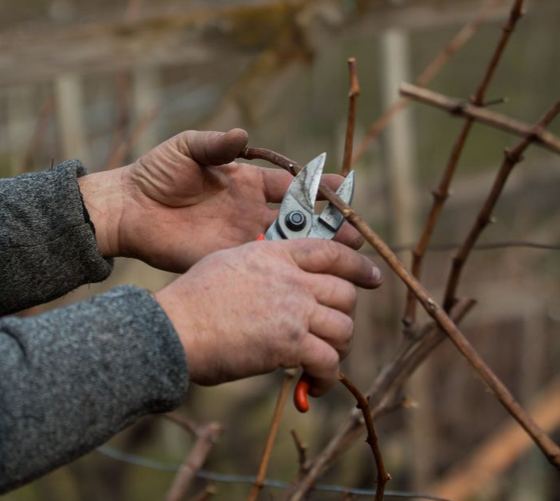
TENUTA GOTTARDI
Cembra Lisignago (TN) · 14.5 km
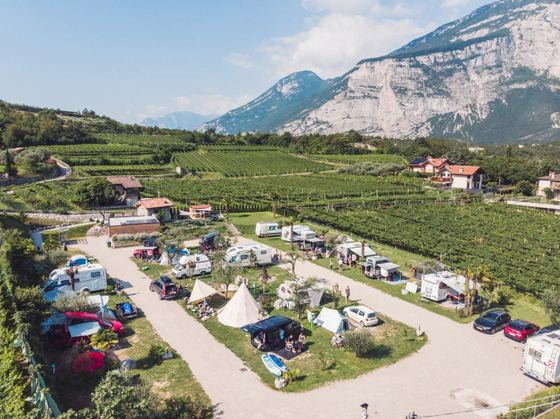
Camping Le Marocche
Cavedine (TN) · 16.1 km

Drena Resort
Drena (TN) · 17.9 km

Cristian Floriani - Pavimenti in Legno
Rovereto (TN) · 19.2 km
Torrefazione Caffè Bontadi
Rovereto (TN) · 20.5 km