
A medieval village at the foot of the Maiella, Guardiagrele is known both for its wrought iron and goldsmithing craftsmanship and for a solid local gastronomic tradition tied to the products of the mountain territory.
Guardiagrele sits 576 metres above sea level, on the eastern slope of the Maiella, in a position that connects the mountain directly with the Adriatic coastal plain. This double geographic identity — neither fully mountainous nor flat — has shaped over the centuries a composite material culture, where the products of shepherding and woodland blend with those of hillside farming. The village lies within the Parco Nazionale della Maiella (Maiella National Park) and is listed among the Borghi più belli d'Italia (the association of Italy's most beautiful villages): two recognitions that convey the measure of a territory long left on the margins of the main circuits.
The white stone of the Maiella is the material with which Guardiagrele was built, and Gabriele d'Annunzio, in his novel *Il trionfo della morte* (The Triumph of Death), called it precisely "the city of stone". That same stone appears in the façades of the Collegiata di Santa Maria Maggiore, in the layout of the alleyways and in the doorways of the artisan workshops that still work wrought iron and gold according to techniques handed down over generations. The continuity between making and dwelling is more visible here than elsewhere: the workshops are not museum reconstructions but places of active production, where the craft is practised with recognisable tools and gestures.
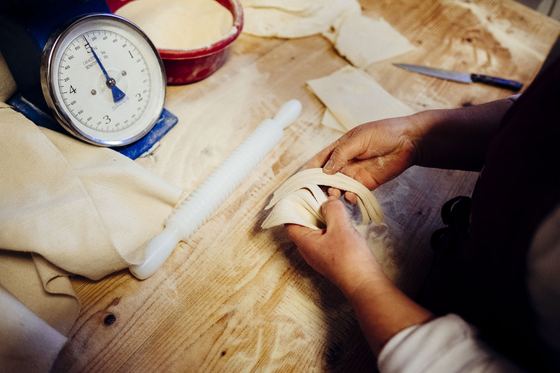
The village's gastronomic tradition draws on a precise repertoire. Handmade pasta — in particular maccheroni alla chitarra, prepared with the dedicated frame of metal strings that is itself a handcrafted object — represents the common thread of a cuisine that favours local raw materials: sheep meat, mushrooms from the Maiella undergrowth, mountain pulses. The cured meats produced in the Maiella area, including ventricina and soppressate, follow recipes that vary from town to town with minimal but tenaciously preserved differences.
Among the pastry products, the *Sise delle Monache* hold a distinctive place. This is a three-lobed cake made with choux pastry and custard cream, whose origin is traced back to the Poor Clare nuns who lived in the village's convent. The name, direct and free of euphemism, has remained unchanged over time. Some historic pastry shops in Guardiagrele still produce it according to the traditional recipe, and the cake has become over time one of the most recognisable gastronomic references of the entire province of Chieti.
The relationship between Guardiagrele and the Parco Nazionale della Maiella also defines the quality of the raw materials available in the surrounding territory. The massif, with its peak of over 2,700 metres at Blockhaus and a plant biodiversity among the richest in the central Apennines, provides aromatic herbs, black truffle, high-altitude honey and game. This availability has steered local cuisine toward preparations that highlight the product in its most direct form, without elaborations that alter its character. The result is a table that faithfully reflects the landscape surrounding it.
Da flow · CC BY-SA 3.0 — Wikimedia Commons
Certified Made in Italy businesses close to this place.
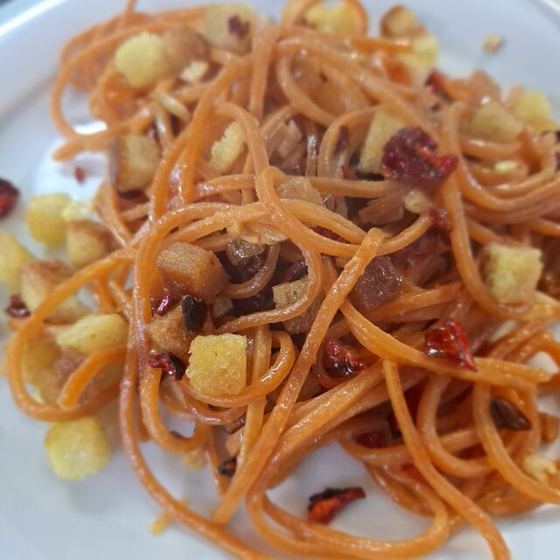
RISTORANTE LA TORRE DI PRETORO DI SALVATORE PATRIZIA
Pretoro (CH) · 6.9 km
BRIOPACK - packaging
Poggiofiorito (CH) · 9.5 km
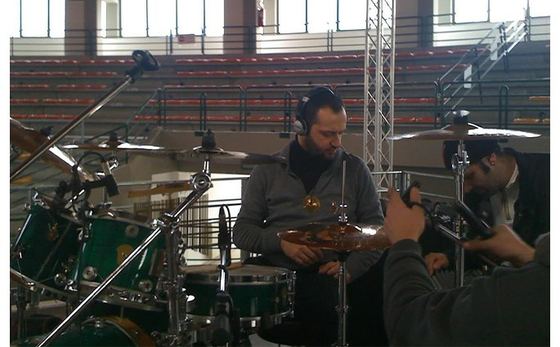
Il Paese Della Musica Lanciano e Pescara
Lanciano (CH) · 13.5 km
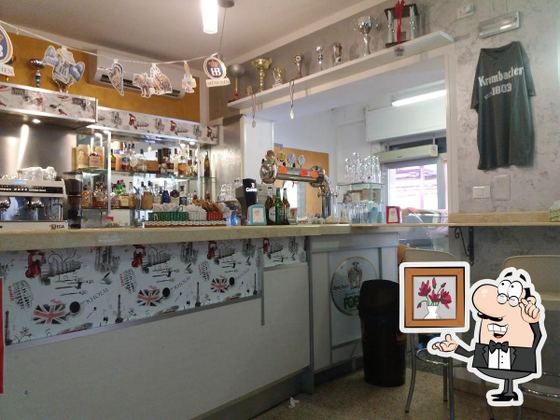
DIBA BAR
Lanciano (CH) · 13.6 km
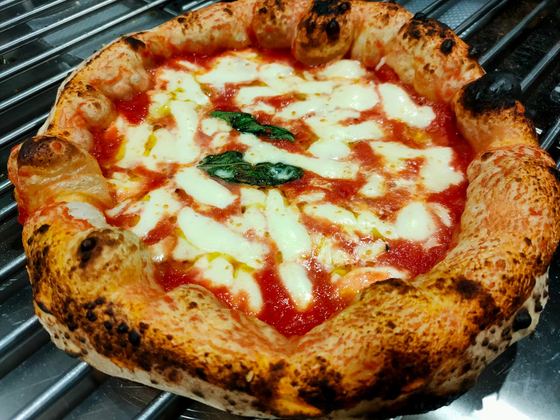
PIZZERIA NAPULE È
Lanciano (CH) · 14.9 km
Agriturismo Il Grappolo
Lanciano (CH) · 18 km
