Before you go on
This site uses only what it needs to work: the language you choose, access to the members' area, and anonymous counts that tell us whether the search is answering well. For advertising campaigns we ask your permission, and without a yes nothing starts. See the full list.

In Città di Castello, a centre is dedicated to miniature reproductions of traditional workshops and trades of the Alta Valle del Tevere, with detailed reconstructions of the region's living and working environments.
The Centro di Documentazione delle Tradizioni Popolari e delle Botteghe Artigiane dell'Umbria (Documentation Centre for Popular Traditions and Artisan Workshops of Umbria) is located in Garavelle, a kilometre from the historic centre of Città di Castello, housed within the complex of Villa Capelletti. The setting is a casa colonica (traditional farmhouse) — a choice made deliberately: it is the same type of building that for centuries contained the lives and trades the museum sets out to preserve. Among the first examples in Italy of a systematic collection of objects tied to rural tradition, the Centre has over time built up a material archive of Umbrian rural culture that extends well beyond a simple display of tools.
The visit unfolds across several levels of the building, following the functional logic of the original farmhouse. On the ground floor stands the blacksmith's workshop, with its tools of the trade; the stables hold equipment for the care of animals; the room once used as an olive press contains amphorae for oil, terracotta jars, a stone mill and an eighteenth-century press. The upper floor houses the kitchen with its stone hearth and everyday utensils, a bedroom reconstructed with period furniture, and an attic gathering further materials. Each room is arranged as though still in use: not a display case, but a room stopped in time.
Alongside the full-size objects, the Centre presents a collection of miniature reproductions of artisan workshops and working environments, covering the whole of the Alta Valle del Tevere and Umbria more broadly. The miniatures render the arrangement of spaces, the hierarchy of tools, the density of interiors: a complementary way of reading, alongside the originals, useful for grasping proportions and relationships that full scale sometimes fails to reveal in their entirety.
The Tifernate territory — a name recalling the city's ancient Roman name, Tifernum Tiberinum — has historically woven together agriculture, craft and small-scale trade along the course of the Tiber. The Centre documents this layering: the blacksmith, the miller, the farmer are not separate figures but parts of a local economic system that relied on proximity and the direct transmission of knowledge. The objects preserved at Garavelle belong for the most part to the 18th and 19th centuries, with some older pieces, and bear witness to a continuity of practices that was interrupted over the course of the twentieth century by mechanisation and the depopulation of the countryside.
Città di Castello is known chiefly for its artistic heritage — the Pinacoteca Comunale, the Collezione Burri, and the medieval and Renaissance traces of its historic centre. The Documentation Centre occupies a different place within this landscape: not art as a product of excellence, but material culture as collective sediment. The farmhouse at Garavelle preserves what does not normally survive: everyday objects, worn, repaired, handed down, that rarely enter public collections and yet define with precision the concrete conditions of an era.
Livioandronico2013 · CC BY-SA 4.0 — Wikimedia Commons
Certified Made in Italy businesses close to this place.

SKYECAFE
Città di Castello (PG) · 1 km
Crocché & CO
Città di Castello (PG) · 1.1 km
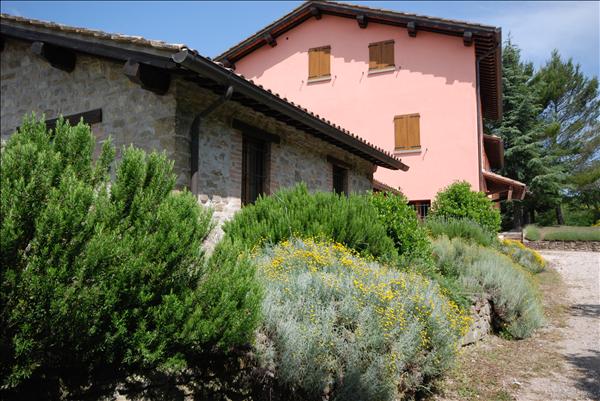
Agriturismo Monterosello
Città di Castello (PG) · 6.1 km

BAR RISTORANTE DAL TOGO CANOSCIO
Città di Castello (PG) · 8.6 km
Il Triangolo Pizzeria
Pietralunga (PG) · 16 km
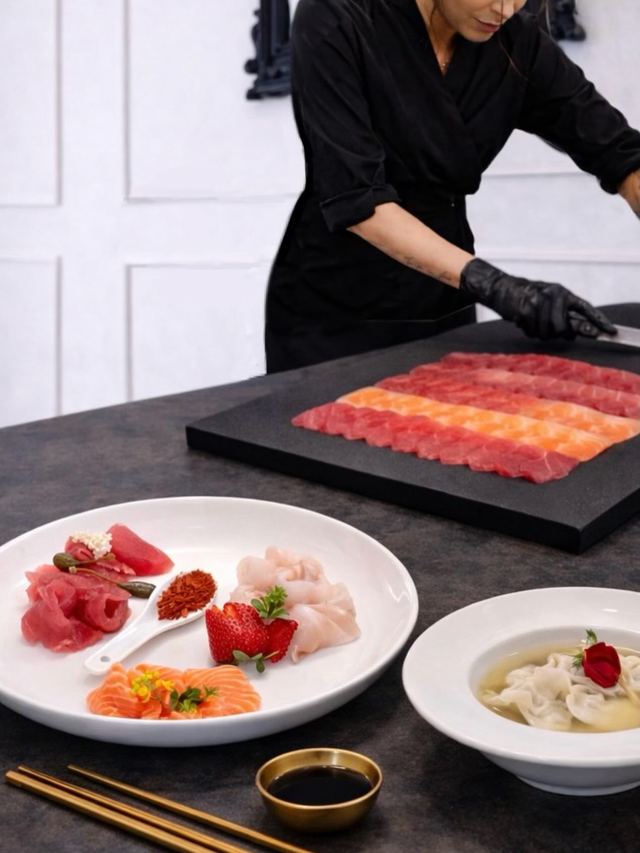
Shiso restaurant
Umbertide (PG) · 18.9 km