
Perched on a rocky spur in the hills of the eastern Maiella, Roccascalegna castle overlooks a small village of just over a thousand inhabitants and offers an unusual panoramic point between the Sangro and Aventino valleys.
The limestone spur on which Roccascalegna castle stands is not a man-made foundation: it is the rock itself, rising from the hills of the eastern Maiella, that determined the shape and destiny of this settlement. The medieval structure grafts onto the rock face with an almost organic continuity, so much so that viewed from below it is difficult to tell where the natural stone ends and the masonry begins. The village of Roccascalegna, in the province of Chieti, has just over a thousand inhabitants and unfolds at the foot of this rocky outcrop, in a territory set between the Sangro and Aventino valleys.
The castle's origins date back to the Middle Ages, a period in which control of the internal communication routes of Abruzzo made any height dominating a valley strategically important. The position guaranteed oversight of a stretch of territory that connected the Adriatic side with the Apennine hinterland. Over the centuries the structure underwent transformations and partial abandonment, until restoration work made it possible to visit again. What remains today is a composite testimony: walls, towers and interior spaces bearing the marks of different eras layered without interruption.
The landscape that opens up from the top of the rock reveals the deep geography of inland Abruzzo: olive groves and vineyards laid out along the hillsides, the profile of the Maiella in the background, the valley floors traced by the two rivers. From this height, the human scale of the territory — the fields, the rooftops of the village, the white roads — takes on a proportion that maps cannot convey. The castle also serves as a starting point for excursions into the surrounding territory, where the agricultural landscape alternates with woods and small towns that share with Roccascalegna the same distance from the major regional itineraries.
Alongside the built history runs an oral tradition that has crossed the centuries. Local legend links the castle to the figure of a tyrannical baron, credited with a feudal right over the first night of the village's brides — a variant of the *ius primae noctis* narrative widespread in many areas of central-southern Italy. According to the story, the baron met his death at the hands of one of the grooms, and since then his ghost is said to wander the walls. Stories of this kind, regardless of their historical accuracy, say something precise about the relationship communities had with places of power: the castle was not only a defensive structure, but also the physical symbol of an authority experienced as arbitrary.
Roccascalegna remains a place that geography has kept on the margins of the main flows, and this marginality has preserved both the landscape and the fabric of the village. The castle, visible from afar along the roads that cross the Sangro valley, continues to mark the territory with the same presence it has held for centuries — not as a museum piece, but as an element still present in the shape of the place.
VerdianaG · CC BY-SA 4.0 — Wikimedia Commons
Certified Made in Italy businesses close to this place.
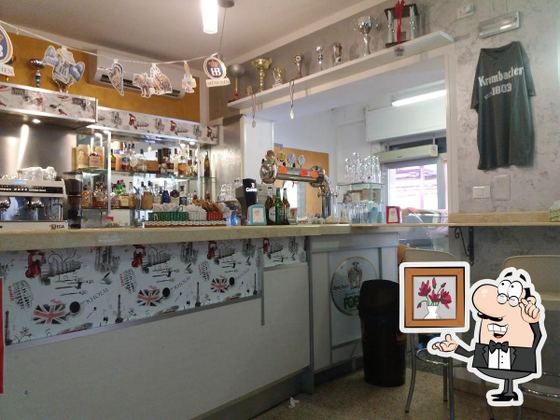
DIBA BAR
Lanciano (CH) · 17.3 km

PIZZERIA NAPULE È
Lanciano (CH) · 17.8 km
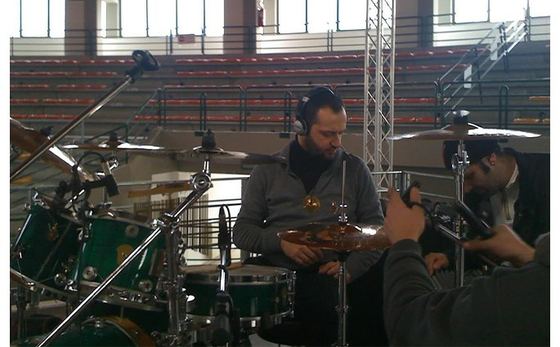
Il Paese Della Musica Lanciano e Pescara
Lanciano (CH) · 19.2 km
BRIOPACK - packaging
Poggiofiorito (CH) · 20.5 km
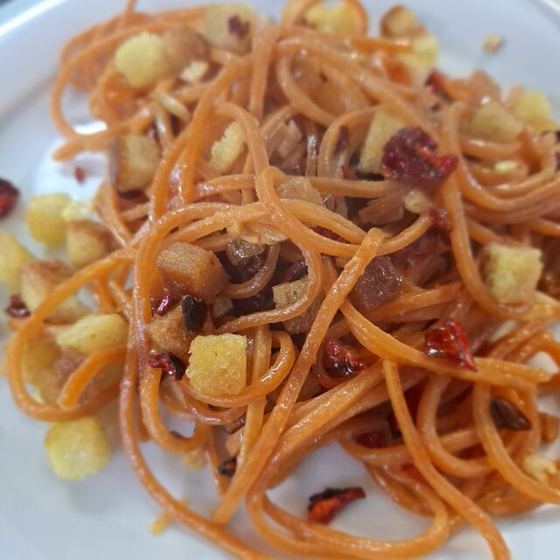
RISTORANTE LA TORRE DI PRETORO DI SALVATORE PATRIZIA
Pretoro (CH) · 21.9 km
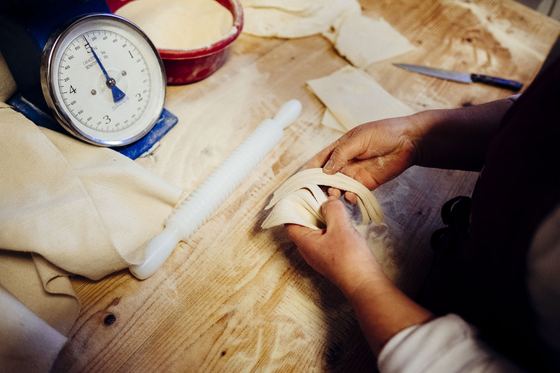
Agriturismo Il Grappolo
Lanciano (CH) · 24.8 km
