
Between Châtillon and Pont-Saint-Martin, and at the entrance to the Lys Valley, 80% of Aosta Valley's chestnut trees are concentrated, yielding a niche autumn fruit that is a recurring ingredient in local traditional cooking.
In the lower Aosta Valley, where the region stops being alpine and turns into something more temperate, the chestnut tree occupies a precise belt of the territory. Between Châtillon and Pont-Saint-Martin, and along the entrance to the Lys Valley — in the municipalities of Lillianes, Perloz and Pont-Saint-Martin itself — around eighty per cent of the region's chestnut trees are concentrated. This is no random figure: it is the direct consequence of a microclimate that, at these altitudes and in this exposure, allows *Castanea sativa* to thrive where the rest of the Aosta Valley would not permit it.
The Lys torrent flows down from the Monte Rosa range and crosses a valley floor that, compared to the great surrounding alpine valleys, retains milder temperatures and enough humidity to sustain chestnut groves. The woods are not continuous stretches as in Piedmont or Tuscany, but compact clusters, often tied to individual stone villages, where harvesting has historically had a communal character. Part of this tradition survives: the *gra*, traditional structures for drying the fruit, are still present in some settlements of the area, evidence of a rural economy that turned chestnuts into flour, a long-keeping winter staple.
In traditional Aosta Valley cooking, the chestnut is not a side ingredient. It goes into soups, accompanies polenta, and in some local preparations is paired with the region's cheeses. It is a small-scale product — the Aosta Valley has never aspired to compete with Italy's great chestnut-growing denominations — but it is precisely this modest scale that has preserved harvesting and processing practices lost elsewhere under the pressure of standardisation.
The narrow growing area also has a landscape dimension. In autumn, when the chestnut trees turn yellow and brown, the belt between Pont-Saint-Martin and the innermost villages of the Lys Valley takes on a colouring different from that of the dominant conifer forests higher up. It is a shift in colour that signals, even before one knows it, that one has entered a transition zone — no longer the Po plain, not yet high mountain — where subsistence farming has left traces still legible in the land.
Jeanne Griffin · CC BY-SA 4.0 — Wikimedia Commons
Certified Made in Italy businesses close to this place.
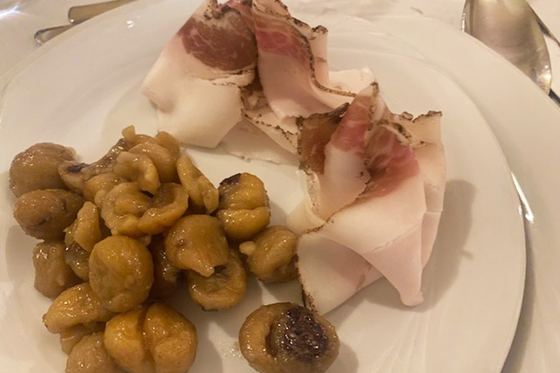
RISTORANTE DEL SANTUARIO
Graglia (BI) · 11.7 km
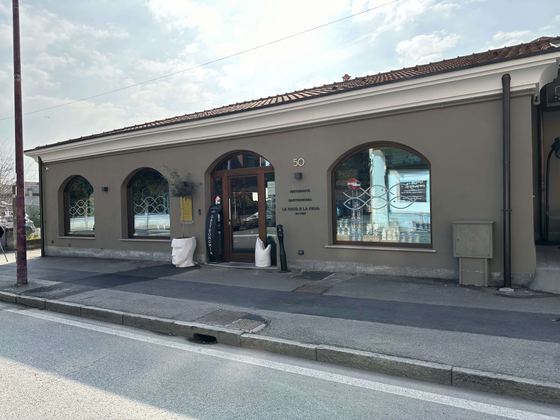
Ristorante La Rava E La Fava
Ivrea (TO) · 15.5 km
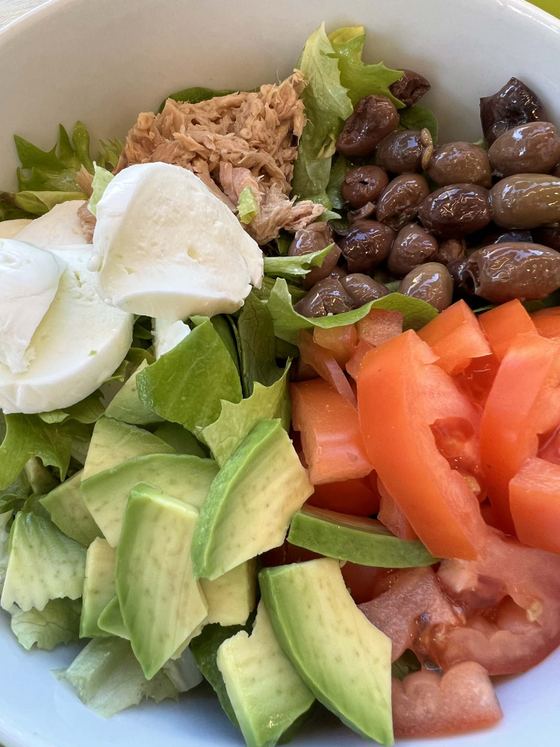
Papi - I Sapori Dell’Orto Di Patrizia E Pino
Ivrea (TO) · 15.6 km

VISO TOP
Banchette (TO) · 16.7 km

BERGO pneumatici - Centro SuperService
Biella (BI) · 17.3 km
Casa Della Bomboniera Di Garda Maria Teresa
Ivrea (TO) · 18.9 km
