
A walking itinerary retracing the places linked to the writer Antonio Fogazzaro through the Vicenza valleys, among villages, villas and hillside landscapes little touched by mass tourism.
Tra la Val Chiampo e la Val d'Agno, nel tratto di Prealpi vicentine che scende verso la pianura senza mai perdersi in essa, esiste un percorso a piedi che porta il nome di due uomini legati da sangue e da una comune fedeltà a questi luoghi: Antonio Fogazzaro, scrittore vicentino tra i più letti nell'Italia di fine Ottocento, e il marchese Giuseppe Roi, suo pronipote, che ha dedicato parte della propria vita a custodire e diffondere la memoria culturale del Veneto. Il cammino che ne porta i nomi collega Montegalda, nella pianura a sud di Vicenza, a Tonezza del Cimone, sull'altopiano prealpino, attraversando un territorio che raramente compare nelle mappe del turismo organizzato.
Il percorso è il primo nato all'interno della rete dei Cammini Veneti, promossa dall'Associazione Cammini Veneti con il contributo della Regione Veneto, ed è frutto del lavoro di un gruppo di volontari che conoscono il territorio palmo a palmo. Questa origine non istituzionale si percepisce nel carattere del tracciato: non una via costruita per il visitatore, ma un filo che segue la logica interna del paesaggio, passando per borghi minori, ville di campagna, tratti boscosi e fondovalle ancora segnati dall'economia rurale. Le ville che il percorso incontra non sono monumenti isolati ma edifici ancora inseriti nel loro contesto agricolo, come lo erano quando Fogazzaro le frequentava e le trasformava in scenari dei suoi romanzi.
Il paesaggio che accompagna il camminatore è quello delle colline vicentine nella loro forma più discreta: versanti coperti di bosco misto, piccoli centri storici dove l'architettura veneta minore — portici, corti, oratori campestri — si affianca senza stridore agli insediamenti più recenti. La Val d'Agno, che ospita tra l'altro Valdagno, conserva tracce di un passato industriale tessile che ha modellato il territorio senza cancellarne la struttura preesistente. Più in quota, avvicinandosi a Tonezza del Cimone, il paesaggio si apre e il bosco lascia spazio a praterie e a vedute sull'altopiano di Tonezza, dove l'aria cambia consistenza e la pianura padana appare in lontananza come un'astrazione geometrica.
Il cammino si percorre in più tappe, con una struttura che consente di modulare il ritmo secondo le proprie possibilità. Non richiede attrezzatura alpinistica né preparazione tecnica specifica, ma chiede attenzione al territorio e disponibilità a rallentare. È in questa lentezza che il senso del percorso si rivela: non nell'accumulo di mete, ma nella capacità di leggere un paesaggio che ha stratificato secoli di presenza umana senza mai imporsi con monumentalità.
Between Val Chiampo and Val d'Agno, in the stretch of the Vicenza foothills that descends towards the plain without ever losing itself in it, there is a walking route bearing the names of two men bound by blood and by a shared devotion to these places: Antonio Fogazzaro, a Vicenza-born writer among the most widely read in Italy at the end of the nineteenth century, and the marquis Giuseppe Roi, his great-great-nephew, who dedicated part of his life to preserving and spreading the cultural memory of the Veneto. The path bearing their names connects Montegalda, on the plain south of Vicenza, to Tonezza del Cimone, on the foothill plateau, crossing a territory that rarely appears on the maps of organised tourism.
The route is the first to emerge within the network of Cammini Veneti (Venetian Walks), promoted by the Associazione Cammini Veneti (Venetian Walks Association) with the support of the Veneto Region, and is the result of the work of a group of volunteers who know the territory inch by inch. This non-institutional origin can be felt in the character of the trail: not a way built for the visitor, but a thread that follows the landscape's own inner logic, passing through minor villages, country villas, wooded stretches and valley floors still marked by a rural economy. The villas the route encounters are not isolated monuments but buildings still set within their agricultural surroundings, just as they were when Fogazzaro frequented them and turned them into settings for his novels.
The landscape accompanying the walker is that of the Vicenza hills in their most understated form: slopes covered in mixed woodland, small historic centres where minor Venetian architecture — porticoes, courtyards, rural chapels — sits without friction alongside more recent settlements. Val d'Agno, home among other places to Valdagno, retains traces of an industrial textile past that shaped the territory without erasing its earlier structure. Higher up, approaching Tonezza del Cimone, the landscape opens out and the woods give way to meadows and views over the Tonezza plateau, where the air takes on a different quality and the Po Valley appears in the distance like a geometric abstraction.
The walk is covered in several stages, with a structure that allows the pace to be adjusted to one's own capabilities. It requires no mountaineering equipment or specific technical preparation, but it does ask for attention to the territory and a willingness to slow down. It is in this slowness that the meaning of the route reveals itself: not in the accumulation of destinations, but in the ability to read a landscape that has layered centuries of human presence without ever imposing itself with monumentality.
Unknown photographer · Public domain — Wikimedia Commons
Certified Made in Italy businesses close to this place.
PASTICCERIA DIRUPO
Chiampo (VI) · 11.2 km

Ambulatorio Veterniario San Francesco Dott. Maimeri Daniele
Badia Calavena (VR) · 13.3 km

LOCANDA 61
Zane (VI) · 15.6 km

Vino Quotidiano
Thiene (VI) · 18 km

Sartoria Pasinato
Vicenza (VI) · 22.7 km
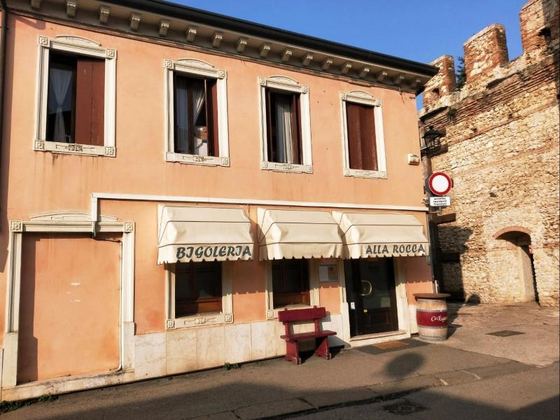
Bigoleria Alla Rocca
Soave (VR) · 24.7 km
