Before you go on
This site uses only what it needs to work: the language you choose, access to the members' area, and anonymous counts that tell us whether the search is answering well. For advertising campaigns we ask your permission, and without a yes nothing starts. See the full list.

Small Venetian ateliers where artisans hand down the art of the papier-mâché mask, a craft bound to the Carnival tradition and the theatrical culture of the Serenissima. Visiting them means witnessing, first hand, a centuries-old process still practised in the calli.
In the urban fabric of Venice, where the pressure of mass tourism has steadily eroded local production, a handful of workshops survive as living laboratories of a codified craft. These are the botteghe of the *mascareri* (mask-makers) — a term the Serenissima officially recognised in the 15th century as an autonomous artisan category — and their work still consists, today, in shaping papier-mâché masks according to procedures that have undergone no substantial change over the centuries.
The technique begins with layers of dampened paper, laid with precision over plaster moulds that reproduce the canonical faces of Venetian tradition and the Commedia dell'Arte: the Bauta, the Moretta, the Pantalone, the Zanni, the Arlecchino. Once dry, the shell is removed from the mould, trimmed, carefully sanded and finally handed over to painted decoration, which may remain understated or be enriched with gold leaf, pigments inspired by the pictorial cycles of eighteenth-century Venice — Tiepolo among the most cited references by the masters of the trade — or hand-applied plastic elements. Every stage demands patience: papier-mâché cannot be rushed.
One workshop that best embodies this continuity is the Bottega dei Mascareri of brothers Sergio and Massimo Boldrin, open at the foot of the Ponte di Rialto (Rialto Bridge) since 1984. Their masks have entered Italian and international collections, been used in film productions and for the California Shakespeare Festival, and the Tiepolo-inspired decorations applied to papier-mâché represent an innovation the Boldrin brothers claim as their own. The workshop has remained in the same spot for over forty years — in contemporary Venice, a fact that carries the weight of an anomaly.
The origins of this craft reach further back than the carnival tradition alone might suggest. The earliest evidence of masks in the Venetian calli (lanes) dates to the 13th century, when — according to chronicles of the time — women from Constantinople introduced the practice of covering the face in public, a custom that struck Doge Enrico Dandolo enough to warrant explicit mention. Over the centuries, the Venetian mask took on different roles: an instrument of social anonymity, a theatrical accessory, an object of representation, and finally, with the revival of Carnival in 1979 after decades of interruption, a handcrafted piece destined for collecting and the cultural market.
What sets these workshops apart from industrial production — which does exist, fed by imports of mass-produced objects — is the traceability of the gesture. In a Venetian papier-mâché workshop, every mask bears the marks of the hands that built it: minimal irregularities in the surface, non-standardised colour choices, proportions that vary slightly from one piece to the next. It is this controlled variability, not serial perfection, that defines the value of the piece. Some workshops pair mask-making with the tailoring of eighteenth-century costumes, reconstructing a complete imagery that points directly back to the visual culture of the Republic of Venice.
Didier Descouens · CC BY-SA 4.0 — Wikimedia Commons
Certified Made in Italy businesses close to this place.
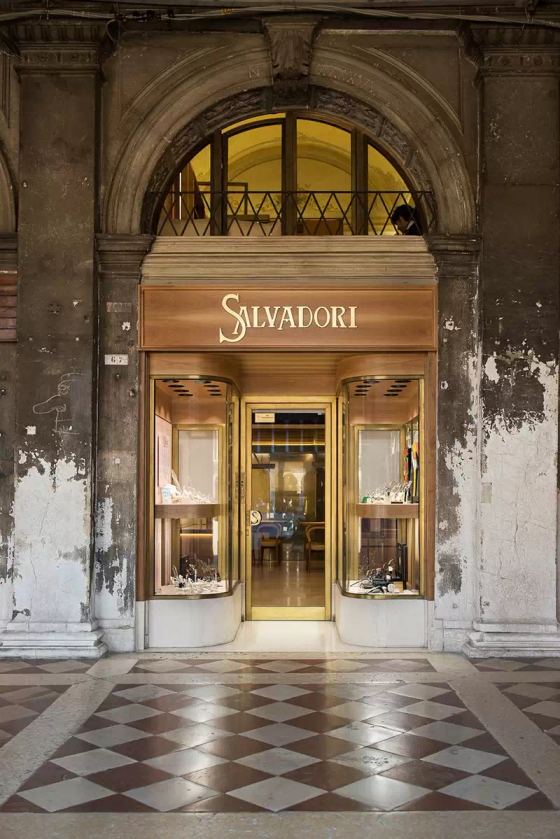
Salvadori Diamond Atelier
Venezia (VE) · 3.8 km
TOWER RISTORAZIONE DONAZZON ACHILLE
Venezia (VE) · 8.8 km
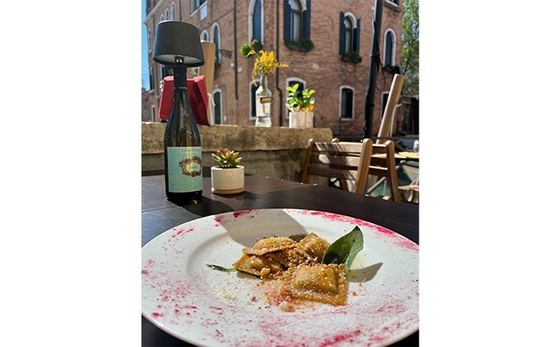
TRATTORIA ALLE VIGNOLE - I SAPORI DELLE VIGNOLE
Venezia (VE) · 9.7 km
OSTERIA CUCCAGNA
Mestre (VE) · 11.4 km
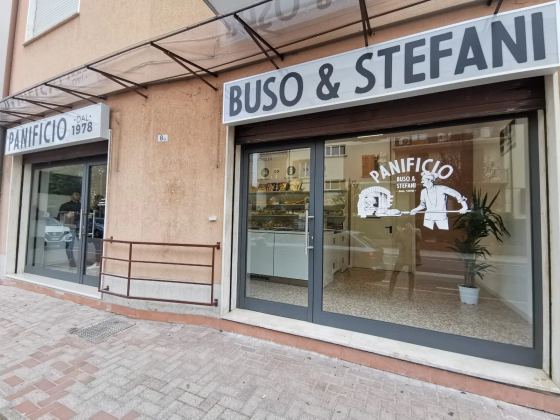
PANIFICIO BUSO&STEFANI
Venezia (VE) · 11.9 km
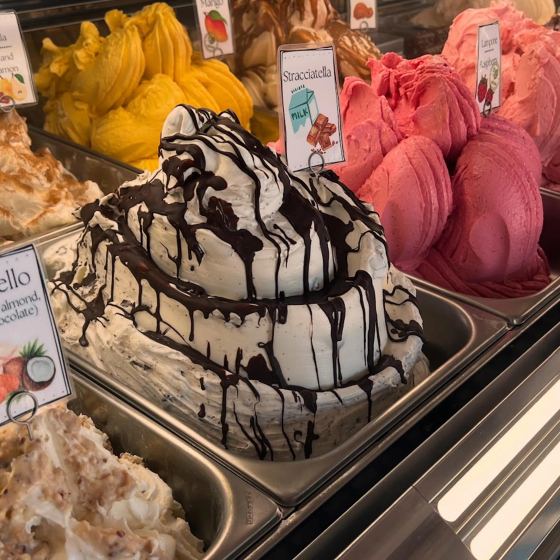
Gelateria Artigianale Da Geremia
Venezia (VE) · 12.3 km