
Small town in the Valsugana nicknamed 'the little Venice of Trentino' for the canal running through its historic centre, recognised among the Borghi più Belli d'Italia in 2023.
The Valsugana is one of those geographic corridors that alpine Italy has always used as a hinge: a furrow carved by the Brenta river between the mountains of Trentino and the plains of the Veneto, travelled for centuries by merchants, armies and pilgrims. Borgo Valsugana sits exactly at this point of transit, some forty kilometres from Trento, and its history is largely the history of those who stopped here long enough to build something lasting.
The historic centre still bears the marks of that mercantile prosperity: the porticoes lining the main streets, the noble palazzi with frescoed façades, the compact urban fabric that reveals deliberate planning rather than haphazard growth. It is this balance between form and function — between the demands of trade and the ambitions of display — that gives the borgo (historic town) an architectural coherence formally recognised by the Borghi più Belli d'Italia (Italy's Most Beautiful Villages) association in January 2023, which added Borgo Valsugana to its list following an assessment based on criteria of urban quality and conservation of the historic fabric.
What sets the borgo apart among Trentino's alpine towns is the artificial canal that runs through its heart. The water flows through the built-up centre alongside the houses, creating perspectives in which the reflection of the façades overlaps with stone and plaster: hence the comparison with the water towns of the Veneto that gave rise to the nickname "little Venice of Trentino". The comparison is deliberately hyperbolic, but it captures something real: the presence of the canal changes the perception of the urban space, introduces a different rhythm into the act of walking through it, and is a reminder that water, in these territories, has never been mere scenery but infrastructure.
The position along the Valsugana has also meant exposure. The twentieth century left deep traces in this valley, a theatre of fighting during the First World War, and the borgo had to rebuild parts of itself after the damage of the conflict. What can be seen today is therefore a layered historic centre, in which continuity with the medieval and Renaissance past coexists with more recent interventions, without compromising the overall reading of the place.
Walking beneath the porticoes of Borgo Valsugana means passing through a place that has managed to keep its function as a living centre — not a museum, not a stage set — while still preserving the memory of its origins. The valley continues to be an axis of connection, the borgo continues to be a place to pause: some geographies resist the centuries with a tenacity that needs no explanation, only observation.
Pottercomuneo · CC BY-SA 4.0 — Wikimedia Commons
Certified Made in Italy businesses close to this place.
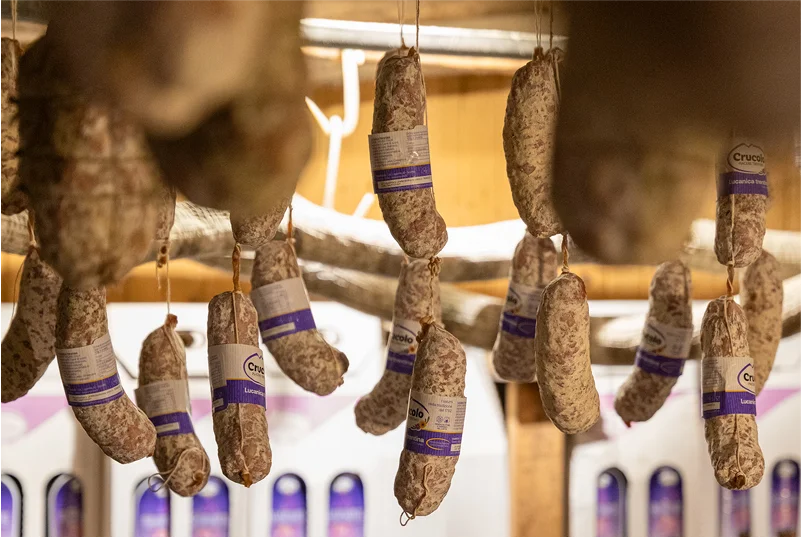
CRUCOLO - PIACERE TRENTINO
G R Scurelle (TN) · 4.4 km
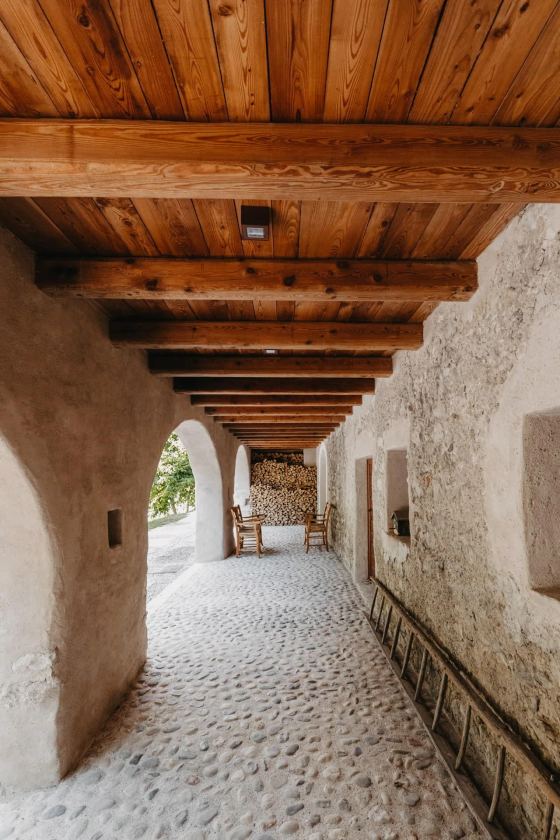
Calchèra San Giorgio
Grigno (TN) · 15.9 km
RISTORANTE TRE FONTI
Rodeghieri Rigoni Podestà Costa (VI) · 18.7 km
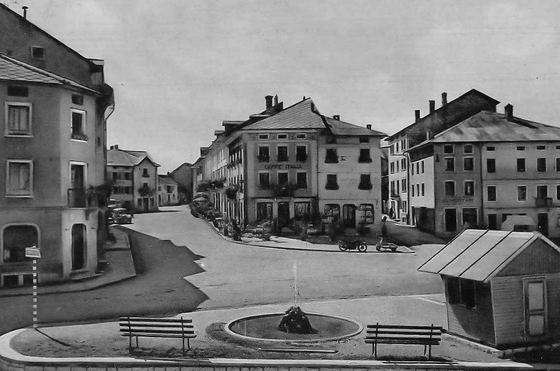
Alimentari Schivo
Gallio (VI) · 19.2 km
TENUTA GOTTARDI
Cembra Lisignago (TN) · 22.6 km
Hotel Ristorante La Baitina Asiago
Asiago (VI) · 23.3 km
