
A small village in the Lower Aosta Valley wedged among the rocks, dominated by the historic fort that shares its name and marked by a medieval urban layout of great coherence. Its strategic position made it, for centuries, a point of control over access to the valley.
Bard sits at 381 metres above sea level, at the point where the Aosta Valley narrows into what is almost a corridor of rock. The Dora Baltea traces a tight meander here, the walls drop toward the river at nearly vertical angles, and the passage contracts into a gorge that for centuries represented the only practicable access to the heart of the region. This is not a position chosen for convenience, but out of strategic necessity: whoever controlled Bard controlled the valley.
The medieval village unfolds at the foot of the rock on which the Forte (fort) stands, and it preserves an urban layout of remarkable coherence. Narrow lanes, houses in local stone arranged according to the logic of a garrison rather than comfort, a scale of proportions that speaks of a community organised around the site's military function. The architecture is not decorative: it answers to a territory that allowed no waste of space or material. Every built element responds to the shape of the ground.
The history of control over this passage is ancient. The earliest evidence of a defensive structure dates back to the Middle Ages, but the position was already known and exploited in Roman times. The episode that fixed Bard in wider historical memory concerns Napoleon Bonaparte's Italian campaign: in May 1800, French troops marching toward the Po plain found in the fort an obstacle they could not take head-on. The army had to skirt the position along the mountainside paths, hauling dismantled cannons on mules, so as not to reveal the crossing to the Austrian garrisons holed up in the fort. The episode is documented and became a celebrated example of how a single geographical position could shape the decisions of an entire army.
The present-day Forte, in its nineteenth-century form, was rebuilt after Napoleon ordered its demolition in 1800. The structure that dominates the village today therefore dates to the period following the Restoration, when the Kingdom of Sardinia decided to rebuild it as an updated defensive stronghold. The complex is arranged over several levels connected by internal galleries carved into the rock, and today houses museum spaces dedicated to alpine military history and to the Alps more broadly.
The village and the fort form a whole that geology rendered coherent even before history did. The rock is not backdrop: it is the very reason this place exists, the material it is built from and the reason it was fought over.
pollobarca (Paul Barker Hemings) · CC BY-SA 2.0 — Wikimedia Commons
Certified Made in Italy businesses close to this place.

LA RIVIERA DEL DOLCE
Saint Vincent (AO) · 17 km
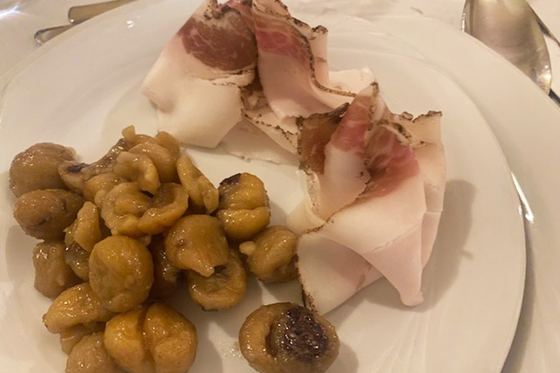
RISTORANTE DEL SANTUARIO
Graglia (BI) · 17.2 km
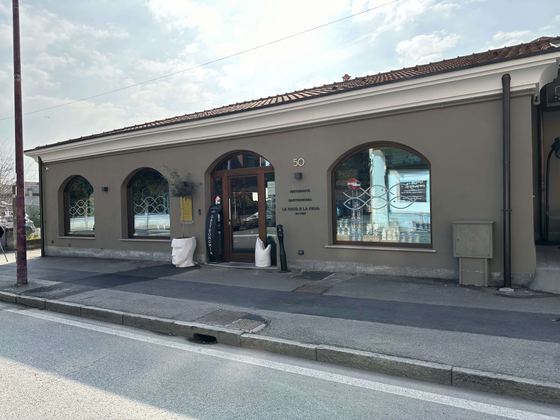
Ristorante La Rava E La Fava
Ivrea (TO) · 19.5 km

Papi - I Sapori Dell’Orto Di Patrizia E Pino
Ivrea (TO) · 19.6 km

VISO TOP
Banchette (TO) · 20.1 km
Casa Della Bomboniera Di Garda Maria Teresa
Ivrea (TO) · 22.4 km
