
An ancient devotional path crossing the small high-hill villages of the Macerata area, linking rural landscapes and little-known historic heritage. The route starts from Pievebovigliana and winds toward Pieve Torina, touching places marked by Apennine religious tradition.
Valfornace is a municipality in the Macerata area born in 2017 from the merger of Pievebovigliana and Fiordimonte, two villages that the central Apennines held close for centuries along the routes leading toward Umbria. First a Roman waypoint on those routes, then a Benedictine outpost, then a Da Varano domain: the territory carries layers of history that do not announce themselves, but can be read in the landscape and in the vernacular architecture, in the parish churches and civic museums that hold materials spanning from prehistoric times to the twentieth century.
From Pievebovigliana opens one of the routes of the Via Lauretana di Macereto, a devotional path that crosses the high hills of the Macerata area toward Pieve Torina, touching minor villages marked by Apennine religious tradition. The name refers to the Lauretan devotion that for centuries moved pilgrims across the inland Marche toward the Sanctuary of the Holy House of Nazareth (Santa Casa) in Loreto, in the province of Ancona. This mountain branch represents its quietest stretch: not the main route between Macerata and the coast, but the arm that climbs toward the pastures, where devotional traffic slowed and the landscape opened up.
The territory of Valfornace occupies a hinge position between two distinct landscapes. To the east, the valleys descend into the Marche plain; to the west, mid-altitude pastures anticipate the peaks of the Monti Sibillini National Park (Parco Nazionale dei Monti Sibillini), part of which falls within the municipality. This double exposure translates into a landscape that shifts register within a few kilometers: cultivated fields, turkey-oak woods, upland meadows, with rural settlements that retain the scale typical of historic Apennine building.
The path intersects with the Anello dei piccoli borghi (Ring of Small Villages), a network of itineraries connecting the minor centers of the Macerata hinterland. Those who walk the Via Lauretana di Macereto find a rhythm dictated by topography rather than tourist organization: the elevation changes are the real ones of the Apennines, the resting points coincide with the villages crossed, and the parish church of Santa Maria Assunta in Pievebovigliana — a Romanesque structure with a neoclassical interior and a crypt recovered in 1930 — is one of the architectural landmarks along the route. Not an isolated monument, but a node in a network of minor religious buildings that punctuate the trail with the regularity typical of historic pilgrim routes.
What this territory offers to those who cross it slowly is, above all, measure: contained distances, accessible elevations, a built and natural heritage that requires no interpretive mediation to be perceived. The Marche hinterland at this altitude has remained outside the established circuits not for lack of substance, but through a combination of geographic position and scant narrative infrastructure. The Via Lauretana di Macereto is, among other things, an attempt to restore legibility to a route that existed long before anyone thought to promote it.
Paulacastelli · CC BY-SA 4.0 — Wikimedia Commons
Certified Made in Italy businesses close to this place.

Trattoria La Piccola Baita
Pieve Torina (MC) · 11.7 km
Bar Centrale Gelateria Incicco
San Ginesio (MC) · 17.1 km

Il Parco Di Snoopy Amici Per Sempre
Amandola (FM) · 21 km
Apicoltura Apegaia
Amandola (FM) · 21 km

Fior di Pizza Pizzeria al Taglio
Colmurano (MC) · 23.9 km
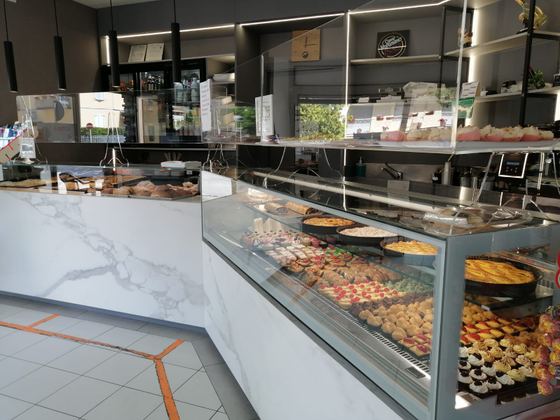
La Gustosa
Matelica (MC) · 23.9 km
