
DOCG red sparkling wine produced in a small area around Serrapetrona, one of Italy's very few dry and sweet red sparkling wines with a controlled and guaranteed designation of origin.
Serrapetrona sits at 474 metres above sea level, on the right bank of the Cesolone stream, at the foot of the Sibillini Mountains. The village, home today to around a thousand people, retains an urban structure dating back to the early thirteenth century: a compact medieval core perched on a hill overlooking Lake Borgiano. All around, dense woodland, natural springs, and a flora and fauna that the mountainous terrain has preserved over time. It is in this setting — closed, precise, almost set apart from Italy's major wine routes — that one of the peninsula's most singular native grape varieties survives: Vernaccia Nera.
Vernaccia di Serrapetrona has been awarded DOCG status, the designation that certifies its uniqueness and precisely delimits its production area: the municipalities of Serrapetrona, Belforte del Chienti and San Severino Marche, all in the province of Macerata. It is a red sparkling wine — a rare category in itself within the Italian landscape — made in both dry and sweet versions. The production process involves a double fermentation and the use of a portion of partially dried grapes, which gives the wine a dense aromatic structure, with fruity notes interwoven with a complexity that resists easy categorisation.
The wine's historical traces run deep. Vernaccia has been vinified in this area since at least the fifteenth century, and medieval literature carries some echo of it: in the twenty-fourth canto of Purgatorio, Dante mentions Vernaccia in the circle of the Gluttonous, in a line that pairs the wine with the eels of Bolsena favoured by Pope Martin IV. The Dantean reference does not prove a direct continuity with Vernaccia di Serrapetrona, but it does testify to how widely the name and reputation of this wine already circulated in central Italy in the late Middle Ages.
Today the denomination is upheld by a small number of producers, in keeping with the scale of the territory and the character of a wine that has never sought industrial scale. The double fermentation — part of the grapes vinified in the traditional way, another part after drying — demands time and attention that mass production cannot allow. The result is a wine that occupies a precise niche: recognisable, difficult to replicate outside that small patch of land around Macerata, and for this reason largely untouched by the winemaking trends of recent decades.
The territory that produces it holds to the same measure. Serrapetrona is neither a transit hub nor a mass destination: it is a place where the hilly, mountainous landscape, the vineyards and the quiet of the back roads form a picture consistent with the character of the wine it produces. The DOCG, in this case, is not merely a seal of quality: it is the map of a specific place, without which that wine simply would not exist.
Giacomo Alessandroni · CC BY-SA 4.0 — Wikimedia Commons
Certified Made in Italy businesses close to this place.
Bar Centrale Gelateria Incicco
San Ginesio (MC) · 12.9 km
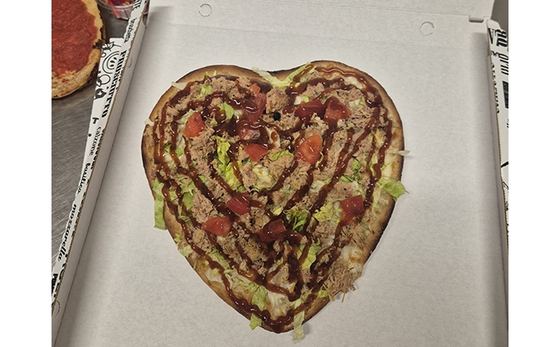
Fior di Pizza Pizzeria al Taglio
Colmurano (MC) · 15.1 km
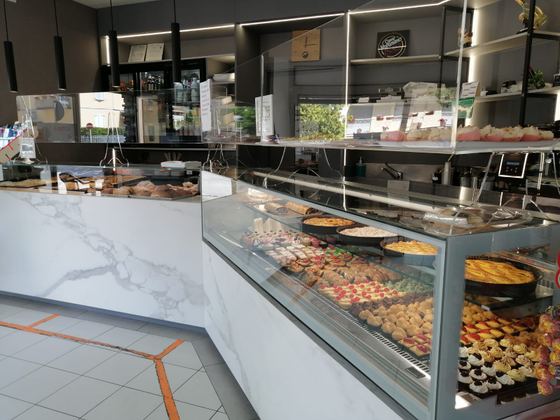
La Gustosa
Matelica (MC) · 17 km
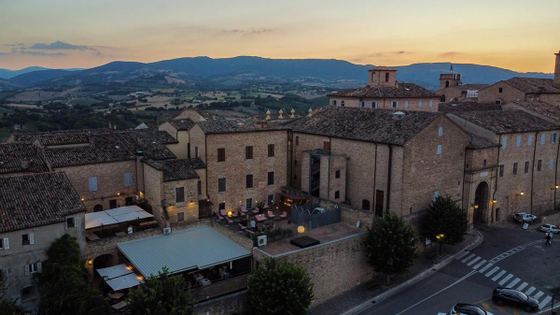
Antica Fornace
Treia (MC) · 18 km
Palazzo Riccucci Resort
Montappone (FM) · 23.2 km

Trattoria La Piccola Baita
Pieve Torina (MC) · 23.2 km
