
A side valley of the Julian Alps, secluded and little frequented, where nature grows lush amid dense woods, streams and deep silences. A place of genuine renewal, far from mass tourism circuits.
Val Resia opens as a narrow corridor between the Julian Alps, within the municipality of the same name in the province of Udine, separated from the surrounding valleys by ridges that for centuries have served as both a natural and cultural boundary. It is not a valley of passage: it leads nowhere but into itself, and this geographic closure has shaped, over the centuries, a community that is entirely singular. Its inhabitants still speak Resian (a South Slavic language variety), which does not coincide with any of the national languages of neighbouring countries — neither Slovene nor Friulian — and which preserves archaic features documented by linguists since the nineteenth century. The valley counts a few hundred residents spread across a handful of hamlets: Stolvizza, Oseacco, Gniva, Lischiazze, Prato di Resia.
The landscape is organised around the Resia stream, which runs along the valley floor and gathers the waters of the wooded slopes pressing in on either side. Beech and fir forests cover the hillsides up to considerable elevations, giving way further up to pastures and rock faces. The territory's morphology belongs to the Monte Canin system, a karst massif rising above 2,500 metres that in summer offers hiking routes at both medium and high altitude. Canin is also known for its summit karst plateau, one of the most extensive in the eastern Alpine sector, with sinkholes, swallow holes and an underground network still partly unexplored.
The valley's silence is not an absence: it is a physical quality, most perceptible off season, when the stream is the only continuous sound and the hamlets return to the slow rhythms of a community that has always lived within measure. In summer, the meadows of the valley floor and the beech woods on the slopes offer walking routes accessible even without specialist equipment, while in autumn the vegetation shifts tone progressively, from green to ochre yellow to the deep red of the most exposed beeches. It is not a spectacle staged to be watched: it is simply the cycle of vegetation in a place where no one has interrupted it.
What sets Val Resia apart from other Alpine valleys in Friuli is its layering: over the natural landscape lies a material and intangible culture that persists with discretion. Traditional Resian music, with its violins and dances, has been the subject of ethnomusicological study and continues to be practised locally. The language, protected under regional legislation, is taught in the municipality's schools. These elements are not staged for the visitor: they exist because the community has kept them alive over time, regardless of outside attention.
Ajznponar · CC0 — Wikimedia Commons
Certified Made in Italy businesses close to this place.
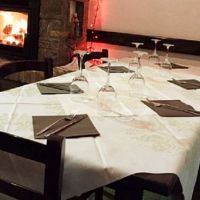
OSTERIA INTANT BONDÌ
Gemona del Friuli (UD) · 19.1 km
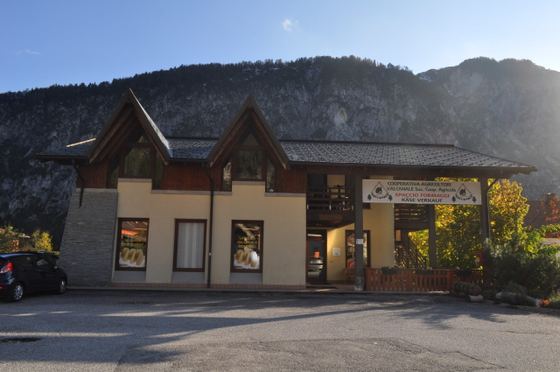
CASEIFICIO DI UGOVIZZA
Ugovizza Malborghetto Valbruna (UD) · 21 km
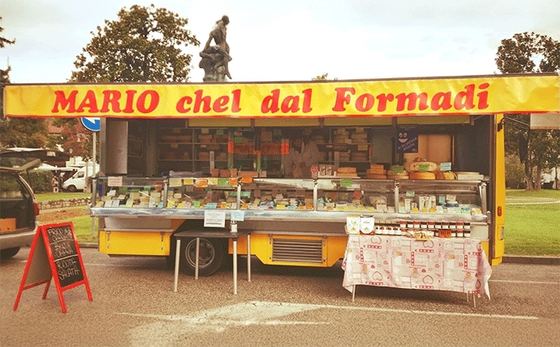
''MARIO CHEL DAL FORMADI'' DI BERTOSSI LUCIA - Cassacco - Ambulante di Formaggi e Latticini
Cassacco (UD) · 21.3 km
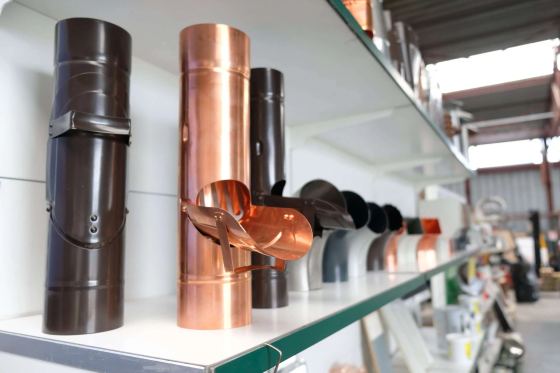
Degano Primo
Tavagnacco (UD) · 26.9 km

1859
Udine (UD) · 32.4 km
CLUB 97
Buttrio (UD) · 38.1 km
