
The Valdichiana Senese preserves a documented tradition of basket-makers, kept alive through local craft promotion initiatives and among the area's most deeply rooted manual trades.
In the Valdichiana Senese, among the hill towns looking toward Siena and the Umbrian border, the working of wicker and plant fibres marked the rhythm of the agricultural seasons for centuries. Trequanda, a walled village in the province of Siena, is one of the places where this practice has kept a documented continuity: the panieraio — or basket-maker — was an ordinary figure of rural life, present in farmhouses as much as at periodic markets, able to turn humble local materials into everyday objects meant for gathering, carrying, storing.
The craft was passed down directly, within families, with no formal institutions involved. Weaving techniques — spiral work, cross-woven patterns, flat or raised bases — varied from area to area and from workshop to workshop, forming a repertoire of solutions adapted to local needs: baskets for the grape harvest differed from those for olives, kitchen baskets from those used in the fields. Alongside the basket-maker, the oral tradition of the Valdichiana Senese also recalls figures such as the bigherino (lace-maker), who worked lace, and the bucataia (communal laundress), in charge of communal washing: a body of manual knowledge that shaped the domestic and artisanal economy of the area before mechanisation.
Today these figures are the subject of documentation and promotion initiatives at the local level, including online exhibitions dedicated to the area's craftspeople. The shift from oral transmission to systematic collection — in publications, photographic archives, digital projects — points to a change in the very nature of these trades: from living practices to intangible heritage to be preserved. This is not a surrender, but a different form of care, one that acknowledges the distance between the present and the context that once made those objects necessary.
The Valdichiana Senese provides the territorial setting within which this story unfolds: an agricultural landscape of long continuity, with grain crops, olive groves and vineyards that have shaped the relationship between community and natural resources for centuries. Trequanda, with its compact historic centre and municipal territory stretching across gentle hills, still retains the scale of a rural settlement where the distance between working the land and working with one's hands was minimal. The basket-maker's materials — wicker, rushes, willow — came from the very surroundings of the cultivated fields, and the seasonality of fibre gathering was interwoven with that of farming.
lo.tangelini from Soliera / Modena, Italia · CC BY-SA 2.0 — Wikimedia Commons
Certified Made in Italy businesses close to this place.
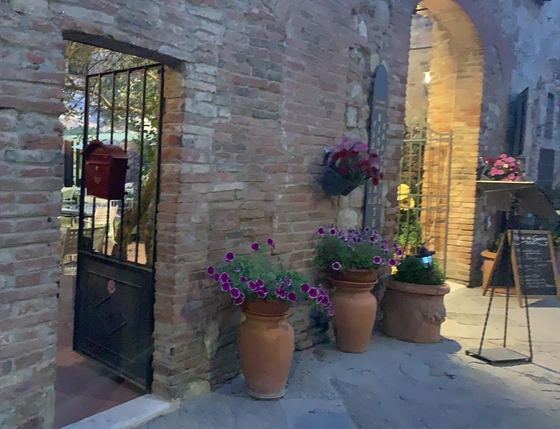
La Corte Dell' Ulivo
Montepulciano (SI) · 14.2 km
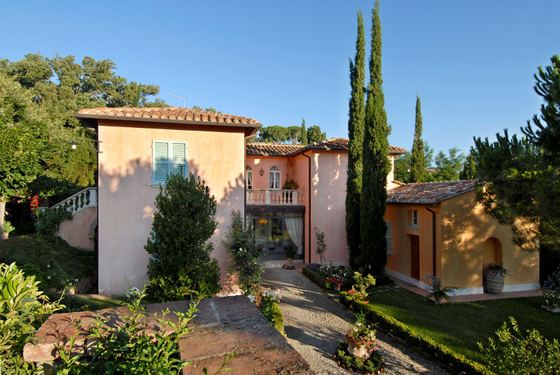
Il Rondò
Montepulciano (SI) · 14.4 km
DJ LATOR
San Quirico D'orcia (SI) · 15.4 km
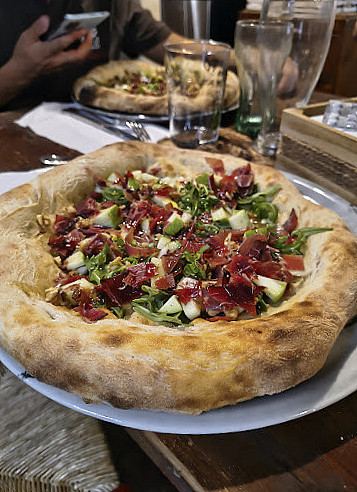
RISTORANTE PIZZERIA LA GALERA
Monteroni D'arbia (SI) · 20.4 km
Azienda Agricola Ferro Di Burroni Daniela
Montalcino (SI) · about 21 km
La Bottega Del Futuro
Pozzuolo (PG) · 24.6 km
