Before you go on
This site uses only what it needs to work: the language you choose, access to the members' area, and anonymous counts that tell us whether the search is answering well. For advertising campaigns we ask your permission, and without a yes nothing starts. See the full list.

A small medieval village near Perugia that has become a symbol of excellence in textile craftsmanship tied to cashmere production. The village retains an artisan identity consistent with its historic architecture.
Solomeo is a hamlet within the municipality of Corciano, in the province of Perugia, rising on a hill a few kilometres from Lake Trasimeno. The village retains its medieval layout almost intact: the walls, the castle, the church of San Bartolomeo, the limestone houses following the curve of the land without forcing it. For centuries it remained in the discreet shadow that belongs to many smaller settlements of inland Umbria, places that history passed through without upending them.
The turning point came at the end of the 1970s, when Brunello Cucinelli — born in Castel Rigone, the son of a farmer who became a factory worker — chose Solomeo as the seat of his cashmere knitwear company. The choice was neither casual nor purely sentimental: Cucinelli saw in the village a physical and human setting consistent with an idea of production that refuses to separate the quality of the finished piece from the quality of life of those who make it. In the years that followed, the company grew until it listed on the Milan Stock Exchange in 2012, reaching consolidated revenues of over 357 million euros in 2014. Solomeo, meanwhile, transformed itself without losing its own measure.
The restoration of the village followed a philological method: the historic structures were recovered using the original materials and proportions, without additions that would betray the character of the whole. Alongside the church and the castle stand the Teatro Cucinelli (Cucinelli Theatre) — a space for culture and music carved out of the ancient fabric — and the Accademia Neoumanistica Aureliana (Aurelian Neo-Humanistic Academy), conceived as a place of learning that weaves together craft knowledge and humanistic reflection. The Bosco della Spiritualità (Wood of Spirituality), on the edge of the village, completes a design in which contemporary intervention seeks a dialogue with the Umbrian hill landscape rather than imposing itself upon it.
What makes Solomeo a case worth attention on the Italian scene is not only the quality of the cashmere worked in its workshops, nor the international renown of the brand based there. It is, rather, the coherence between the parts: a medieval village, a luxury manufacturing enterprise, a cultural project, and a philosophy of work expressed through the care given to physical spaces. This coherence is rare, and it can be felt walking through the village's streets, where historic architecture and productive presence coexist without one overwhelming the other.
Solomeo remains, in its dimensions, a small place. It has neither the critical mass of a larger historic centre nor the accessibility of a city of art. And yet it is precisely this reduced scale that allows one to read clearly the relationship between territory, craftsmanship and identity that elsewhere gets lost in the noise. The cashmere worked here travels the routes of global trade; the village stays still on its hill, with the same stone and the same light.
Hagai Agmon-Snir حچاي اچمون-سنير חגי אגמון-שניר · CC BY-SA 4.0 — Wikimedia Commons
Certified Made in Italy businesses close to this place.
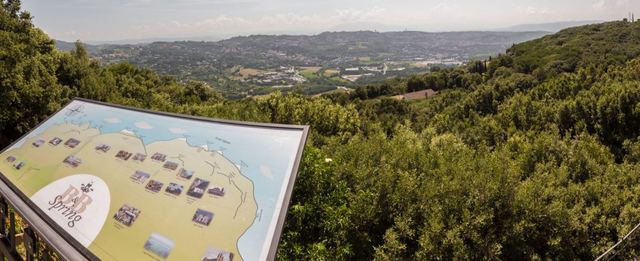
B & B SPRING
Perugia (PG) · 4.2 km
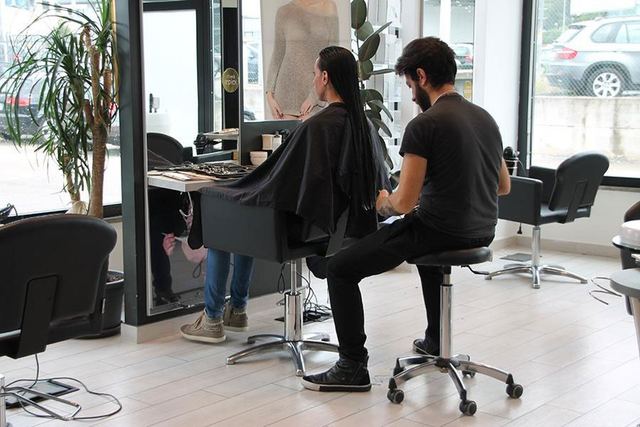
TAGLIATI X IL SUCCESSO PERUGIA
Perugia (PG) · 6.9 km
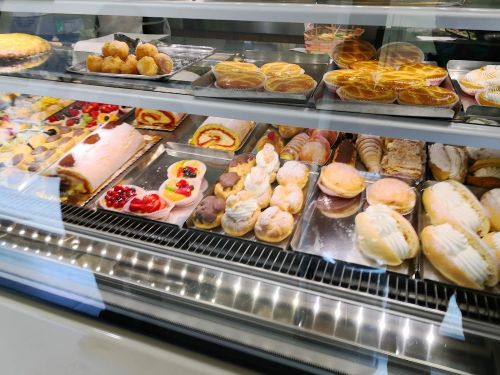
Panetteria Pasticceria Cerquiglini
Perugia (PG) · 7.1 km
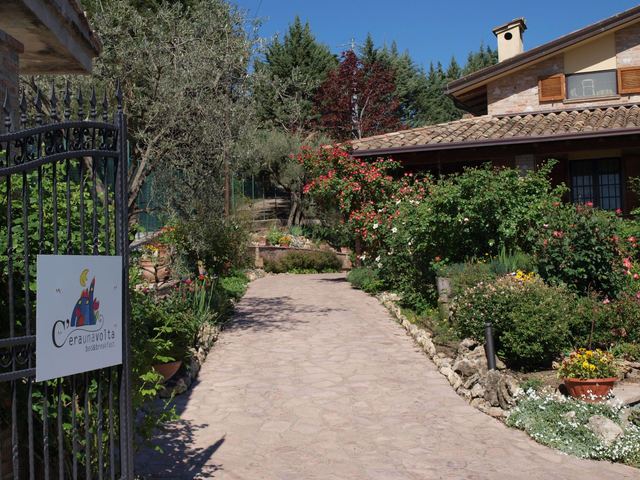
B&B C'Era Una Volta
Perugia (PG) · 8 km
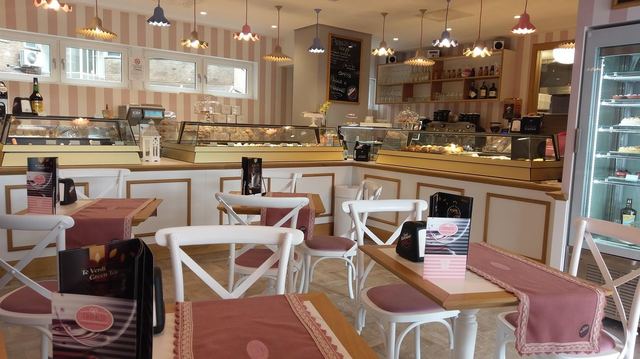
Pasticceria Tripaldi
Perugia (PG) · 8.9 km
PIZZERIA DEL BORGO
Perugia (PG) · 9 km