
The salt works near Volterra form a striking industrial-natural landscape, far less visited than the town's Etruscan old centre. An unusual setting where geology, extractive history and nature meet.
A few kilometres downhill from Volterra, along the road that descends into the Valdicecina, the landscape undergoes a quiet transformation. The soft geometries of the clay calanchi (badland ridges) give way to a low, open plain, crossed by canals and marked by industrial structures that do not belong to the familiar imagery of Tuscany. This is Saline di Volterra, a hamlet within the municipality of Volterra, in the province of Pisa: an area that owes its very name to the extractive activity which shaped it for centuries and still defines its character today.
The presence of salt in this area is linked to the deep geology of the Tuscan subsoil. Evaporite deposits — sedimentary formations produced by the evaporation of ancient marine basins — surface here in unusually high concentrations, feeding brackish springs that made the site productive since antiquity. The Etruscans, who governed a vast, mineral-rich territory from Volterra, knew and exploited these waters. Organised salt extraction continued in the centuries that followed, and in the modern era it was Società Italiana Sali Alcalini that ran the industrial plant which still characterises the area, with its evaporation structures and artificial basins stretching across the plain.
The resulting landscape resists easy classification. It is neither untouched nature nor a disused industrial site in the conventional sense: extraction has continued, in different forms, to shape the territory into the present day. The saline water collection basins, when they catch the light in the middle of the day, take on colours ranging from opaque white to grey-blue, depending on salt concentration and season. Around these surfaces, a halophyte vegetation has developed over time — adapted, that is, to highly saline soil — hosting botanical species rare in the Tuscan hill country and drawing birdlife of some interest, particularly during migration periods.
What makes Saline di Volterra hard to place is precisely this layering of eras and functions. Its extractive history overlaps with geology, geology shapes biology, and all of this unfolds in a setting made even more telling by the proximity of the Etruscan old town of Volterra — about twelve kilometres away as the crow flies. The hill town, with its cyclopean walls and the Museo Etrusco Guarnacci, looks down from a distance on this plain, which was, in its own way, part of the same territorial economy. Salt was a strategic resource, and control over its sources carried political and commercial weight that historical sources document clearly.
Those who pass through this stretch of the Valdicecina without stopping risk crossing a landscape that seems minor, almost residual. Looked at more closely, it instead reveals a coherence of its own: that of a territory which has always turned its underground resources into visible form, from salt to alabaster, from geothermal energy to mineral waters. Saline di Volterra is one of the places where this logic can be read with the greatest clarity.
Janericloebe · CC BY 3.0 — Wikimedia Commons
Certified Made in Italy businesses close to this place.
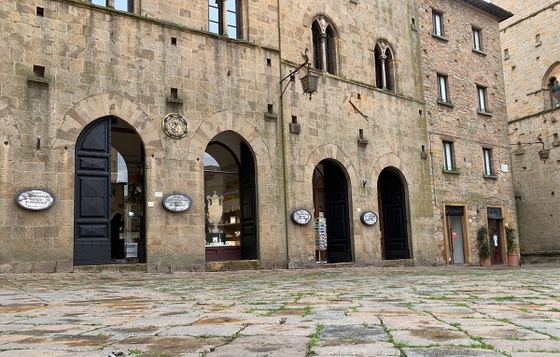
COOPERATIVA ARTIERI ALABASTRO VOLTERRA
Volterra (PI) · 1 km

LA LOCANDA DEL TAGLIERE - TRATTORIA
San Gimignano (SI) · 16.6 km
Impresa Funebre Biasci
Lorenzana (PI) · 31 km

CATERINA MALVEZZI - CREAZIONI
San Miniato (PI) · 31.1 km
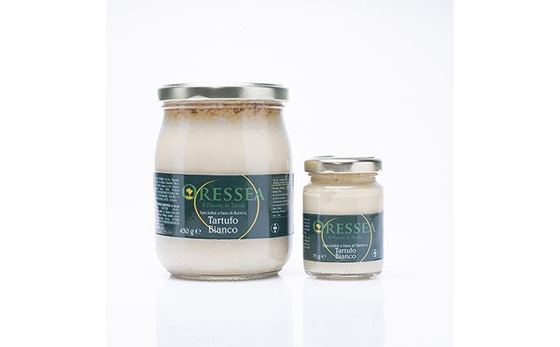
ORESSEA IL PIACERE IN TAVOLA
Montespertoli (FI) · 31.8 km
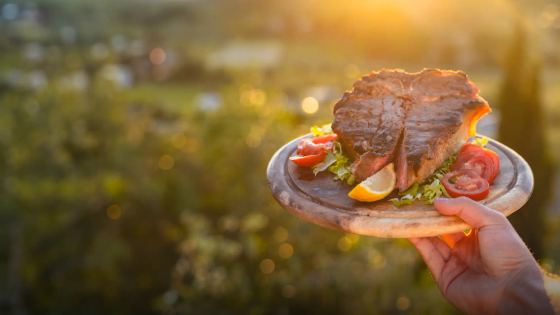
Agriturismo Montemagnoli
Empoli (FI) · 32.5 km
