
A large karst sinkhole near Altamura, with vertical walls dropping for dozens of metres and a rock-face ecosystem of great naturalistic and historical interest. It bears witness to the karst geology of the Murgia and to prehistoric human presence.
About six kilometres north of Altamura, on the Murgia plateau at 477 metres above sea level, the ground opens without warning. The Pulo di Altamura is a collapse sinkhole: a failure of the limestone substrate that has left a circular void with a diameter of more than 700 metres and walls dropping some 90 metres. It is not a gradual depression, nor a dip in the terrain — it is a clean break, as if the landscape had simply stopped existing along a precise line. The term "pulo" shares its root with other sinkholes in the area, including the Pulicchio di Gravina and the Pulo di Molfetta, and its etymology remains uncertain: one hypothesis traces it to the word "polo", the point where a surface of rotation meets its own axis, later extended by metonymy to designate the whole form.
The phenomenon belongs to the karst geology of the Murgia, a territory built on Mesozoic limestone riddled with fractures, cavities and underground drainage systems. When the roof of an underground cavity can no longer bear the weight of the material above it, it collapses, and the result at the surface is exactly this: an amphitheatre of bare rock, with vertical walls hosting caves that open at different heights. Some of these cavities can be reached on foot along the inner perimeter, others require caving equipment. The sinkhole at the bottom, where rainwater disappears into the deep karst system, can only be explored by experts. The Pulo lies within the Parco Nazionale dell'Alta Murgia (Alta Murgia National Park), established in 2004, which protects this kind of landform along with the Mediterranean scrubland and the stretches of stony pasture that surround it.
The caves opening along the walls have not only ever housed bats — today among the site's principal inhabitants. Archaeological research has documented traces of human presence dating back to prehistory, a sign that these cavities offered shelter and resources in an otherwise exposed landscape. The Murgia, with its network of caves and sinkholes, is one of the Italian territories with the longest documented continuity of human presence: Altamura itself yielded, in a cave distinct from the Pulo, the remains of the Uomo di Altamura (Altamura Man), a Neanderthal skull embedded in the limestone rock and dated to over 150,000 years ago. The Pulo fits into this broader context, as one of the nodes of a landscape that has always offered favourable conditions for settlement.
Today the site is reached on foot via rocky trails that run along the rim and descend partway toward the bottom, for a route of about six kilometres with a total elevation change of 328 metres. There are no permanent structures, nor any significant interpretive facilities. The silence found at the edge of the sinkhole, with pale rock underfoot and the void opening below, belongs to that category of landscapes that require no mediation.
Davide Mauro · CC BY-SA 4.0 — Wikimedia Commons
Certified Made in Italy businesses close to this place.

PIZZERIA SOEL
Altamura (BA) · 0.7 km

GUSTO D'ALTURA Ristorante
Altamura (BA) · 0.9 km
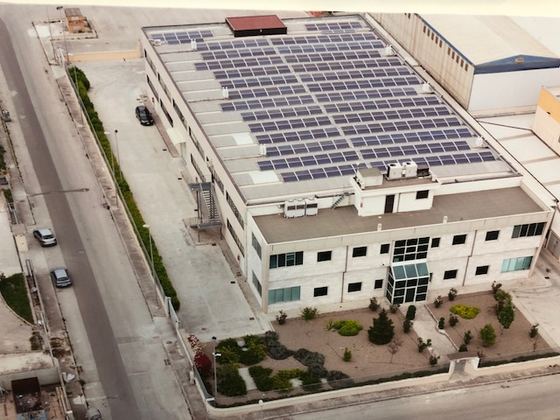
Form Design
Gravina In Puglia (BA) · 9.2 km
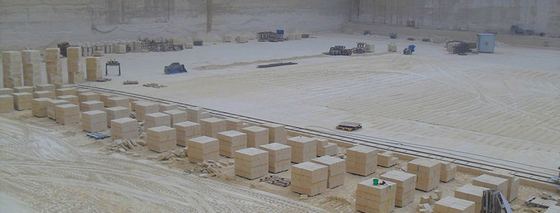
Gravina Tufi Srl
Gravina In Puglia (BA) · 12 km
BAR BISTROT
Santeramo In Colle (BA) · 17.6 km
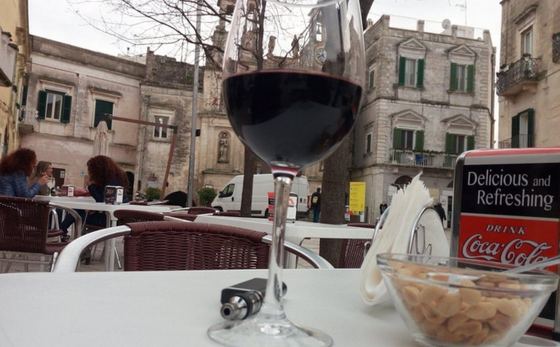
BAR PIZZERIA I DUE SASSI CAFE'
Matera (MT) · 18.8 km
