Traditional preparation of whole pig seasoned with herbs and spices, made in Ariccia to a recipe handed down over centuries and recognised with the IGP mark.
Ariccia rises in the Colli Albani hills some thirty kilometres from Rome, part of that system of volcanic hill towns the Romans called Castelli. Its historic centre is marked by Palazzo Chigi, by the Collegiata di Santa Maria Assunta designed by Gian Lorenzo Bernini, and by the nineteenth-century viaduct that spans the valley on arches of peperino stone. Against this backdrop, for centuries, the town has produced and consumed the porchetta that bears its name: a product that has come to identify the place as much as its landscape and architecture do.
The preparation follows a precise procedure, now codified in the standard of the Protected Geographical Indication granted by the European Union. The raw material consists of female pigs of the Landrace, Large White and Pietrain breeds and their crossbreeds, with eviscerated carcasses weighing a minimum of sixty kilograms. The animal is deboned, seasoned with garlic, rosemary and black pepper, then rolled and oven-roasted. The standard allows for two forms: the whole porchetta and the so-called tronchetto (little log), corresponding to the portion of the half-carcass between the third dorsal vertebra and the last lumbar vertebra. The skin, which turns crisp and golden during cooking, is an integral part of the finished product and of its distinctive character.
The bond between this preparation and the territory of Ariccia is not only geographical. The fraschette — the traditional taverns of the Castelli Romani, so called after the branch (frasca) hung at the entrance as a sign — historically served porchetta alongside local wine, building an economy of proximity that drew Romans out on day trips as early as the nineteenth century. That habit of visiting consolidated over time a reputation that the IGP recognition later formalised, establishing that the stages of production must take place within the territory defined by the standard.
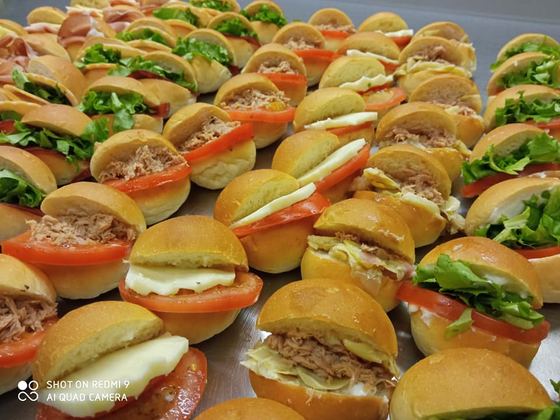
Today the shops of Ariccia's historic centre still sell porchetta by the slice, cut to order at the counter or tucked into bread. Production continuity is also guaranteed by family businesses that have passed the craft down through generations: one documented case is that of the Leopardi family, active in local production from the first to the fourth generation. Around the product a whole supply chain has taken shape, including the Sagra della Porchetta (Porchetta Festival), an annual event that draws visitors from across Lazio and beyond. The EU recognition, granted to protect the authenticity of the local recipe against the imitations found throughout the peninsula, made official a distinction that in Ariccia was already long taken for granted.
RodzillaReviews web site · CC BY-SA 2.0 — Wikimedia Commons
Certified Made in Italy businesses close to this place.