Before you go on
This site uses only what it needs to work: the language you choose, access to the members' area, and anonymous counts that tell us whether the search is answering well. For advertising campaigns we ask your permission, and without a yes nothing starts. See the full list.

The Romanesque Pieve di Sant'Appiano, in the municipality of Barberino Val d'Elsa, stands alone among cypresses with the ruins of an octagonal building and a cloister, amid hills reachable on foot along the white roads of the Chianti.
In the municipality of Barberino Val d'Elsa, a few kilometres from the medieval village and set within the hilly landscape that separates the Val d'Elsa from the Val di Pesa, the Pieve di Sant'Appiano (a pieve is a rural parish church with baptismal rights, typical of medieval Tuscany) stands as one of the most intact Romanesque complexes in the Florentine Chianti. The church, whose origins date back to the early Middle Ages, presents a façade in pietra serena and sandstone typical of Romanesque-influenced Tuscan sacred architecture, flanked by the remains of an octagonal baptistery — a rare structure of considerable architectural interest — and a cloister that still retains its spatial legibility despite the centuries. Around the pieve a small settlement developed over time, with the canonry and a handful of farmhouses, forming a close-knit cluster distinct from the surrounding towns.
The octagonal baptistery, today partly in ruins, is perhaps the element that most distinguishes Sant'Appiano among the pievi of the Chianti. The octagonal form recalls a baptismal tradition of early Christian origin, widespread in Tuscany between the eleventh and twelfth centuries, and its presence beside the main church points to the complex's role as a pieve: not a simple local place of worship, but the religious and administrative centre of an extensive rural territory, with baptismal functions reserved for the entire dependent community. The squared ashlar blocks of the surviving walls and the capitals still visible amid the rubble bear witness to careful workmanship, in keeping with the constructive ambitions of rural Tuscan Romanesque.
The landscape setting of the complex belongs to that band of hills between Florence and Siena that the route of the Via Francigena has crossed for centuries. The white gravel roads linking Sant'Appiano to the surrounding farms and hamlets — walkable or cyclable — cut through vineyards and olive groves that mark out the land according to an agricultural geometry that has remained largely unchanged over time. Those who reach the pieve on foot, along paths climbing from the valleys or descending from the ridges, find a silence that owes nothing to geographical isolation and everything to distance from the main flows of organised tourism. The pieve is also a landmark for those following local stretches of the Via Francigena, the medieval pilgrimage route that led from Canterbury to Rome and which, in this part of Tuscany, still preserves a network of itineraries recognisable on the ground.
A visit to the Sant'Appiano complex lends itself to being folded into longer routes through the Florentine Chianti, combining a reading of medieval architecture with direct engagement with the agrarian landscape. The slowness required to get there — whether on a footpath or along a dirt road by bicycle — is not an obstacle but a condition that changes how the place is perceived. The complex does not announce itself from afar with bell towers visible for miles: it appears gradually, among the cypresses, as a settlement that has chosen discretion over prominence.
Mattis · CC BY-SA 3.0 — Wikimedia Commons
Certified Made in Italy businesses close to this place.
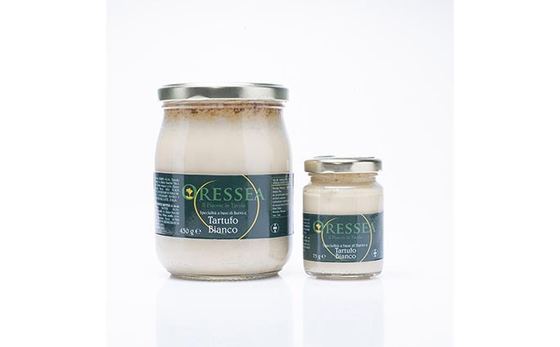
ORESSEA IL PIACERE IN TAVOLA
Montespertoli (FI) · 6.3 km
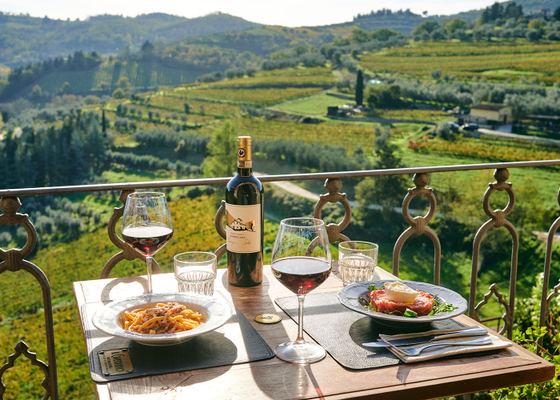
Antica Trattoria ''Il Guerrino''
Greve in Chianti (FI) · 11.4 km
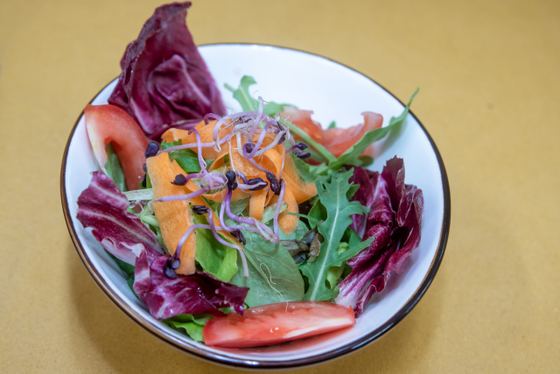
LA LOCANDA DEL TAGLIERE - TRATTORIA
San Gimignano (SI) · 13.2 km
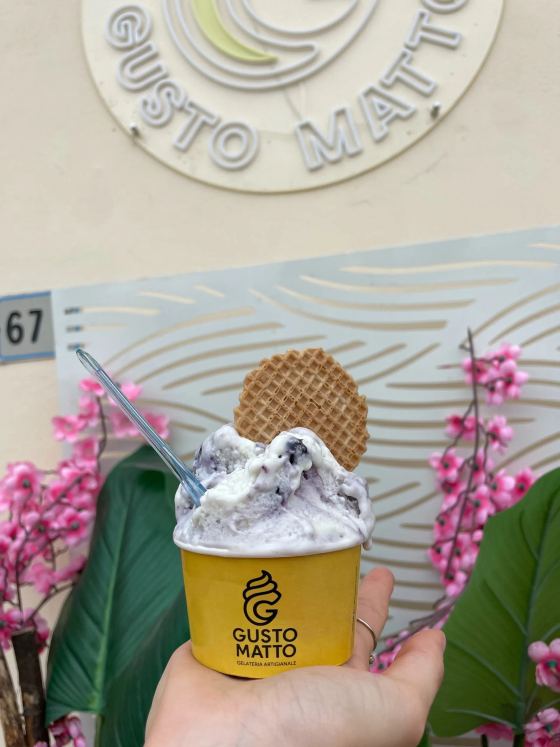
GUSTO MATTO
Colle di Val D Elsa (SI) · 14.7 km
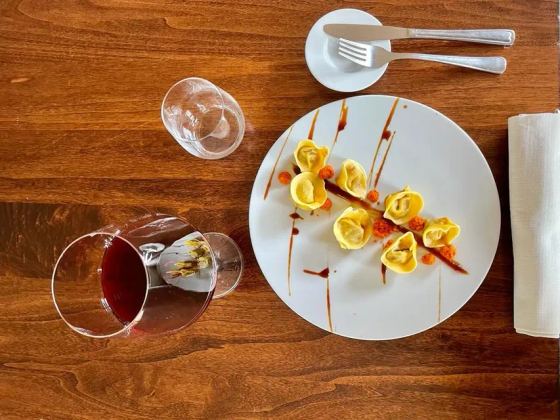
Ristorante La Loggia Del Chianti
Radda in Chianti (SI) · 17.6 km

Delta Case Mobili
Castelfiorentino (FI) · 20.7 km