
A medieval village perched on the hills of Molise, Oratino is recognised among Italy's Borghi più Belli d'Italia (Most Beautiful Villages of Italy) for its heritage of history, art and stone architecture.
Oratino stands on a rocky spur at around 700 metres above sea level, overlooking the Biferno valley in the heart of the province of Campobasso. The village has just over a thousand inhabitants, and its medieval urban layout has remained substantially intact: houses built of local stone lean against one another following the line of the ancient circular walls, which builders in later periods turned into foundations and load-bearing walls for their homes. Two access points from that original defensive ring survive, one of them preserved in a form that still serves today as the main gateway into the historic centre.
The village's name has passed through several linguistic transformations over the centuries. In twelfth-century documents it appears as *Loretinum*, derived from a late Latin form linked to the laurel tree; in the fifteenth century it becomes *Ratino* or *Rateni*, then *Loratino*, before settling into today's Oratino. The feudal history of the place is just as layered: among the earliest documented lords is Eustachio d'Ardicourt, recorded in 1268, succeeded by his son Adamo. The family disappears, however, from the feudal survey of 1279 ordered by Charles I of Anjou, and in the following decades the village passed under various rulers, until in 1333 it is recorded as property of the royal demesne, for reasons the sources do not fully explain.
The fabric of the historic centre tells this layered story without need of captions. Limestone portals, alleys climbing and dropping with the shape of the spur, Piazza Giordano (Giordano Square) with the Palazzo dei Giordano (Giordano Palace) — a building recalling one of the families historically tied to the village — together compose an urban landscape where time is measured in surfaces worn smooth by stone. The Belvedere Ugo Calise (Ugo Calise Lookout) offers a view over the Biferno valley and the hills stretching towards Campobasso, a handful of kilometres away as the crow flies.
The village's churches hold works tied to Molise's popular devotion, an expression of a religious sensibility that in this part of the southern Apennines has kept its own forms and rhythms, distant from the circuits of high art but no less coherent or accomplished for that. Oratino belongs to the network of Italy's Borghi più Belli d'Italia (Most Beautiful Villages of Italy), a recognition that has also led the village to host the association's mayors' gathering, an occasion on which the communal dimension of this heritage became visible well beyond regional borders.
Inland Molise, of which Oratino is part, remains one of the least visited areas of the peninsula — not for want of substance, but for historical reasons tied to infrastructure and the economic marginalisation of the postwar decades. This stone village on the spur above the Biferno owes to that very marginality a rare legibility: nothing here has been remade to look old, because it never stopped being so.
Pietro · CC BY-SA 3.0 — Wikimedia Commons
Certified Made in Italy businesses close to this place.
BOTTEGA FLOREALE DI TIZIANA LOMBARDI
Campobasso (CB) · 6.5 km

PROFESSIONAL SERVICE S.a.s Di Lucchese Lucia e Granata Alessandro
Campobasso (CB) · 6.8 km
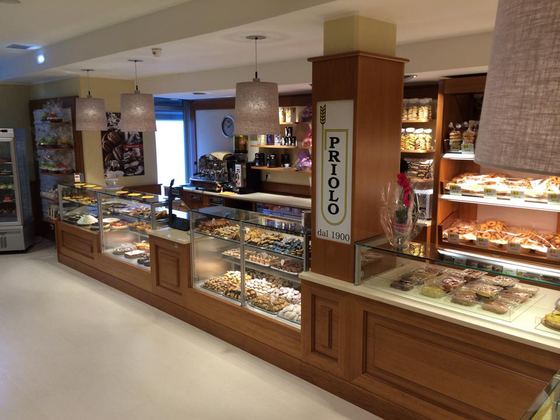
PANIFICIO - PRIOLO NINO - DAL 1900
Bojano (CB) · 15.6 km

BOCA - LATTE+
San Polo Matese (CB) · about 17 km
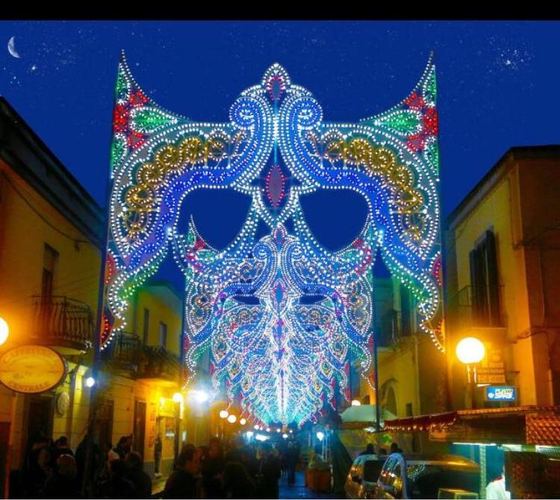
VENDITTI LUMINARIE Srl
Carpinone (IS) · 22.7 km
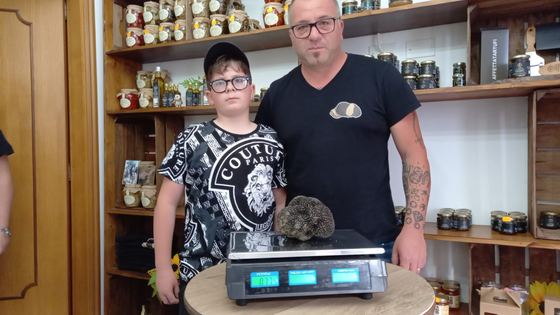
Tenuta Agricola Campati
Schiavi di Abruzzo (CH) · 24.9 km
