Carved into the rock walls of the Anapo river canyon, the necropoli di Pantalica (Pantalica necropolis) holds more than five thousand rock-cut tombs dating between the 13th and 7th centuries BC, set within a landscape of remarkable natural integrity.
In the heart of the Syracuse hinterland, where the Anapo river and the Calcinara stream have carved over the centuries a system of canyons with vertical walls, lies one of the most extensive prehistoric funerary complexes in the Mediterranean basin. The Pantalica plateau, bounded by these two watercourses, holds more than five thousand rock-cut tombs — known as tombe a grotticella artificiale (small artificial cave tombs) — carved directly into the limestone cliffs. Their dating spans roughly six centuries, from the 13th to the 8th century BC, corresponding to the late Bronze Age and early Iron Age, when the plateau was home to an indigenous settlement of regional importance.
The tombs are distributed across distinct clusters, each with its own topographic position: Filiporto, San Nicolicchio and San Pietro are the main groupings, arranged along the different exposures of the canyon. The shape of the small tombs — an oval opening leading into a chamber carved with stone or metal tools — has remained largely consistent over time, while the dimensions vary according to the rank of the deceased and the period of construction. Together they form a funerary landscape whose scale is difficult to grasp in a single visit: the walls, dotted with openings, extend for hundreds of metres vertically, composing a stratification that is at once architectural and chronological.
The site lies within the Riserva Naturale Orientata Valle dell'Anapo (Anapo Valley Nature Reserve), established in 1997 and managed by the Azienda Foreste Demaniali della Regione Siciliana (Sicilian Regional Forestry Authority). The reserve extends across the municipalities of Sortino and Ferla, in the province of Syracuse, and its territory includes eucalyptus woods, Mediterranean scrub and stretches of riparian vegetation along the Anapo. The trails crossing the reserve allow visitors to reach the different clusters of the necropolis on foot, with varying gradients and paths that in some stretches follow the old route of a narrow-gauge railway, decommissioned after the Second World War. In 2005 UNESCO recognised Pantalica as a World Heritage site, including it in the same listing as the Aeolian Islands under the serial site known as "Syracuse and the Rocky Necropolis of Pantalica".
The distance from main roads and the need to cover significant stretches of the terrain on foot have kept the site free from mass tourism. Visitors arriving at Pantalica find themselves walking in a silence that the rock walls amplify, with tomb openings appearing at different heights overhead, some reachable, others inaccessible without equipment. The absence of extensive interpretive facilities along the paths leaves the landscape in its essential form, where understanding the site depends largely on the visitor's own preparation. The wider geographical context — the Val di Noto with its Baroque towns, Syracuse with its Greek and Roman heritage — offers a historical frame within which Pantalica represents the oldest and least visited layer.
Certified Made in Italy businesses close to this place.

LA BOUTIQUE DEL PANE
Augusta (SR) · 18.8 km

PIZZERIA LA CANTINA
Augusta (SR) · 19.7 km

BISTRO' PRIVE' N. 5
Giarratana (RG) · 24.1 km
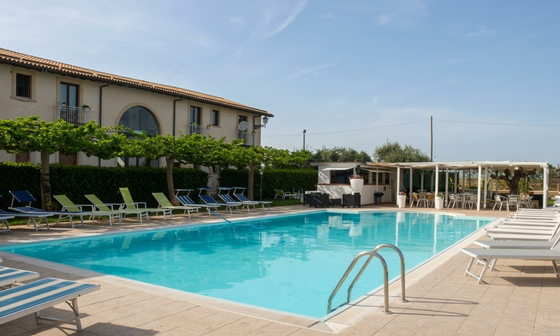
Aranceto Hotel Agriturismo Siracusa
Siracusa (SR) · 24.7 km

Residence Il Paradiso Di Italia Zaira
Siracusa (SR) · 24.8 km
GREEN ENERGY LAB SRL SOCIETÀ BENEFIT
Siracura (SR) · 25 km
