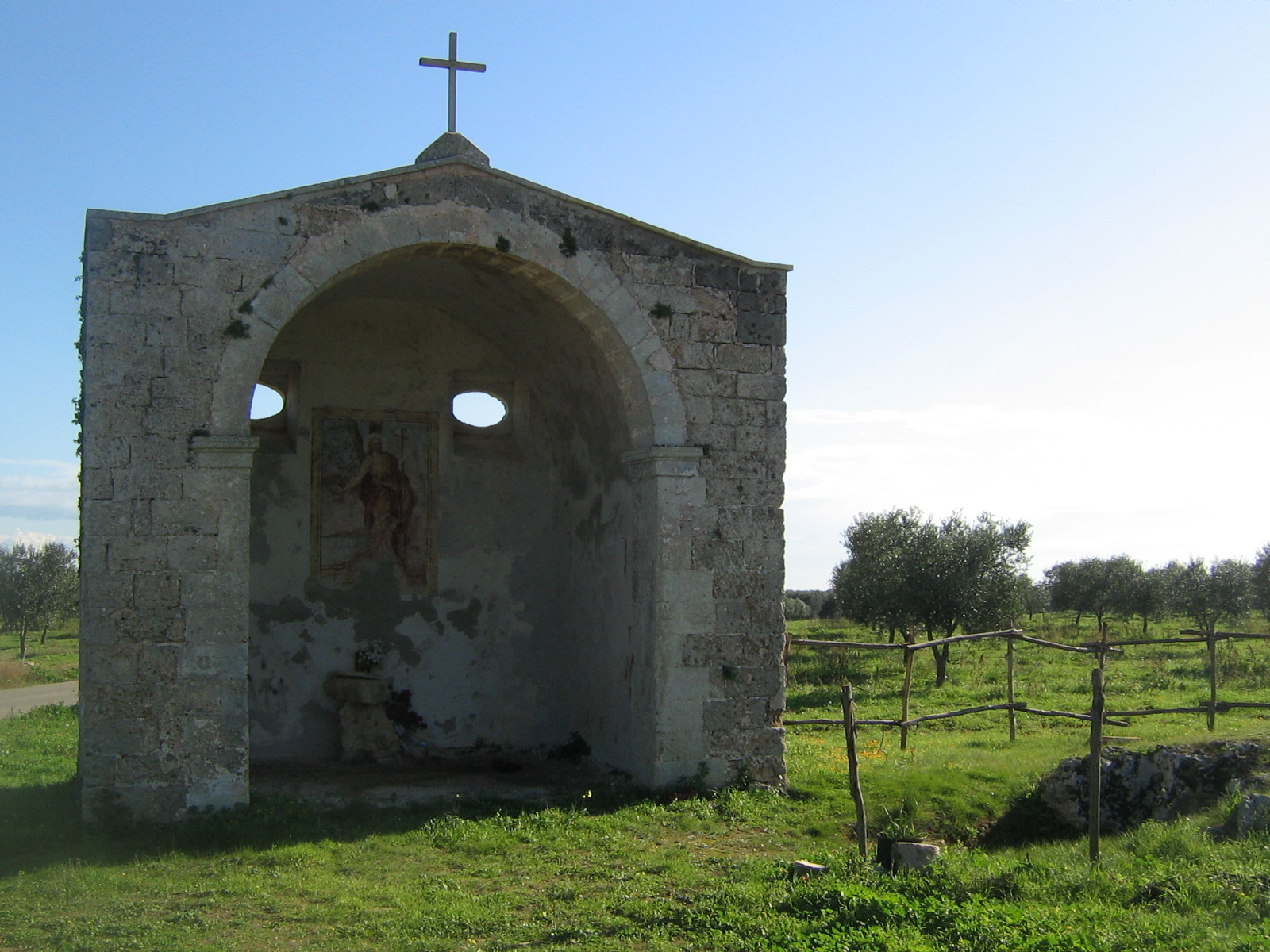
Cutrofiano is one of Salento's historic ceramic centres, with a potter's tradition documented over centuries; the local museum preserves and tells the story of this craft production between past and contemporary experimentation.
In the heart of the Grecìa Salentina (the Greek-speaking area of Salento), some thirty kilometres from Lecce, Cutrofiano owes its historical identity to something underfoot: a layer of plastic clay, abundant and workable, which shaped the economy and culture of this town in central Salento for centuries. The very name of the town points, according to one of the most credited etymologies, to the Latin *Cultus Iani*, a trace of Roman origins that intertwines with the later Byzantine dominations and with its belonging to the Principality of Taranto until 1463. Ceramics, however, ran through all these seasons without interruption, taking root as a collective craft long before becoming heritage to be preserved.
The Museo della Ceramica di Cutrofiano was born precisely from this awareness: that a potter's tradition still alive in the workshops of the historic centre also needed a place where memory could settle and become legible. The collections document the evolution of forms and techniques over time, from everyday objects — jugs, jars, storage containers — to more recent work, in which the craft has engaged with contemporary languages without losing its reference to the local raw material. The exhibition path does not sharply separate past from present: it puts them in dialogue, letting the ancient object and the more recent one comment on each other through the continuity of technical gesture.
What sets this museum apart from a simple archive is the workshop dimension that runs alongside it. The visit can become hands-on practice: hands in the clay, the wheel, the physical understanding of a process that no caption can ever fully convey. It is a choice consistent with the character of the place, where ceramics have never been merely objects to contemplate but tools to use, sell, repair. The artisan workshops still active in the historic centre extend this discourse beyond the museum's rooms, making Cutrofiano one of the few places where the entire chain — from clay extraction to firing, from sale to the passing on of knowledge — remains observable in its entirety.
The surrounding territory adds a further layer of reading. Cutrofiano lies within the Grecìa Salentina, that small cultural area where traces of the *griko* dialect survive and where local identity has retained a stratification unusual for the rest of Puglia. In this context, ceramics are not an isolated artisanal exception but part of a wider set of material and linguistic practices that resist standardisation. The museum, in this sense, also serves as a point of orientation for those who want to read Salento beyond its coastline.
Lupiae · Public domain — Wikimedia Commons
Certified Made in Italy businesses close to this place.
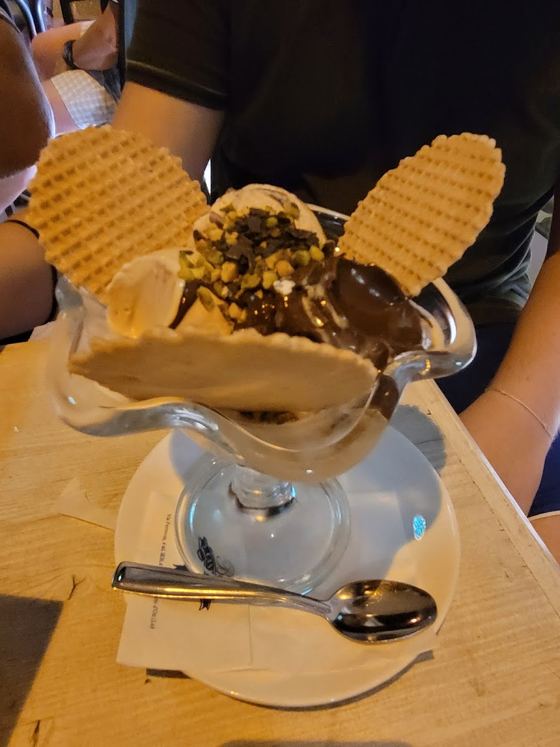
Bar Castello
Corigliano D'otranto (LE) · 6 km
Verde Giuranna
Parabita (LE) · 10.7 km
HOME RESTAURANT LA LOCANDA TA NONNA TUTA
Parabita (LE) · 10.7 km
PIZZERIA LA CUNGRECA
Supersano (LE) · 12.2 km
LA CATTEDRALE - Enoteca Osteria Gintoneria
Nardo (LE) · 15.7 km
Rame Rossa Pappadà
Ruffano (LE) · 17.1 km
