The tradition of the evil eye is one of the most deeply rooted beliefs in Campania: some women still hold the knowledge to recognise and dispel it through rituals involving water and orally transmitted formulas.
In the Neapolitan dialect there is a proverb that condenses centuries of popular belief: *'uocchie sicche so' peggio de scuppetate* — dry eyes do more harm than gunshots. The evil eye — or *jettatura*, in its more literary form — is not a marginal or residual superstition here, but a cognitive category through which generations of people in Campania have interpreted sudden illness, inexplicable misfortune, malaise with no apparent cause. Its persistence in the daily life of Naples and the towns of the region says something precise about the cultural stratification of this territory, where the sacred and the profane have coexisted without ever resolving into one another.
The belief rests on the idea that the human gaze can carry negative energies, whether intentionally or not. Whoever casts the evil eye is not necessarily an enemy: it can be anyone whose gaze carries a particular intensity, often associated with dark, deep-set eyes. Symptoms attributed to *jettatura* include headache, sudden fatigue, unexplained crying in children, a diffuse sense of oppression. Diagnosis and removal traditionally fall to specific female figures, elderly women recognised by the community as keepers of a knowledge that is not learned but received — according to tradition, the rite of transmission takes place exclusively on Christmas night, and only from someone who already holds it to the person designated to carry it forward. The healing ritual involves the use of water, a few drops of oil poured into a bowl, and formulas recited under the breath in dialect: if the oil scatters into many small drops, the evil eye is confirmed; if it stays compact, the person is free of it. The formula itself is never spoken aloud in front of strangers.
Alongside this ritual knowledge survives an entire system of apotropaic objects and gestures that runs across every social class. The red horn — preferably made of coral, a mineral extracted for centuries in the Gulf of Naples and worked in Torre del Greco — is the most widespread amulet, hung on domestic walls, worn around the neck, attached to car dashboards. The horn gesture made with the hand, pointed downward, serves to deflect the evil eye at the very moment one fears receiving it. Less known outside the region is the *cimaruta*, a silver amulet shaped like a sprig of rue with multiple symbolic elements — the moon, the rooster, the key, the heart — documented at least since the nineteenth century and still produced by a few Neapolitan artisans. These objects do not belong to a belief system alternative to Catholicism: they coexist with it, often in the very same homes where crucifixes and images of saints are hung.
In this intangible heritage, Campania carries traces of very ancient layers. The Oscan, Greek and Roman cultures that overlapped in this territory between the fifth and fourth centuries BC — as studies on cultural transformation in the Capua area and the coastal colonies document — left syncretic sediments that medieval Christianity did not erase but reshaped. The Latin *fascinum*, the malevolent force of the gaze against which the Romans hung phallic amulets at the doors of their shops, is a recognisable ancestor of the Neapolitan *jettatura*. What distinguishes the Campanian version is its endurance over time and its social reach: it is not confined to rural communities or older generations, but continues to circulate, with varying degrees of belief and irony, even among those who live and work in contemporary urban settings.
Certified Made in Italy businesses close to this place.
Trattoria & Pizzeria - Piazzetta Sant'Anna - DAL PAVAROTTI DEL GUSTO
Napoli (NA) · 0.3 km
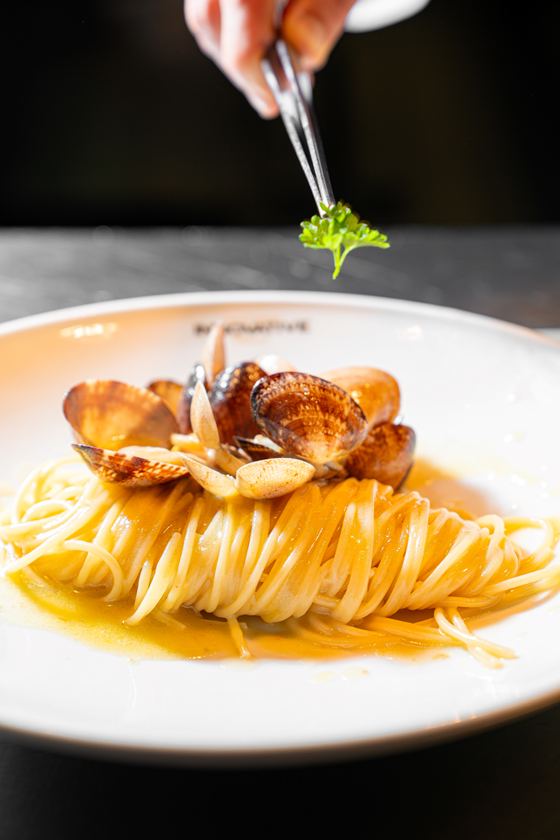
Scicchitano Napoli
Napoli (NA) · 0.6 km
ASCENSORI BONAVOLONTA' Srl
Napoli (NA) · 0.7 km
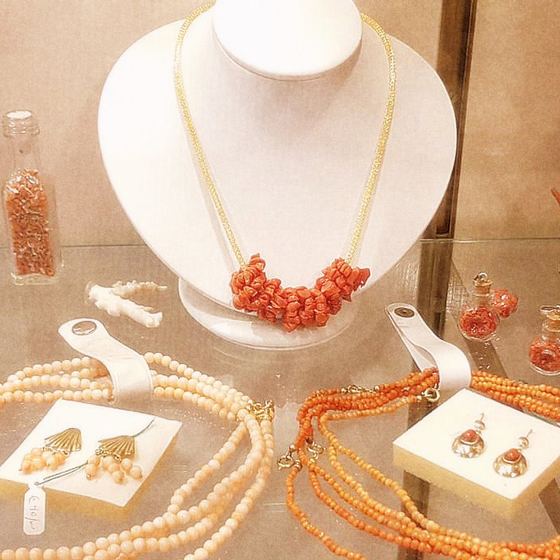
Cameo Factory De Paola
Napoli (NA) · 1.4 km

Dott. Stefano Viglione Chirurgo Ortopedico
Napoli (NA) · 1.8 km
Carbone Dal 1972
Napoli (NA) · 1.9 km
