
A borderland between Liguria and Tuscany, Lunigiana holds on to a gastronomic and cultural tradition of its own, with typical products and dialects that set it apart from the surrounding areas.
Lunigiana occupies a geographical position that belongs entirely to neither of its neighbours: wedged between Liguria and Tuscany, administratively split between the provinces of La Spezia and Massa-Carrara, it has developed over the centuries a character of its own, recognisable as much in the landscape as in the language and at the table. Its dialects retain traces of a Ligurian substratum that Tuscan has never fully absorbed, and this linguistic resistance is, in some measure, the mirror of a broader cultural resistance: that of a territory which has kept its distance from the gastronomic models of neighbouring regions, developing instead a cuisine of peasant and mountain origin that answers to the logic of woodland, pasture and season.
The chestnut tree is the structural element of this cuisine. The flour milled from it — known locally as farina dolce (sweet flour) — appears in preparations spanning the whole day's eating, from bread to fritters to festive sweets. Testaroli, perhaps the best-known product of Lunigiana tradition, are discs of batter cooked between two cast-iron plates called testi, then cut into diamond shapes and dressed with pesto or with oil and parmesan: a form of pasta that conceptually precedes the extruded kind, carrying with it a cooking technique that has remained substantially unchanged. The European Union has recognised Testaroli della Lunigiana with IGP status, just as Lunigiana chestnut honey has earned the DOP mark — formal signals of a specificity that the local community has guarded for generations.
Fosdinovo, on the Massa-Carrara side of Lunigiana, is one of the villages that best conveys the layered history of this territory. Perched on a hill at roughly 500 metres, with views over the Gulf of La Spezia and the Apuan Alps, the village is dominated by Castello Malaspina, a medieval building that has retained its residential function over time and is today among the best-preserved castles in the entire area. The Malaspina family were, for centuries, the lords of Lunigiana, and their pervasive presence — dozens of castles scattered along the valleys of the Magra and its tributaries — left a deep imprint on the organisation of the territory and on the identity of its villages. Dante Alighieri stayed with the Malaspina in 1306, an episode local tradition remembers precisely.
Lunigiana's gastronomic calendar still follows the rhythm of the agricultural seasons today. In autumn, chestnut gathering organises the days of entire families, and the cheeses made in mountain huts during summer transhumance come back down to the valley with the flocks. The cuisine of this land seeks not the refinement of elaborate technique but coherence between ingredient and method: Lardo di Colonnata, produced in the Apuan municipalities bordering Lunigiana, spalla cotta di San Secondo, and the wild herbs that go into savoury pies known as scarpazzone or torta d'erbi — preparations that vary from village to village with differences that are minimal yet significant to those who know them. It is in this local granularity, in this millimetric gap between one recipe and its variant in the next village, that the cultural density of a territory is measured.
Davide Papalini · CC BY-SA 3.0 — Wikimedia Commons
Certified Made in Italy businesses close to this place.
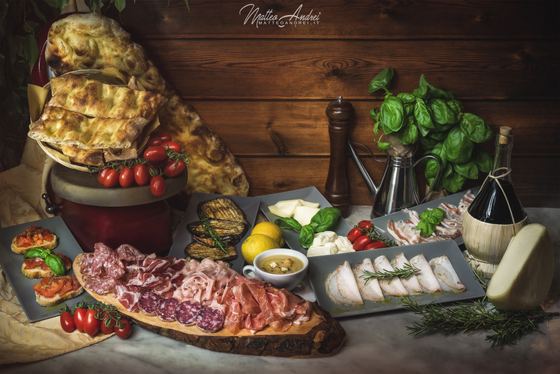
Focacceria Bisteccheria Elia
Castelnuovo Magra (SP) · about 4 km
BAR TRATTORIA CANDIA
Massa (MS) · 12.3 km
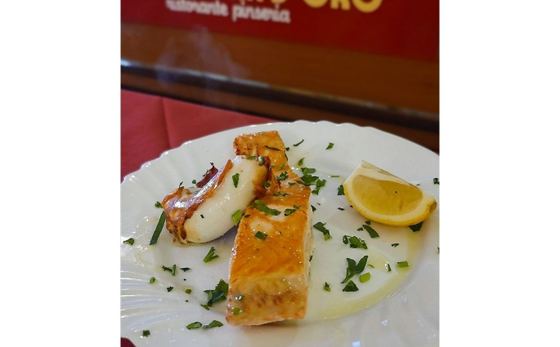
LA PALMA D'ORO RISTORANTE PINSERIA Giovanni e Eleonora
Piano di Follo (SP) · 12.7 km
LA CASA DELLA POMPA
La Spezia (SP) · 14.9 km
GUSTO SICILIANO
La Spezia (SP) · 15 km
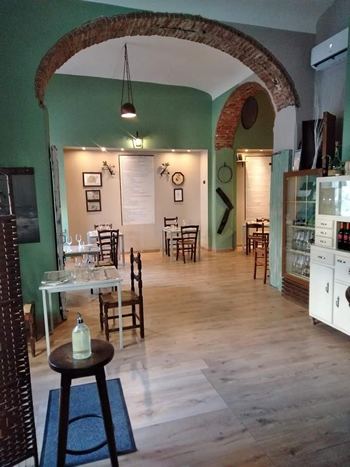
Antica Osteria dei Camalli
La Spezia (SP) · 15.9 km
