
An archetypal figure of rural Piedmontese folklore, the masca is the local witch: a tradition of magical and demonic beliefs rooted in the villages and farmhouses of Piedmont.
In rural Piedmont, the figure of the masca does not belong only to the past. In the farmhouses of Monferrato and the Asti area, among rows of vines and white roads cutting across the hills, the memory of these presences has survived with a tenacity that no amount of modernisation has entirely dissolved. The masca — a Piedmontese dialect term denoting a woman endowed with occult powers, capable of casting curses but sometimes also of healing — is an ambivalent figure: feared and consulted, marginalised and necessary. She is not the witch of Nordic tales, nor the one of the Tuscan inquisitorial trials, but something closer and more everyday, rooted in the concrete logic of peasant life.
In Revigliasco d'Asti, a small hill town in the province of Asti, this tradition has left precise traces in the local oral memory. Here survives the legend of *la gent d'ij can bianch* — literally "the people of the white dogs" — tied to the appearance of a large white dog near a local farmhouse. In Piedmontese popular tradition, the white dog is a liminal figure: it guards thresholds, marks the passage between the world of the living and that of nocturnal presences, gives warning. It is neither a domestic animal nor a wild beast, but a signal that the land sends to those who know how to read it. The legend of Revigliasco belongs to this symbolic grammar shared by many villages of the Asti area and the Roero.
The knowledge of the masche was a knowledge of the body and of nature: herbs gathered at precise moments of the calendar, ointments prepared according to orally transmitted formulas, gestures and words that acted upon illness, upon the harvest, upon animals. The women identified as masche were often on the margins of the community — widows, women living alone, bearers of knowledge that escaped collective control. Their social ambiguity mirrored the ambiguity of their role: the very person feared as a bringer of the evil eye might be sought out in secret for a remedy, for advice, for an intervention the village doctor would not have known how to provide. This duality lies at the heart of the figure, and explains why the memory of the masche has never entirely faded.
The *vija* — the winter vigils held in the stables, when families gathered in the warmth of the animals to pass the longest evenings of the year — were the privileged setting in which these stories circulated. In the stable, sheltered from the cold, people told of nocturnal encounters, transformations, apparitions along the paths. The telling was not pure entertainment: it had a normative function, signalling behaviours to avoid, places not to frequent after sunset, people to treat with caution. The geography of the land was thus populated with invisible meanings that shaped daily life as much as the roads and the boundaries of the fields.
Today, municipalities, pro loco associations and cultural bodies in the Asti area and neighbouring districts have taken up this heritage as a means of understanding the territory. This is not superficial folklorisation: the legends of the masche preserve, within their narrative form, real information about local botany, about pre-industrial medical practices, about the relations of power within rural communities. Revigliasco d'Asti and the nearby villages offer, in this sense, a layered terrain of reading, where the hill landscape and oral memory overlap in ways still legible to those with the patience to listen.
Neq00 · CC BY-SA 3.0 — Wikimedia Commons
Certified Made in Italy businesses close to this place.
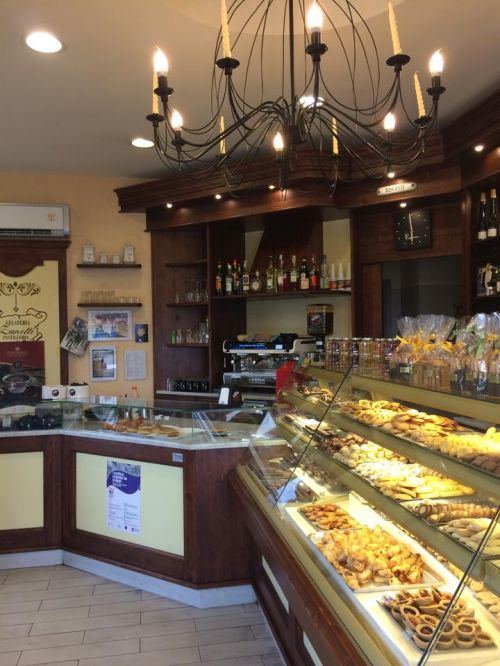
LA CASA DEL PROFITEROLE
Asti (AT) · 4.9 km
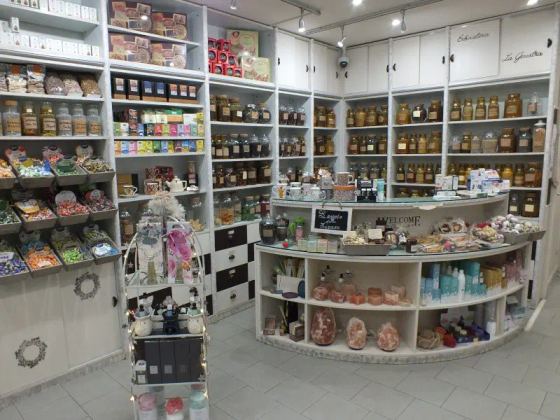
Erboristeria La Ginestra - Asti
Asti (AT) · 5.9 km
Onoranze funebri L' Astigiana
Asti (AT) · 7.6 km
Home Restorant Cascina Casa Mia
Asti (AT) · 9.8 km
CANTAMESSA CATERING DAL 1978
Priocca (CN) · 10.2 km

Il Filo Rosso
Villafranca D'asti (AT) · 11.5 km
