
The Grado lagoon, with its channels and salt marshes, is one of the main resting sites for migratory birds in the upper Adriatic. It is traditionally explored aboard local traditional boats.
Between Grado and the open sea stretches a lagoon that belongs to neither: an in-between territory of shallow waters, silent channels and expanses of salt marsh swept unobstructed by the Adriatic wind. The Grado lagoon, in the province of Gorizia, is one of the most intact lagoon ecosystems in northern Italy, and its extent — some ninety square kilometres of open water, mudflats and small islands — places it among the most significant natural sites along the entire northern Adriatic coast.
The structure of this environment is shaped by the morphology typical of the upper Adriatic lagoons: extremely shallow bottoms that emerge at low tide, channels cutting through the salt marsh like veins across a leaf, and a light that changes quality with every hour of the day, reflected off still water or rippled by the bora wind. This is not a landscape that gives itself up readily. It calls for slowness, and here slowness takes a precise form: that of the traditional local boats, flat-bottomed and silent, with which Grado's fishermen have navigated these channels for centuries.
It is from the boat that the lagoon reveals its role as a migratory corridor. During migration season — especially in spring and autumn — the salt marshes and muddy shores become resting grounds for species travelling between northern Europe and sub-Saharan Africa. Grey herons and purple herons nest in the most sheltered areas; spoonbills, recognisable by their flattened, paddle-shaped beaks, gather in tight groups along the channels. Waders — a term covering different families such as sandpipers, black-winged stilts and curlews — probe the mud with their specialised beaks across the tidal flats. The variety of species to be seen depends on the season and weather conditions, but the Grado lagoon is recognised by ornithologists as one of the most significant observation points in the upper Adriatic.
Navigating the inner channels makes it possible to reach areas that remain inaccessible on foot, where the silence is broken only by the calls of birds and the sound of water against the hull. Here, the close distance that a boat allows — without disturbing the animals, which perceive the vessel as a neutral element of the landscape — turns observation into something other than a chance sighting. It becomes an immersion in the logic of an ecosystem that runs on its own rhythms, indifferent to human presence when that presence moves with restraint.
Grado, the island on which the historic town stands, is connected to the mainland by an elevated road that crosses the lagoon itself. From that vantage point one senses the scale of the system. But it is only by navigating within it, among the salt marshes and reed beds, that one grasps how alive and layered this territory truly is — a place where physical and biological geography overlap in a way rarely found elsewhere along the Italian coast.
Carsten Steger · CC BY-SA 4.0 — Wikimedia Commons
Certified Made in Italy businesses close to this place.
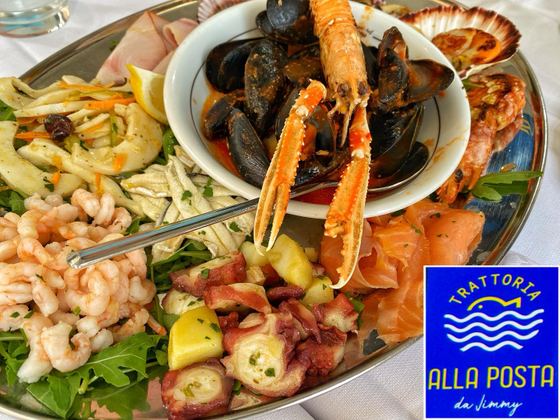
Trattoria Alla Posta Da Jimmy
Grado (GO) · 0.8 km
Hotel Repubblica
Monfalcone (GO) · 18 km
DORY GRILL DI MICHELE E ERICA GENOVESE
Bibione (VE) · 26.8 km

U SUSHI GORIZIA
Gorizia (GO) · 32.3 km

Residenza per anziani - VILLA IRIS - di PATRIZIA GANGALE E NICOLE GALLINUCCI
San Dorligo della Valle (TS) · 34.7 km
TRATTORIA DAL DIAUL E L'AGHESANTE
Rivignano (UD) · 35.2 km
