A high-altitude alpine lake in the Bionaz area, reached on foot via little-frequented trails of Valpelline. Its deep blue waters make it a strikingly scenic hiking destination, far from the main tourist circuits.
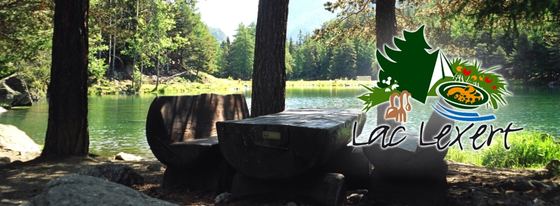
Valpelline is one of the side valleys of Valle d'Aosta that organised tourism has passed through without ever truly stopping. Climbing toward the municipality of Bionaz, the last settlement before the road comes to a halt against the walls of the Place Moulin reservoir, one finds Lago di Lexert in a position that requires neither long treks nor specialised equipment: the lake lies near the village of the same name, ringed by a forest of larches and firs, and the regional road skirts it with a familiarity that might mislead one about the nature of the surrounding landscape.
The water is emerald in colour, fed by glacial melt, and shifts in tone according to the hour and cloud cover. From the eastern shore the view opens onto an arc of notable peaks and glaciers: the Dent d'Hérens, the Tza de Tzan glacier, the Becca de Luseney, Les Grandes Murailles. To the west lies the Vessona valley; to the north, the Morion range and the Crête Sèche pass, which leads to the Otemma glacier. Within a few degrees of turning one's gaze, a glacial geography takes shape belonging to the border zone between Italy and Switzerland, with elevations exceeding four thousand metres.
The lake is listed among the Luoghi del Cuore (Places of the Heart) of FAI, the Fondazione per l'Ambiente Italiano (Italian Environment Fund), a designation that attests to its scenic value in the eyes of those who visit it. A path accessible to people with motor disabilities has been built along the shore, roughly 430 metres long, along with an equipped rest area. These interventions place Lexert in a hybrid category: it is neither a high-altitude lake reachable only after hours of walking, nor a postcard destination worn down by mass tourism. Its elevation and its location within the municipality of Bionaz keep it off Valle d'Aosta's main circuits, while remaining accessible to a wide public.
What sets Lexert apart from the region's better-known alpine lakes is precisely this layering of accessibility and seclusion. The surrounding forest muffles the noise and visually separates the lake from the road, preserving a sense of quiet that the amenities in place do not compromise. The peaks reflected in the emerald water belong to one of the most formidable mountain systems in the Western Alps, and that distance — geographic and visual — between the equipped shore and the glaciers in the background is what gives this place its particular character.
Francofranco56 · Public domain — Wikimedia Commons
Certified Made in Italy businesses close to this place.