Before you go on
This site uses only what it needs to work: the language you choose, access to the members' area, and anonymous counts that tell us whether the search is answering well. For advertising campaigns we ask your permission, and without a yes nothing starts. See the full list.

Natural springs along the course of the Clitunno river, set in a landscape of clear waters, poplars and willows that has inspired poets and travellers since antiquity. A place of authentic stillness in the heart of Umbria.
Along the Via Flaminia, just north of Spoleto, the Clitunno emerges from the earth with a discretion that contrasts with the fame it has accumulated over the centuries. The karst springs surface at several points, feeding a small pool with clear beds, where light filters and scatters before reaching the gravelly bottom. The river born here is a tributary of the Topino, which in turn flows into the Tiber: a modest course in geographical terms, but one dense with meaning in the collective memory of ancient Italy.
Virgil wrote of it in the Georgics, Pliny the Elder described its waters with admiration in his letters, and centuries later Byron stopped here during his journey through Italy, dedicating a few stanzas of Childe Harold's Pilgrimage to the springs. This continuity of literary attention is no accident: the place possesses a quality of suspension, born from the combination of still water, dense vegetation and a silence broken only by the movement of the currents. White poplars and weeping willows line the banks, their reflections overlapping with those of the sky on a surface that changes character with every hour of the day.
In antiquity the waters of the Clitunno were considered sacred and endowed with purifying properties. The white oxen that drank from them were destined for sacrifice in the temples of Rome, and their whiteness was attributed, according to tradition, to the very quality of the water. Temples and porticoes once stood along the banks; nothing remains of them directly, but their existence is documented in Latin sources.
A few hundred metres from the springs stands the Tempietto del Clitunno (Clitunno Temple), a modestly sized building long debated by historians: for centuries believed to be a Roman temple, it is now classified as a Paleochristian structure, datable to between the 5th and 7th centuries AD. In 2011 UNESCO included it on the World Heritage List, as part of the serial site of the Longobards in Italy, recognising the cultural stratification the territory expresses. The façade, with its Corinthian columns and triangular pediment, draws on classical architectural vocabulary while adapting it to a Christian function: a passage of forms that visually sums up the transition between two eras.
The park that today surrounds the springs allows visitors to walk along the banks, following the water's edge past small bridges and through vegetation. Slowness is the right measure for this place: it offers no spectacle, only a continuous, silent presence, that of waters flowing with the same steadiness for millennia, indifferent to the history that has settled around them.
Einaz80 · CC BY-SA 4.0 — Wikimedia Commons
Certified Made in Italy businesses close to this place.
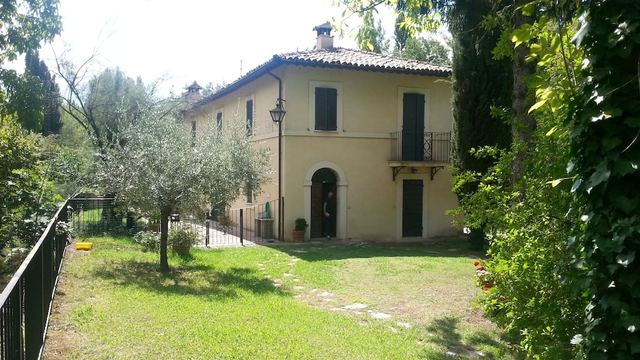
PIEVE SANT'ANGELO GUEST HOUSE
Campello sul Clitunno (PG) · 2.5 km

LA TAVERNA DI SAMPEY
Castel Ritaldi (PG) · 7.9 km

AGRITURISMO SANTA SERENA
Cerreto di Spoleto (PG) · 8.5 km

BAR SELF-RESTAURANT PIZZERIA VALNERINA Srl
Vallo di Nera (PG) · 9.3 km
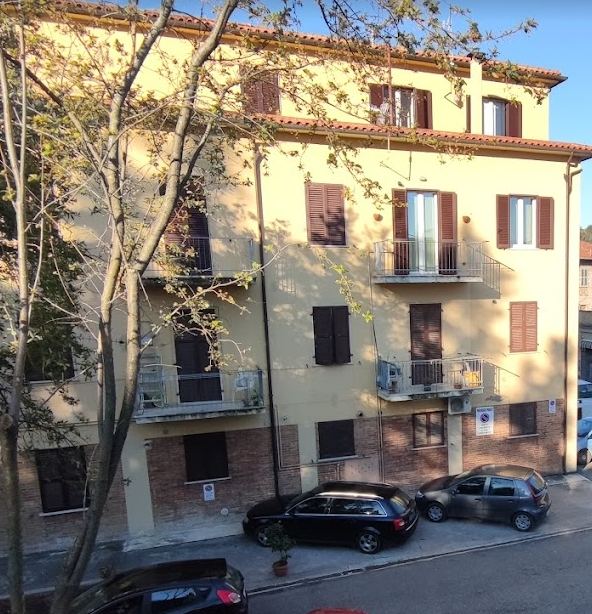
B & B LA ROCCA SPOLETO
Spoleto (PG) · 9.5 km
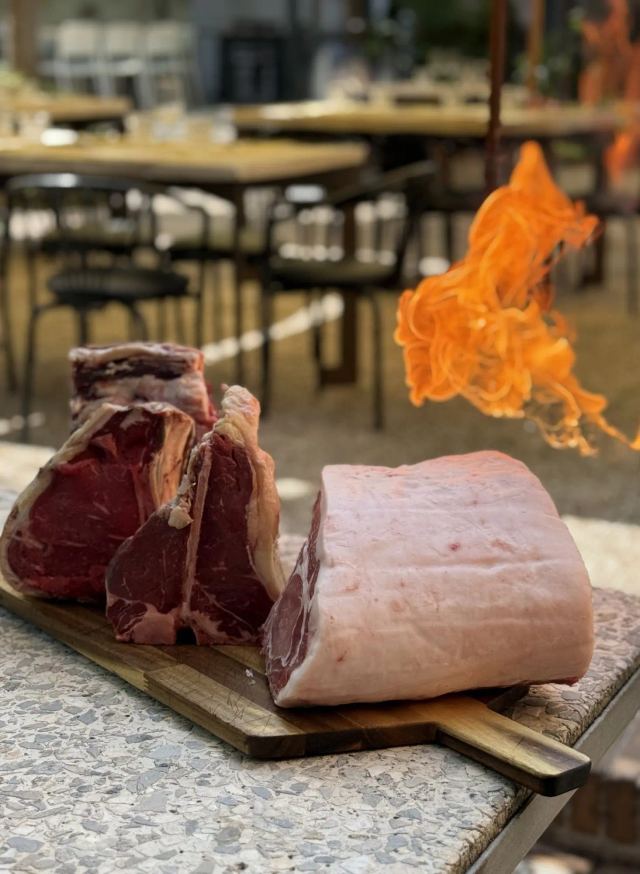
ANTICA TRATTORIA PECCHIARDA DAL 1903
Spoleto (PG) · 10 km