Before you go on
This site uses only what it needs to work: the language you choose, access to the members' area, and anonymous counts that tell us whether the search is answering well. For advertising campaigns we ask your permission, and without a yes nothing starts. See the full list.

Founded in the 11th century near Serra Sant'Abbondio, the Camaldolese hermitage of Fonte Avellana is one of the oldest and best-preserved monastic sites in the Marche. Visited by Dante Alighieri, it holds a scriptorium and a library of great historical value.
At the foot of Monte Catria, at 700 metres above sea level, in the municipality of Serra Sant'Abbondio in the province of Pesaro e Urbino, stands a monastic complex that carries almost eleven centuries of unbroken history. The origins of Fonte Avellana date back to around 980, when a group of hermits chose these wooded slopes to build the first retreat cells. The spirituality that shaped its development was that of San Romualdo di Ravenna, founder of the Camaldolese Benedictine congregation, who was active in those years in the immediately surrounding areas — Sitria, Monte Petrano, San Vincenzo al Furlo — leaving an imprint that would define the hermitage's character for centuries to come.
The moment of greatest significance in the history of Western monasticism coincides with the priorate of San Pier Damiani, who led the community in the 11th century and made Fonte Avellana one of the driving centres of medieval monastic reform. Under his direction the hermitage was not only a place of prayer and penance, but an intellectual and spiritual point of reference capable of engaging with the great questions facing the Church of his time. That period left architectural and cultural traces that the complex still preserves in legible form today: the Romanesque-Gothic church from the 12th century, the crypt, the chapter house, the cloister, the refectory and the scriptorium — spaces that together convey the functional structure of a medieval monastic community.
The scriptorium deserves separate consideration. The room was designed as a sundial, so that natural light would mark the hours of the monks' daily work as scribes, engaged in transcribing classical Greek and Latin texts onto parchment and in producing illuminated codices. That function — copying, preserving, transmitting — was at once manual labour and spiritual act, in keeping with the Rule of St Benedict. The manuscripts produced and gathered over the centuries still form the core of a library of uncommon historical and documentary value.
Dante Alighieri's presence at Fonte Avellana in 1311 belongs to established tradition, and it is the poet himself who fixes its memory in the twenty-first canto of Paradiso. Here Pier Damiani, appearing in the sphere of Saturn, describes the place of his eremitic life in verses precise in their geography: «Tra due liti d'Italia surgon sassi / e non molto distanti a la tua patria / tanto che troni assai suonan più bassi / e fanno un gibbo che si chiama Catria / di sotto al quale è consecrato un ermo / che suole esser disposto a sola latria» (Between the two shores of Italy rise crags, not far from your homeland, so high that the thunder sounds far below, forming a hump called Catria, beneath which is consecrated a hermitage once given wholly to worship). Catria, the hump, the hermitage: Dante does not allude, he names. That citation has travelled through the centuries alongside the hermitage, lending it a literary dimension that overlays the religious one without erasing it.
The history of Fonte Avellana also knew forced interruptions: the Napoleonic suppressions of 1810 and those that followed the Unification of the Kingdom of Italy in 1866 drove away the Camaldolese monks, who later returned to run the complex. In March 1982 John Paul II raised the abbey church to the dignity of minor basilica. The monastery can be visited today and still hosts an active monastic community, a condition that keeps alive the continuity between the place's original function and its contemporary use.
Giacomo Alessandroni · CC BY-SA 4.0 — Wikimedia Commons
Certified Made in Italy businesses close to this place.
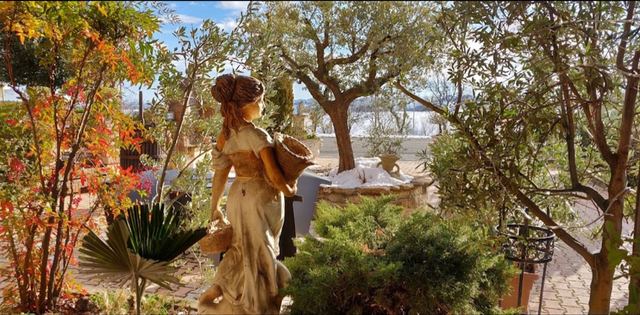
Ristorante Piccolo Ranch
Arcevia (AN) · 14.9 km
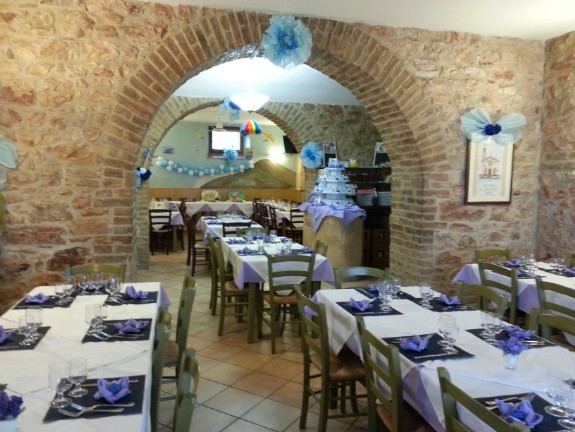
RISTORANTE PIZZERIA VILLA ANITA
Sigillo (PG) · 17.9 km
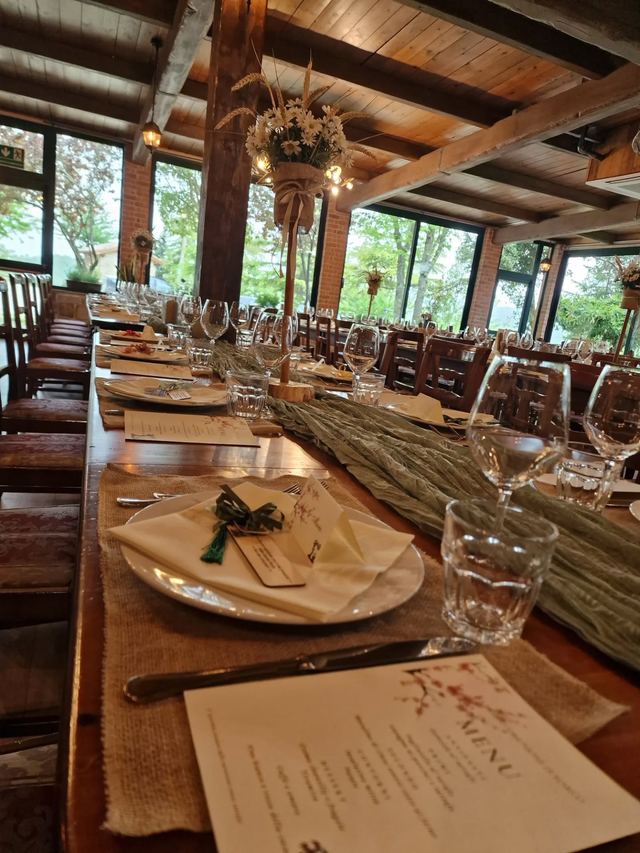
RISTORANTE DA BAFFONE
Gubbio (PG) · 18.7 km

Monella Pizza Experience
Fabriano (AN) · 20.2 km

AGRITURISMO SAN BARTOLO
Gubbio (PG) · 21.9 km
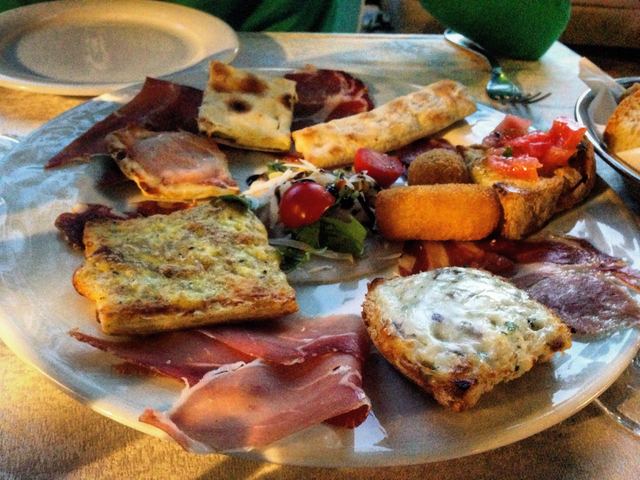
Ristorante Alla Balestra
Gubbio (PG) · 22 km