Before you go on
This site uses only what it needs to work: the language you choose, access to the members' area, and anonymous counts that tell us whether the search is answering well. For advertising campaigns we ask your permission, and without a yes nothing starts. See the full list.

A medieval village in the Imperia hinterland, known for the Doria castle and the quiet alleys that invite a slower pace away from the crowded coast.
The name comes from far back: the Latin *villa dulciaca*, a rural estate of Roman date derived from the personal name Dulcius, which over the centuries contracted into the dialectal *Dusäiga* and then unfolded into the Italian Dolceacqua. The first document mentioning the settlement dates to 1151, when the counts of Ventimiglia had the first nucleus of the castle built on the rocky spur overlooking the confluence of the Nervia stream. Even earlier, between the 5th century BC and the 4th century AD, the surrounding heights were held by the Intemelii with their Iron Age *castellari* — rough dry-stone structures in concentric rings, scattered along the watershed between the Nervia and Roia valleys. The layering is still visible today, if you know where to look.
The castle later passed to the Doria family, the Genoese dynasty that held it for several centuries and made it the centre of a small feudal domain in the Imperia hinterland. What remains is an imposing structure, with towers and curtain walls that read clearly from below, from the single-arch medieval bridge that spans the Nervia and forms the most recognisable image of the village. Claude Monet painted it in January 1884, during his stay on the Riviera, and was struck enough to return to it several times. The painting is now held at the Art Institute of Chicago.
Below the castle spreads the *Téra*, the medieval core of the village: a system of *carugi* — the narrow alleys typical of Liguria — woven into a tight fabric, with low vaults, slate steps and the occasional workshop. Light enters obliquely, filtered through the outlines of the houses. The pace this space imposes is inevitably slow, not for scenic effect but by physical necessity. You cannot walk quickly through the carugi of the Téra.
A significant part of the municipal territory is covered with vineyards planted with Rossese, a native grape variety from which Rossese di Dolceacqua DOC is made, one of the few red wines of Liguria with its own denominazione di origine controllata. The vines grow on steep terraces, sun-exposed and ventilated by the tramontana wind descending from the Alpi Marittime. The resulting wine is delicate, with a light structure and an aromatic profile that recalls Mediterranean scrubland. Production is limited, and distribution outside the area remains modest.
Dolceacqua lies a handful of kilometres from the French border and less than twenty from the coast, yet it belongs to a different measure of time. The Imperia hinterland has this quality: distance from the sea is measured also in decibels and in the density of human presence. The village holds the Bandiera Arancione recognition from the Touring Club Italiano, awarded to small inland centres that meet criteria of environmental and cultural quality. It is an administrative fact, but it says something concrete about what has been preserved here — not out of nostalgia, but out of continuity.
Scrossblu · CC BY 4.0 — Wikimedia Commons
Certified Made in Italy businesses close to this place.
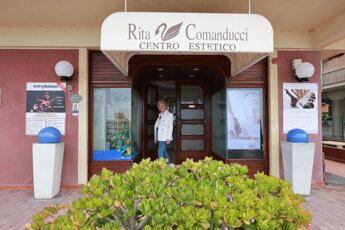
Centro Estetico Comanducci Rita
Ventimiglia (IM) · 9.3 km
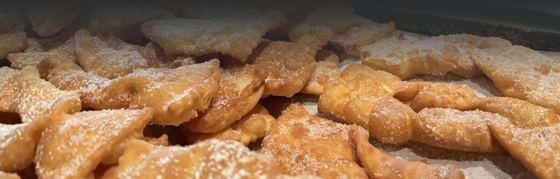
BASILICO E PINOLI
Sanremo (IM) · 12.8 km
Studio D'Arredo Graziella Vero
Sanremo (IM) · 13.3 km
BAR SAN SCI'
Sanremo (IM) · 13.5 km
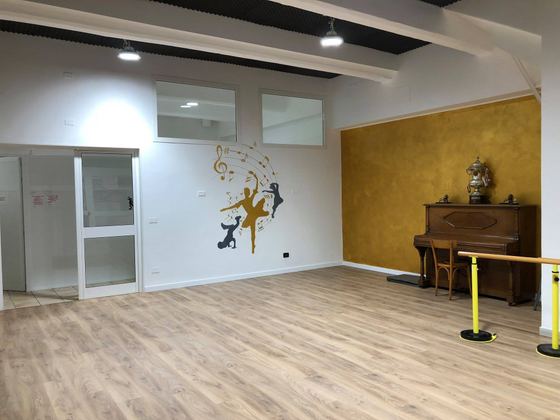
Scuola Danza Città Dei Fiori Asd
Sanremo (IM) · 13.7 km
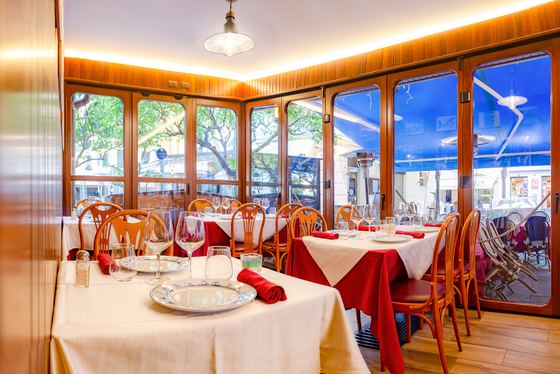
Ristorante Da Nicò - Sanremo
Sanremo (IM) · 13.8 km