Before you go on
This site uses only what it needs to work: the language you choose, access to the members' area, and anonymous counts that tell us whether the search is answering well. For advertising campaigns we ask your permission, and without a yes nothing starts. See the full list.

Medieval village in the Peloritani Mountains with spectacular views over the Aeolian Islands, home to deep-rooted traditions such as the Cristo Lungo procession.
Castroreale stands on the Torace hill, at 394 metres above sea level, among the north-western Peloritani Mountains in the province of Messina. Its origins reach back to the Arab period, when a first settlement took shape around a stronghold on the slopes of Cozzo di Sughero. It was Frederick II of Aragon who, in the 14th century, granted the town the title of Regia city — the source of its present name — turning a military outpost into an urban centre with institutional standing. That medieval choice of an elevated position, dictated by defensive needs, now yields a horizon few places in northern Sicily can match.
From the village, on clear days, the Aeolian Islands stand out against the Tyrrhenian Sea with a sharpness that seems to close the distance. Vulcano, Lipari, Salina and the other islands of the archipelago appear suspended between sea and sky, visible from the belvedere squares that open among the stone-paved lanes. The medieval urban layout has remained largely intact: narrow, steep streets, stone buildings, ornate churches holding works of considerable artistic value. The Torre di Federico II (Tower of Frederick II), cylindrical and austere, is the village's most recognisable architectural feature, a remnant of a defensive system that once controlled the entire valley.
Castroreale's community fabric shows itself with particular clarity in its religious traditions. The procession of the Cristo Lungo (the Long Christ) is the most deeply rooted: a statue of Christ on the cross with unusual proportions, carried in procession according to rites the community has handed down without interruption. This is not folklore staged for visitors, but a practice the local population lives as part of its own collective identity. It is what sets Castroreale apart from many Sicilian villages whose ceremonies have been emptied of their inner meaning.
The village's pace is slow by structure, not by choice. The main tourist flows follow the Tyrrhenian coast and the islands, leaving the Peloritani hinterland in relative quiet. Those who climb up to Castroreale travel secondary roads through cultivated hills, and find a town where daily life follows its own rhythm. It is this distance from the main circuits that makes the place suited to a kind of stay that asks for no crowded itinerary, only a willingness to stand still and look into the distance.
Effems · CC BY-SA 4.0 — Wikimedia Commons
Certified Made in Italy businesses close to this place.
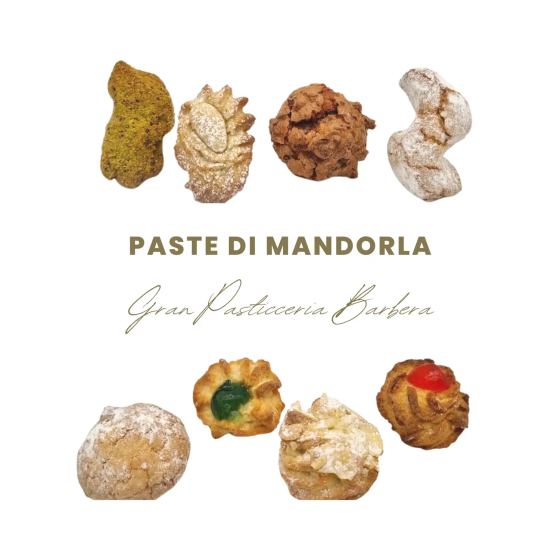
Gran Pasticceria Barbera
Barcellona Pozzo di Gotto (ME) · 5.6 km
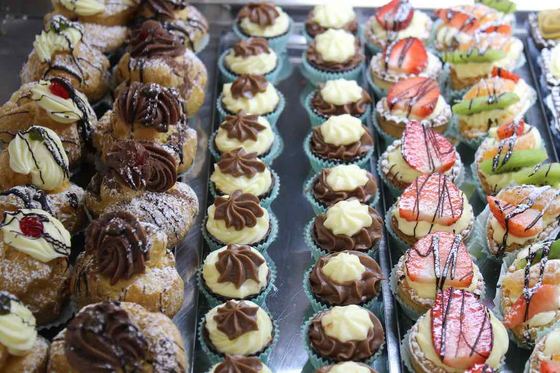
Arthè Cafè
Furnari (ME) · 8.9 km
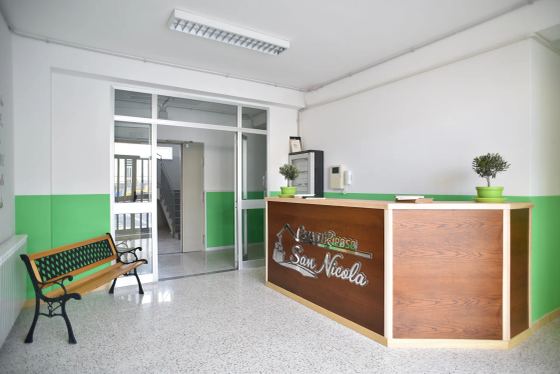
Casa di Riposo San Nicola
Sicamino (ME) · 11.7 km
Poliambulatorio Orice
Milazzo (ME) · 13.3 km
Risto Pescheria Caravello
Milazzo (ME) · 13.6 km
BONDAY RISTORANTE -BEACH CLUB
Giardini-Naxos (ME) · 31.6 km