Before you go on
This site uses only what it needs to work: the language you choose, access to the members' area, and anonymous counts that tell us whether the search is answering well. For advertising campaigns we ask your permission, and without a yes nothing starts. See the full list.

Fortified medieval village mirrored in a small heart-shaped lake, among the most intact examples of walled settlement in the Mantuan plain.
In the Mantuan plain sloping toward the morainic hills of Garda, the municipality of Monzambano safeguards one of the best-preserved medieval settlement structures in eastern Lombardy. Castellaro Lagusello — a name that condenses its dual nature, of stronghold and body of water — presents itself as an almost intact walled enclosure holding a small nucleus of rural houses, two rustic buildings of medieval origin and the remains of a castle, all overlooking a small lake of morainic origin whose outline, seen from above, traces the shape of a heart.
The history of the village is rooted in the 11th and 12th centuries, when the Scaligeri, lords of Verona, had the castle built to garrison a territory of considerable strategic value, positioned at the crossroads between the spheres of influence of some of the major powers of the Po plain. In the centuries that followed, Castellaro Lagusello was contested among the Scaligeri themselves, the Visconti, the Gonzaga and the Republic of Venice — a sequence of changing hands that reflects the mobility of political borders in this area between the 14th and 15th centuries. In the 17th century the Serenissima ceded the complex to the counts Arrighi, and with that transition the defensive structures progressively lost their original function. What remains, however, is the walled circuit with four towers, some stretches of the sentry walkway and the two rustic houses that still define the internal fabric of the village.
What sets Castellaro Lagusello apart in the landscape of walled villages of the Po plain is the degree of its preservation. The ensemble has not been rebuilt or reinterpreted: gaps remain gaps, exposed brickwork bears the mark of time without restoration altering its reading. The small lake, fringed with reed beds, is included within the Castellaro Lagusello Nature Reserve (Riserva Naturale di Castellaro Lagusello), itself part of the Mincio Park (Parco del Mincio). Private management of the area has allowed favourable ecological conditions for spontaneous flora to be maintained, including several species of wild orchids that bloom in the surrounding meadows in spring.
The village belongs to the municipality of Monzambano, in the province of Mantua, and occupies a geographical position that keeps it off the main routes of Garda tourism while remaining just a few kilometres from the lake. This marginality with respect to visitor flows has, over the decades, helped preserve its physiognomy. The inner streets are narrow, the number of residents small, the silence measurable. It is a settlement that history has passed through without ever fully transforming it, and that geography has protected without isolating it.
Massimo Telò · CC BY-SA 4.0 — Wikimedia Commons
Certified Made in Italy businesses close to this place.
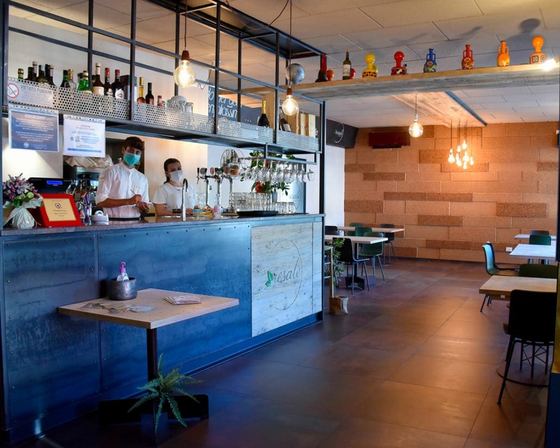
Resalè - Pizza Gourmet
Monzambano (MN) · 0.1 km
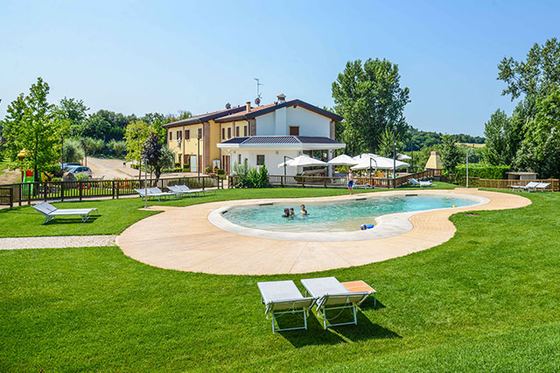
Agriturismo Corte Tonolli
Valeggio sul Mincio (VR) · 2.9 km
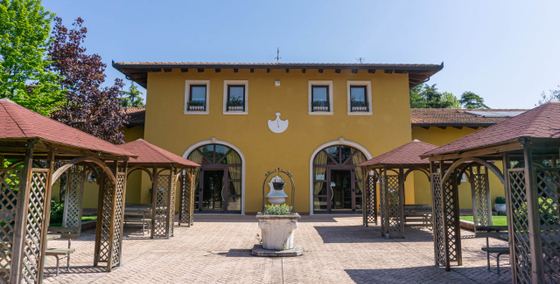
AGRITURISMO I FILARI
Valeggio sul Mincio (VR) · 3.8 km
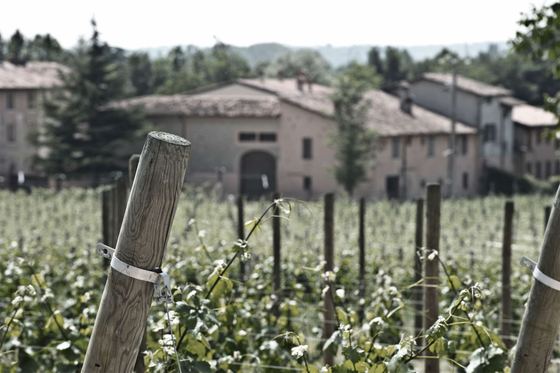
Azienda Agricola Colli Vaibò
Pozzolengo (BS) · 7.2 km

Fragrante
Desenzano del Garda (BS) · 12.6 km

Mach 2 Ricamificio & Abbigliamento Personalizzato
Villafranca di Verona (VR) · 13.3 km