
The Cartiera di Bevagna is one of the workshops in the Circuito dei Mestieri Medievali, faithfully reproducing thirteenth-century papermaking with water-driven machinery and rag processing.
Bevagna preserves its medieval layout with a coherence few Umbrian towns can claim. The streets still follow the Roman plan of ancient Mevania, but it is the period between 1250 and 1350 that defines the town's deeper identity: that century-long span in which the town was divided into four administrative quarters, the gaite, each with its own civil and military responsibilities. It was in this context that the trades now kept alive by the Circuito Culturale dei Mestieri Medievali (Cultural Circuit of Medieval Crafts) took shape and became established, among them that of the cartaro, or papermaker, practised in the workshop known as Cartiera di Mastro Cecco.
The paper mill occupies a space that faithfully reproduces the working conditions of a fourteenth-century workshop. At the heart of the process is the pila idraulica a magli multipli, a water-driven system of multiple hammers that pounded linen and hemp rags until they were reduced to a homogeneous fibrous pulp, the raw material from which every sheet was made. Before being worked, the rags were soaked in water to soften the fibres and encourage them to break down. The sheet was then formed by dipping a wire-mesh mould into the vat holding the diluted pulp, lifting it carefully to spread the fibres evenly, before pressing and drying it. The final step was entrusted to the calandro, a tool that smoothed the surface of the finished sheet to make it suitable for writing.
This process, in its precise sequence and slow pace, was already a relatively recent technology in fourteenth-century Italy. Rag paper had begun to spread across the peninsula over the course of the thirteenth century, gradually displacing parchment for documents, commercial ledgers and texts of study. Its wider availability and lower cost helped reshape the material conditions of written culture, well before the printing press multiplied its reach still further.
The Bevagna workshop is not a museum display in the conventional sense: the machinery works, the process is carried out, the sheet is produced. This operational continuity is integral to the Mercato delle Gaite, the historical re-enactment held every year in June, in which the four quarters compete under juries that judge the historical accuracy of their reproductions. The paper mill, together with the workshops of the ceraiolo (wax-worker), the weaver and the painter, forms one of the nodes of this system, which for a few days each year turns the town into a place where medieval craft knowledge is practised, not merely commemorated.
Diego Baglieri · CC BY-SA 4.0 — Wikimedia Commons
Certified Made in Italy businesses close to this place.
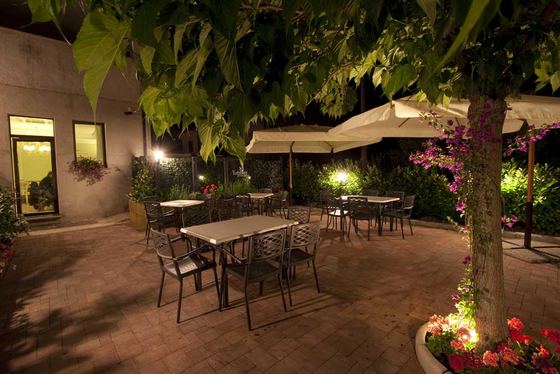
Ristorante La Lumaca D'Oro
Bevagna (PG) · 4.3 km
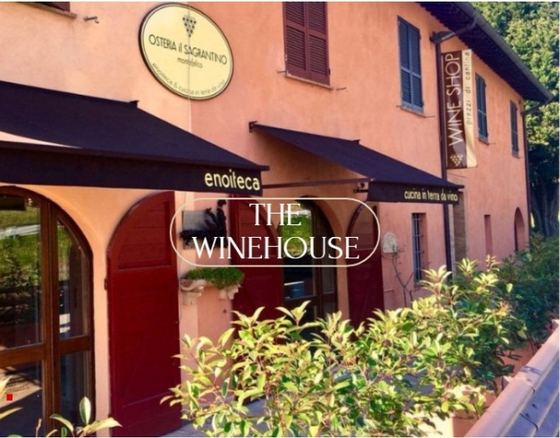
OSTERIA IL SAGRANTINO
Montefalco (PG) · 4.5 km
OLEVM
Montefalco (PG) · 5.7 km
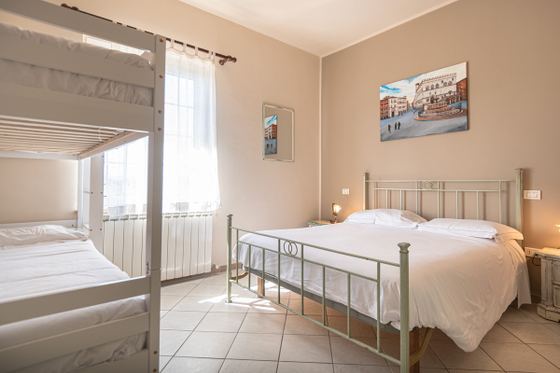
AGRITURISMO TORRE QUADRANA
Spello (PG) · 5.9 km
Norcineria Pizzoni Adelmo
Foligno (PG) · 6.8 km
IL VICOLETTO DEL GUSTO PIZZERIA
Bevagna (PG) · 6.9 km
