
Bevagna preserves a living tradition of ancient medieval crafts passed down in the artisan workshops of its historic centre, among papermakers, wax-workers and weavers.
Bevagna rises in the Topino valley, a short distance from Foligno, along a route that in Roman times was called Mevania. The town was founded in the 3rd century BC as a commercial node along the route between Rome and the Adriatic, and its medieval layout has preserved that structure with rare coherence: the streets still follow the ancient plan, the squares open without artifice, the local stone sets the chromatic tone of the whole. It is within this almost intact urban setting that a craft practice has been preserved over the centuries — one that elsewhere has died out or been reduced to museum reconstruction.
The workshops of the Maestri di Bottega (Master Craftsmen) are neither didactic reproductions nor temporary displays: they operate continuously in the historic centre and pass down techniques that trace back to the Middle Ages with no documented interruption. The papermakers work rag pulp using the manual mould-and-deckle method, producing sheets with the same irregular weight and the same watermark that characterised Umbrian paper of the 14th and 15th centuries. The wax-workers shape and cast wax with hand tools, following processes that involve no automation. The weavers work at pedal looms, reproducing weaves and patterns from medieval tradition. Each of these disciplines requires years of apprenticeship and a direct transmission of technical gesture that cannot be acquired through theory alone.
The setting in which these workshops thrive is the Mercato delle Gaite, the historical event that each year, between late June and early July, divides the town into four districts — the gaite, a term of Lombard origin denoting the urban divisions once responsible for watch and defence. During the Mercato, the workshops open to the public and the master craftsmen work in full view, making the entire production process visible. The competition between the gaite concerns not only costumed re-enactment but also the quality and philological accuracy of the crafted goods produced, judged by a panel according to criteria drawn from medieval historical sources.
What makes Bevagna a case study within Italy's intangible heritage landscape is continuity: the techniques are not revived for the occasion but practised all year round, independent of the event. The paper made in Bevagna is bought, used, sold. The wax worked by the wax-makers becomes liturgical and decorative objects that circulate beyond the town. This productive dimension — not merely exhibitive — is what sets the craftsmanship of Bevagna apart from many other medieval re-enactment experiences found elsewhere in Umbria and across the peninsula. The heritage is not kept behind glass: it continues to generate objects, and with them, to reproduce the knowledge that makes them possible.
Diego Baglieri · CC BY-SA 4.0 — Wikimedia Commons
Certified Made in Italy businesses close to this place.
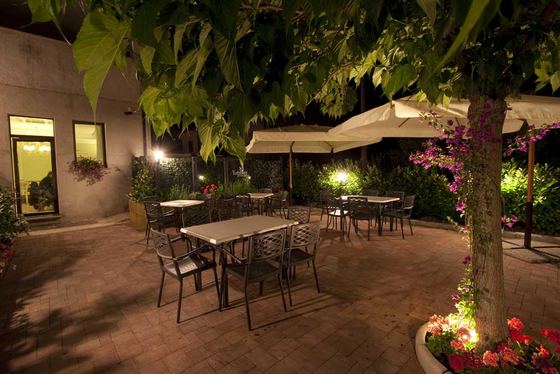
Ristorante La Lumaca D'Oro
Bevagna (PG) · 4.3 km
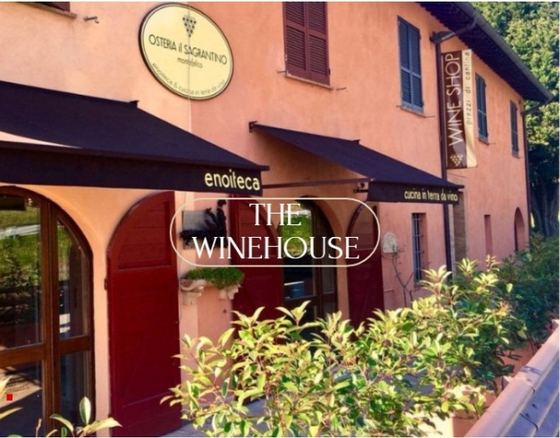
OSTERIA IL SAGRANTINO
Montefalco (PG) · 4.5 km
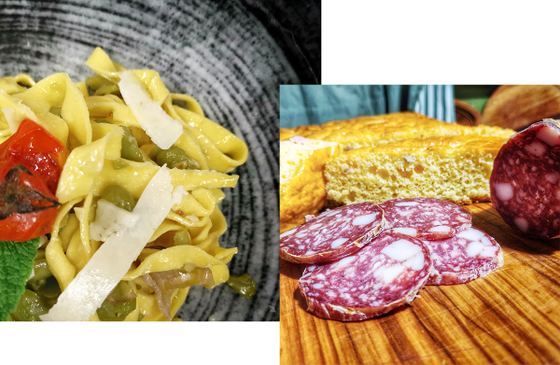
OLEVM
Montefalco (PG) · 5.7 km
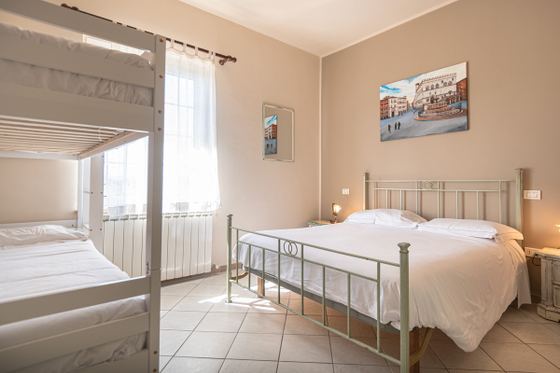
AGRITURISMO TORRE QUADRANA
Spello (PG) · 5.9 km
Norcineria Pizzoni Adelmo
Foligno (PG) · 6.8 km
IL VICOLETTO DEL GUSTO PIZZERIA
Bevagna (PG) · 6.9 km
