Before you go on
This site uses only what it needs to work: the language you choose, access to the members' area, and anonymous counts that tell us whether the search is answering well. For advertising campaigns we ask your permission, and without a yes nothing starts. See the full list.

The village of Allerona holds a museum preserving fossilized cetacean skeletons from roughly two million years ago and a rare fossil ambergris find, evidence of a vanished ancient sea.
Allerona is a medieval village in southern Umbria, in the province of Terni, perched on a hill that looks out toward Tuscany and Lazio. The compact profile of its stone houses, the pieve church of Santa Maria Assunta, and the woods surrounding the settlement compose a landscape of rural quiet. Yet beneath that quiet, and beneath that same soil, lies the memory of a radically different world: roughly two million years ago, in the early Pleistocene, this part of Umbria lay beneath a sea.
The Museo dei Cicli Geologici (Museum of Geological Cycles) in Allerona grew out of that discovery. The clay deposits of the area, particularly those exposed at Bargiano, have over time yielded a remarkable quantity of marine remains: molluscs, decapod crustaceans, shark teeth, and — among the most unexpected finds — fossilized cetacean skeletons. Four specimens are documented and preserved in the museum. Their presence in a hilly inland area more than two hundred kilometres from today's coastline is the result of a long, layered geological process, which the museum reconstructs through the finds themselves and their stratigraphic context.
Among the materials on display is also a sample of fossil ambergris. Ambergris is a substance produced in the digestive tract of sperm whales, known historically for its use in perfumery; in its fossil form, solidified and buried in marine sediment for millions of years, it is a find of scientifically documented rarity. Its presence in Allerona is consistent with the hypothesis that these Pleistocene seabeds supported a rich cetacean fauna, and the museum devotes a dedicated section to the subject, including a discussion of the so-called whale falls — the ecological sequence set in motion when a cetacean carcass sinks to the ocean floor.
The museum's origins are tied to Agnese Peparello, to whom the official site explicitly credits the start of the collecting and scientific project. This local root, built on fieldwork and close attention to the territory, sets the museum apart from larger-scale paleontological circuits and gives it a precise narrative coherence: not a generic fossil collection, but the reconstruction of a specific marine environment, defined in both geography and time.
The village and the museum together form a route in which geology and history overlap without interfering with one another. The wooded paths that branch out around Allerona partly cross the same clay terrain that preserved the fossils, making the surrounding landscape a natural continuation of what is displayed in the halls. Allerona remains a place of modest scale, far from Umbria's main tourist flows, and the museum keeps that same scale: dense with content, free of embellishment.
LigaDue · CC BY-SA 4.0 — Wikimedia Commons
Certified Made in Italy businesses close to this place.

Corradini Serramenti
Castel Viscardo (TR) · about 7 km

Athena Srls
Castel Giorgio (TR) · 11.2 km
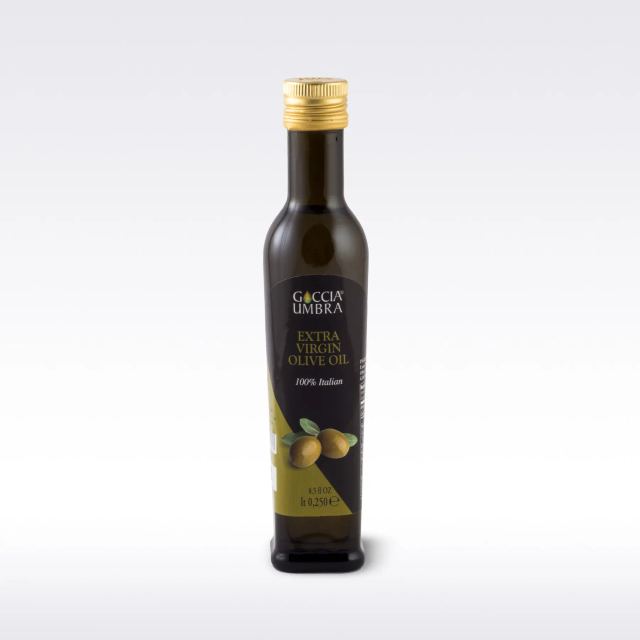
Goccia Umbra
Castel Giorgio (TR) · 12.3 km
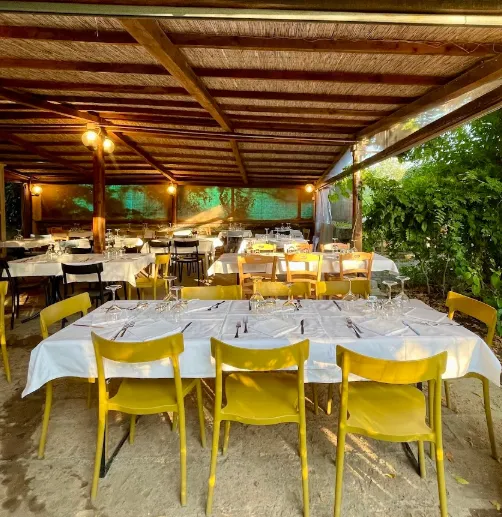
Trattoria Del Conte
Orvieto (TR) · 15.5 km
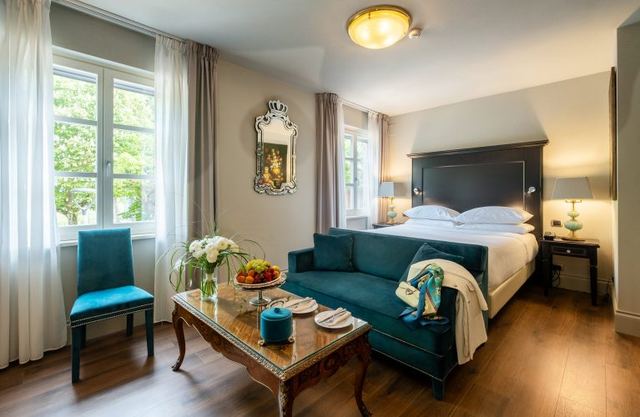
HOTEL VANNUCCI
Città della Pieve (PG) · 16 km
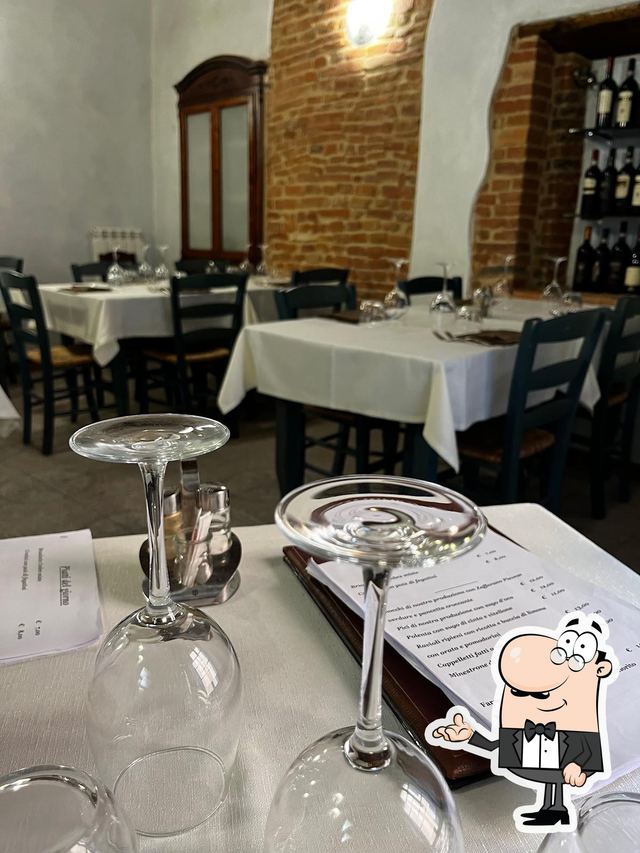
DA LAURA RISTORANTE
Città della Pieve (PG) · 16.1 km