
The megalithic walls of the acropolis of Alatri, dating back to the pre-Roman era, are among the most striking examples of cyclopean architecture in Lazio, still remarkably well preserved today.
Alatri rises in Ciociaria, in the province of Frosinone, on a hill that both tradition and archaeology point to as one of the oldest settlement sites in inland Lazio. Its origins are linked to the Hernici, a pre-Roman Italic people credited with building the acropolis and the megalithic walls that still encircle the upper part of the town. Dating ranges between the 7th and the 4th-3rd centuries BC, depending on the sources and the criteria used in stratigraphic reading, but the material evidence speaks with a consistency few other structures in central Italy can match.
The acropolis's polygonal walls are built dry, without mortar, using limestone blocks of considerable size arranged according to what is known as polygonal or cyclopean masonry — a term popular tradition adopted to explain, through myth, what reason struggled to attribute to human hands. The blocks are not uniformly squared: each one is shaped to fit precisely with those beside it, in a system that distributes loads without any binding material. The wall's perimeter runs for about one kilometre, with a thickness that in places exceeds three metres. The two main gates — the Porta Maggiore and the Porta Minore — still retain their original monolithic jambs and lintels.
The acropolis forms what local sources call the *Civitas nova*, the raised nucleus around which the urban fabric below, the *Civitas vetere*, is organised. This distinction is not merely topographical: it reflects a layering of functions and eras that has made Alatri an urban palimpsest legible to the naked eye. The medieval historic centre developed along the irregular perimeter of the pre-Roman walls, adapting its streets to the slopes of the hill through a network of narrow lanes and terraces, particularly on the southern side known as le Piagge.
Within the landscape of pre-Roman architecture in Lazio, Alatri stands alongside other Hernici sites — Ferentino, Anagni, Veroli — which together form a territorial system of remarkable historical coherence. This system found institutional recognition in the *Hernica Saxa* project, a joint bid for Italian Capital of Culture 2028 that reached the final round without winning, but succeeded in drawing attention to an area long treated by official historiography as peripheral to the great axes of Roman civilisation. Seen in this light, the walls of Alatri are not an isolated relic: they are the visible trace of a civilisation that organised its territory by its own criteria, before Rome redrew its political geography.
pietro scerrato · CC BY 3.0 — Wikimedia Commons
Certified Made in Italy businesses close to this place.
Natura Life Di Polizzi Paolo
Ferentino (FR) · 7.4 km
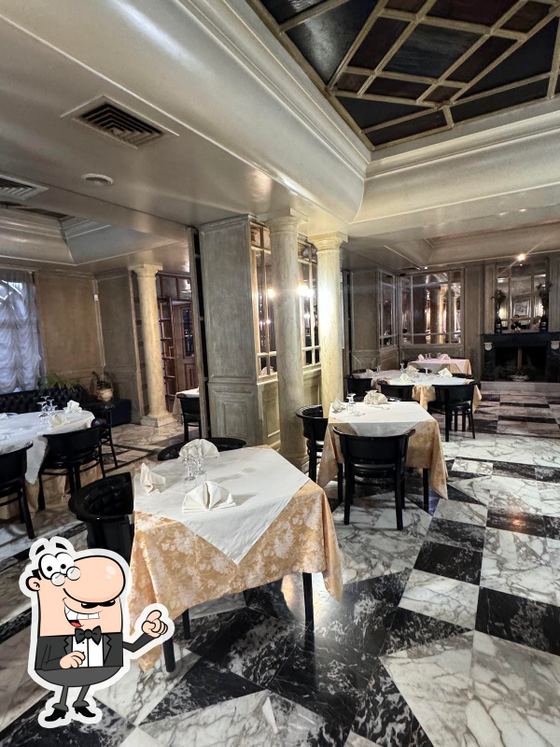
RISTORANTE DA TERESA
Frosinone (FR) · 8.2 km
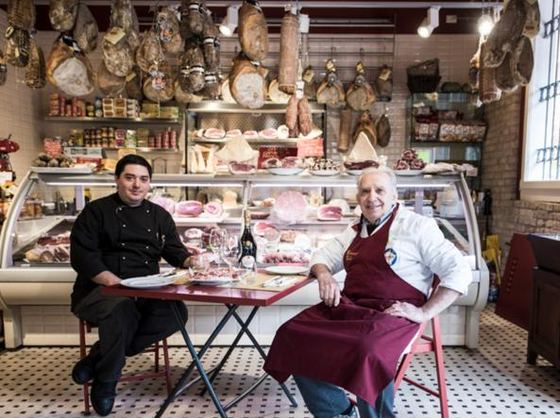
Il Locandiere De Core e De Panza
Acuto (FR) · 12.4 km
LA FRASCHETTA DEL CIOCIARO DI ALESSANDRO TESTANI
Torrice (FR) · 13.1 km
L'ANGOLO DELLA BELLEZZA DI COLELLA ANGELA CENTRO ESTETICO E BENESSERE
Morolo (FR) · 13.7 km

LA.CAR. 2 Srl
Patrica (FR) · 15.5 km
