
A native white-berried grape variety of ancient presence in the Valle d'Itria, whose origins remain partly mysterious; one of the most distinctive winemaking traits of the Brindisi territory.
In the Valle d'Itria (Itria Valley), within the triangle joining the provinces of Bari, Brindisi and Taranto, a white-berried grape variety has grown since time immemorial, its history receding into a past that predates any documented form of Apulian viticulture. Bianco d'Alessano has no certain origin: by the late nineteenth century, when scholars began cataloguing and describing it ampelographically, it was already a well-established presence in the region's agricultural landscape, rooted in particular around Martina Franca, in the Taranto area, and in the neighbouring municipalities of the Brindisi province.
Its modern history has been marked by a gradual marginalisation. Low yield per hectare and the difficulty of vinifying it on its own were the reasons why, over the course of the twentieth century, Bianco d'Alessano was progressively replaced by Verdeca, a more generous variety better suited to producing base wines destined for Vermouth. In the countryside around Martina Franca the variety came close to disappearing altogether, reduced to a few surviving rows kept alive more by inertia than by deliberate choice. Today the standard of the Martina or Martina Franca DOC — recognised by ministerial decree of 5 June 2014 — calls for it to be blended with Verdeca, in a proportion of between 35 and 50 per cent, evidence of a revival rooted in ampelography before it was ever rooted in commerce.
Alongside Impigno, another white-berried variety traditionally attributed to the territory of Martina Franca itself, Bianco d'Alessano forms the oldest core of the Valle d'Itria's winemaking heritage. The two varieties share a distribution concentrated mainly in the province of Brindisi and a low profile beyond the region: niche wines, rarely found on national markets, that speak to a viticultural lineage which has remained on the margins of Italy's great winemaking narratives.
The DOC's production area spans municipalities across three different provinces — Alberobello and part of Castellana Grotte in the Bari area, Ceglie Messapica and Ostuni in the Brindisi area, Crispiano and Martina Franca in the Taranto area — tracing a map that corresponds roughly to the historic boundaries of the Valle d'Itria and its karst plateau. It is a territory where viticulture is interwoven with olive growing and with a landscape shaped over centuries around trulli (traditional conical stone dwellings) and masserie (fortified farmhouses), and where agricultural memory has preserved, often without fanfare, varieties that elsewhere would have been swept away by productive rationalisation.
Bianco d'Alessano has never become a symbol of winemaking redemption in the way some other Italian native varieties rediscovered in recent decades have. It remains a piece of the picture, essential to understanding a territory but not yet at the centre of a story of its own. Its persistence in the standards and vineyards of the Valle d'Itria says something about the tenacity with which certain places hold on to their botanical identity, even when the market pulls in other directions.
Benjamin Smith · CC BY-SA 4.0 — Wikimedia Commons
Certified Made in Italy businesses close to this place.
La Piccola Brace da Rè
Martina Franca (TA) · 0.2 km

PNEUMATICI.IT Srl
Martina Franca (TA) · 0.3 km

Basile Funeral Service
Martina Franca (TA) · 0.8 km

Pizzeria Bon Bon
Locorotondo (BA) · 5.9 km
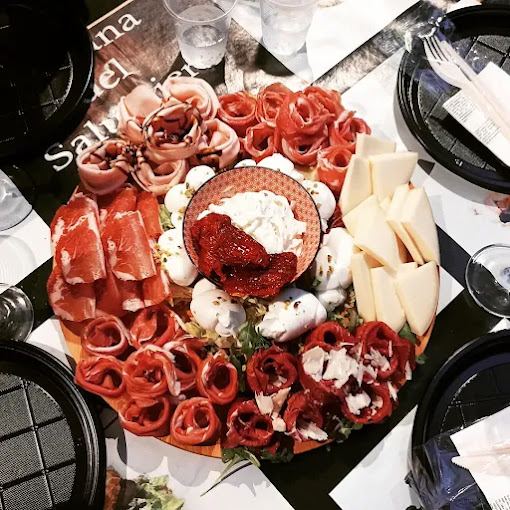
LA TANA DEL SALUMIERE DI CAMPANELLA MARIA
Alberobello (BA) · 12.3 km

Ugo La Caffetteria Dal 1962 - Panzerotti Live
Montalbano di Fasano (BR) · 14.1 km
