Tuscan rural cultures have shaped, over the centuries, a heritage of distinct folk identities, built around peasant activities and the specificities of each local territory.
The Tuscany studied in art history books and the Tuscany passed down in whispers across the countryside are almost two distinct regions, overlapping on the same map yet separated by a cultural distance that is rarely bridged. The intangible heritage of Tuscan rural communities — seasonal rites, festivals tied to the agricultural calendar, artisanal practices, local dialects and folk beliefs — has for centuries followed a path of oral and gestural transmission, indifferent to the official circuits of culture. It is a heritage that is not preserved in picture galleries, but in family memories, in gestures repeated during the grape or grain harvest, in dialect formulas that change from valley to valley.
Florentine ethnographic research has contributed significantly to documenting this deep layer. From the latter half of the twentieth century onward, scholars and institutions — including the Museo di Firenze (Florence Museum), a key reference point for the region's anthropological itineraries — systematized a network of ethno-anthropological museums spread across Tuscan territory. Many of these institutions were born from the direct initiative of citizens and local associations, even before academic recognition arrived: a detail that says something about the nature of this heritage, rooted in a collective will not to let lived experience be lost. Each museum tells a specific story: leather working in the Mugello, the art of embroidery in the Montalbano, traditions tied to sheep farming in the Apennine areas.
What distinguishes Tuscan rural folk identities from generic regional folklore is their granularity. There is no single, unified Tuscan peasant tradition, but rather a constellation of local micro-cultures reflecting the territory's morphological variety: the Maremma developed practices and symbolic figures different from those of the Garfagnana or the Chianti, and even geographically close communities have maintained distinctions in songs, costumes, and festive calendars. This fragmentation is not impoverishment: it is the trace of a history made by communities that organized themselves autonomously, with their own resources and constraints.
The relationship between these traditions and the present is, as often happens, ambivalent. Some practices have been recovered and returned to public life through reenactments and festivals — from the Giostra del Saracino in Arezzo to the Palio di Siena, down to the minor festivals tied to agricultural cycles — with outcomes ranging from faithful conservation to transformation into spectacle. Others have remained in the shadows, kept by elderly communities or by researchers who fixed their memory in archives and publications. The distinction between the two modes is not trivial: it changes the type of transmission, the audience, and the meaning the practice retains for those who carry it out.
What ethnographic studies have made clear is that this heritage is not a remnant of the past awaiting extinction, but a system of knowledge — agronomic, meteorological, medical, social — that responded for centuries to precise material conditions. Understanding its inner logic requires a gaze that goes beyond the picturesque surface of costume and festival, to recognize in those practices a form of adaptive rationality. It is in this sense that rural Tuscany continues to offer a field of observation of rare density for anyone concerned with the history of mentalities and material cultures.
Certified Made in Italy businesses close to this place.
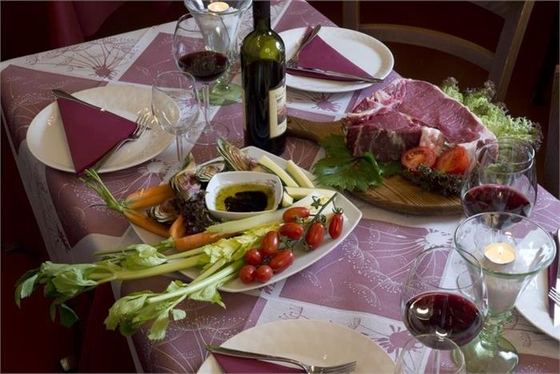
Il Barroccio Antica Osteria Firenze
Firenze (FI) · 0.2 km
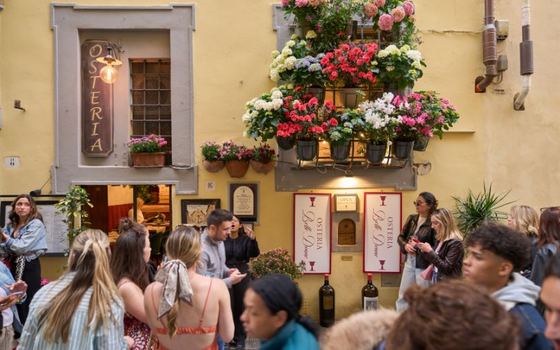
Osteria Belle Donne
Firenze (FI) · 0.5 km
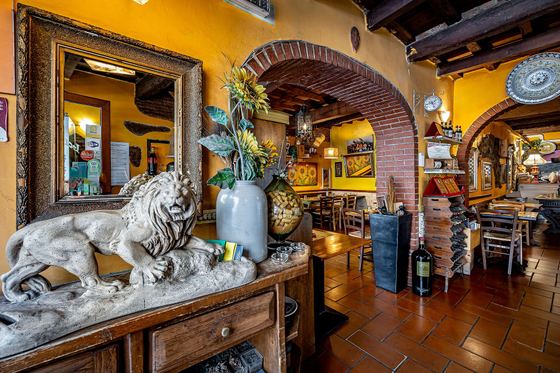
La Grotta Di Leo
Firenze (FI) · 0.9 km

OSTERIA CAORLOTTA - Firenze - RISTORANTE DI PESCE
Firenze (FI) · 1.1 km
Alvise Giustinian Murano Glass Florence
Firenze (FI) · 1.4 km
OSTI srl PAVIMENTI E RIVESTIMENTI
Novoli (FI) · 1.4 km
